
A complete issue · 20 pages · 1900
Judge — August 11, 1900
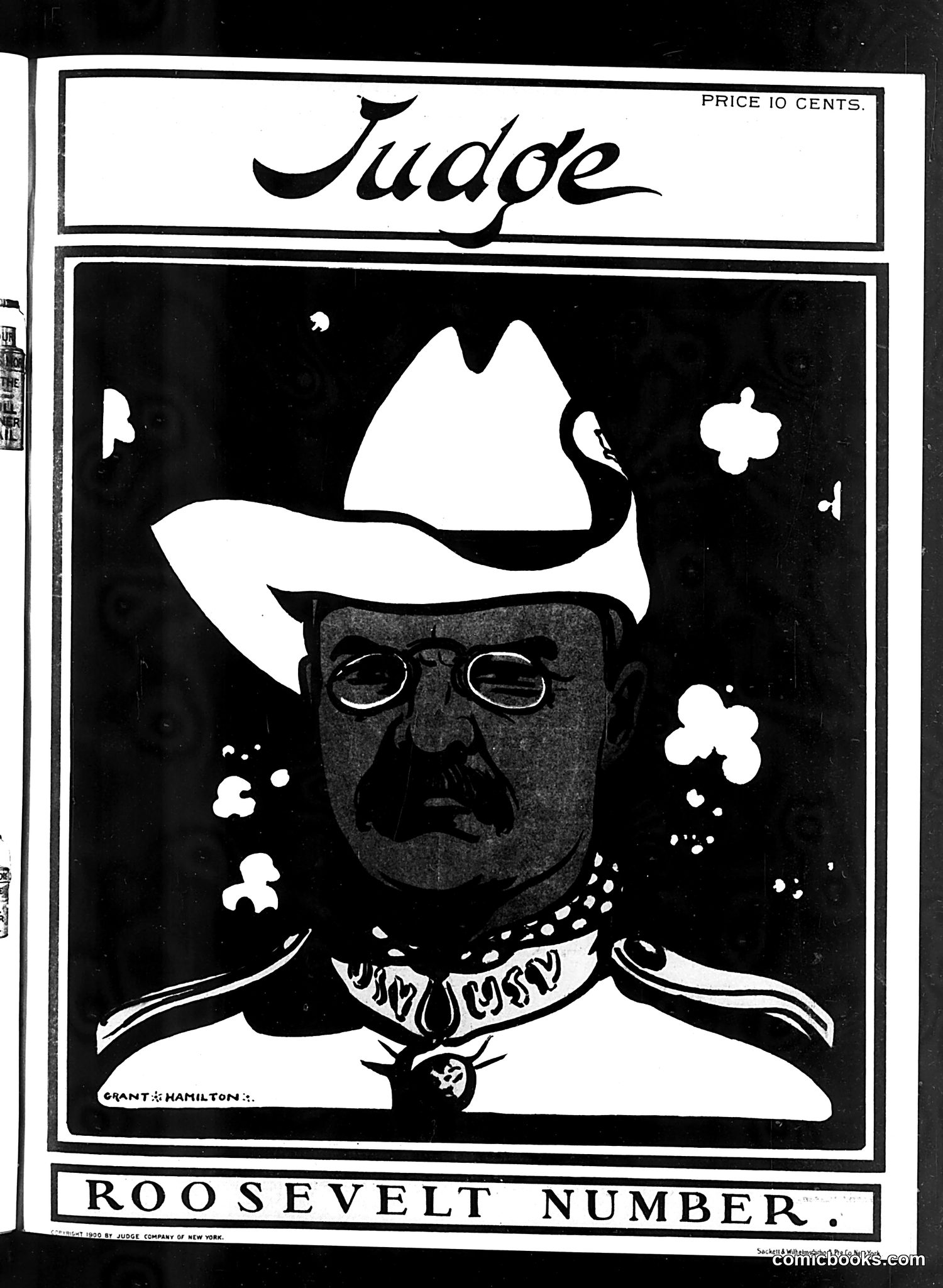
This is a "Roosevelt Number" cover of *Judge* magazine (price 10 cents), featuring a caricatured figure in cowboy attire with exaggerated features: round glasses, prominent mustache, and a large white Stetson hat. The figure wears a neckerchief labeled "UMPIRTY" (likely "Impurity") and what appears to be a sheriff's badge. The satire likely targets Theodore Roosevelt's public persona as a "rough rider" and his reformist crusade against corruption and "impurity" in American politics and business. The cowboy imagery plays on Roosevelt's self-fashioned western identity, while the decorative clouds and suit suggest both his authority and theatrical self-presentation. Without a date visible, the specific political context remains unclear, though this appears critical of Roosevelt's reform agenda or persona.
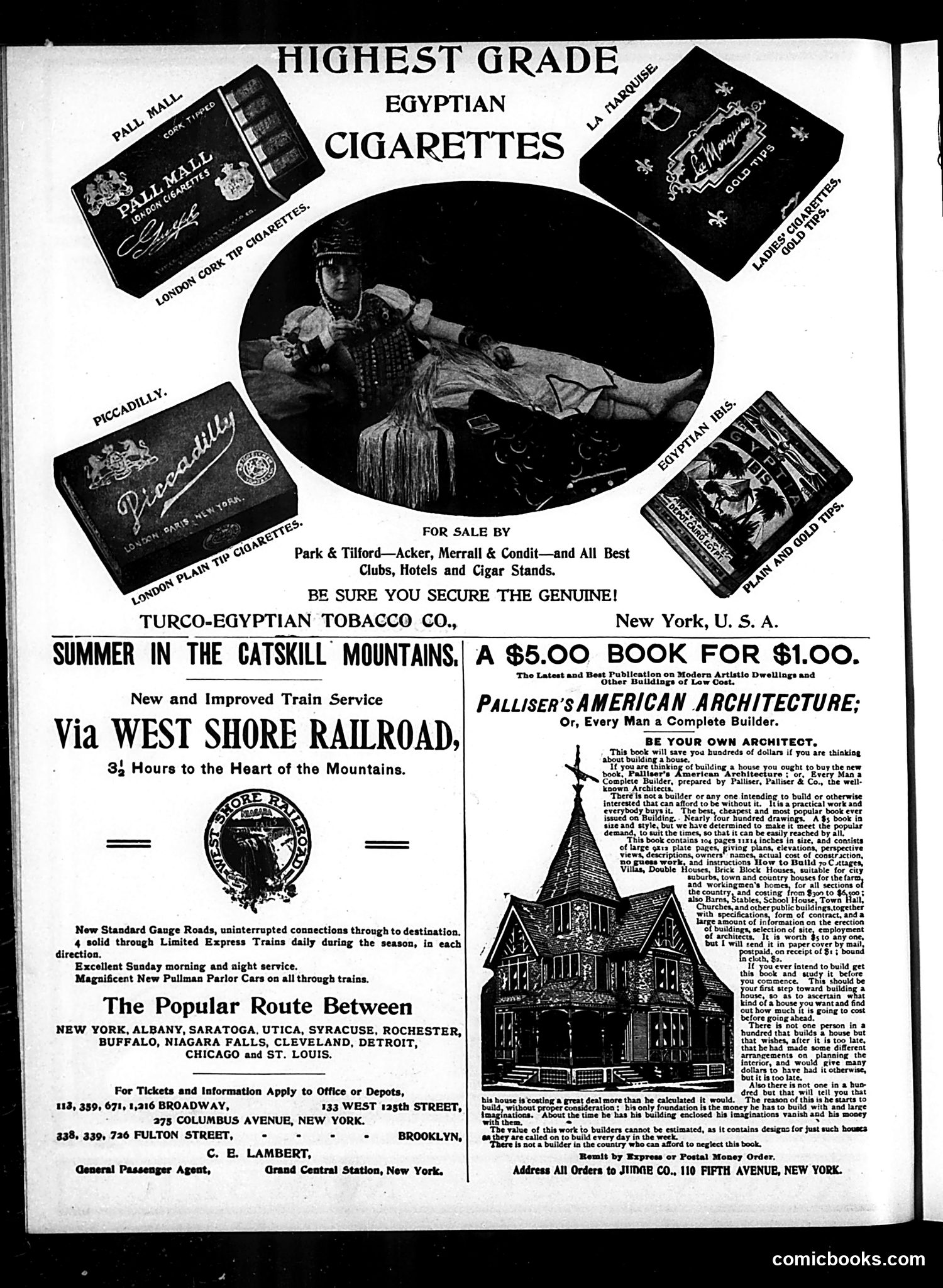
This page is primarily **advertising rather than editorial content**. The top half features a large advertisement for Egyptian cigarettes by the Turco-Egyptian Tobacco Co. of New York, showing various cigarette brands (Pall Mall, Piccadilly, La Favorise) surrounding an image of a woman in Egyptian costume. The ad promises "highest grade" products and directs readers to purchase at clubs, hotels, and cigar stands. The bottom half contains advertisements for the West Shore Railroad (promoting travel to the Catskill Mountains) and a mail-order architecture book. No political cartoon or satire is present on this page—it is a straightforward collection of period commercial advertisements typical of early 20th-century magazine content.
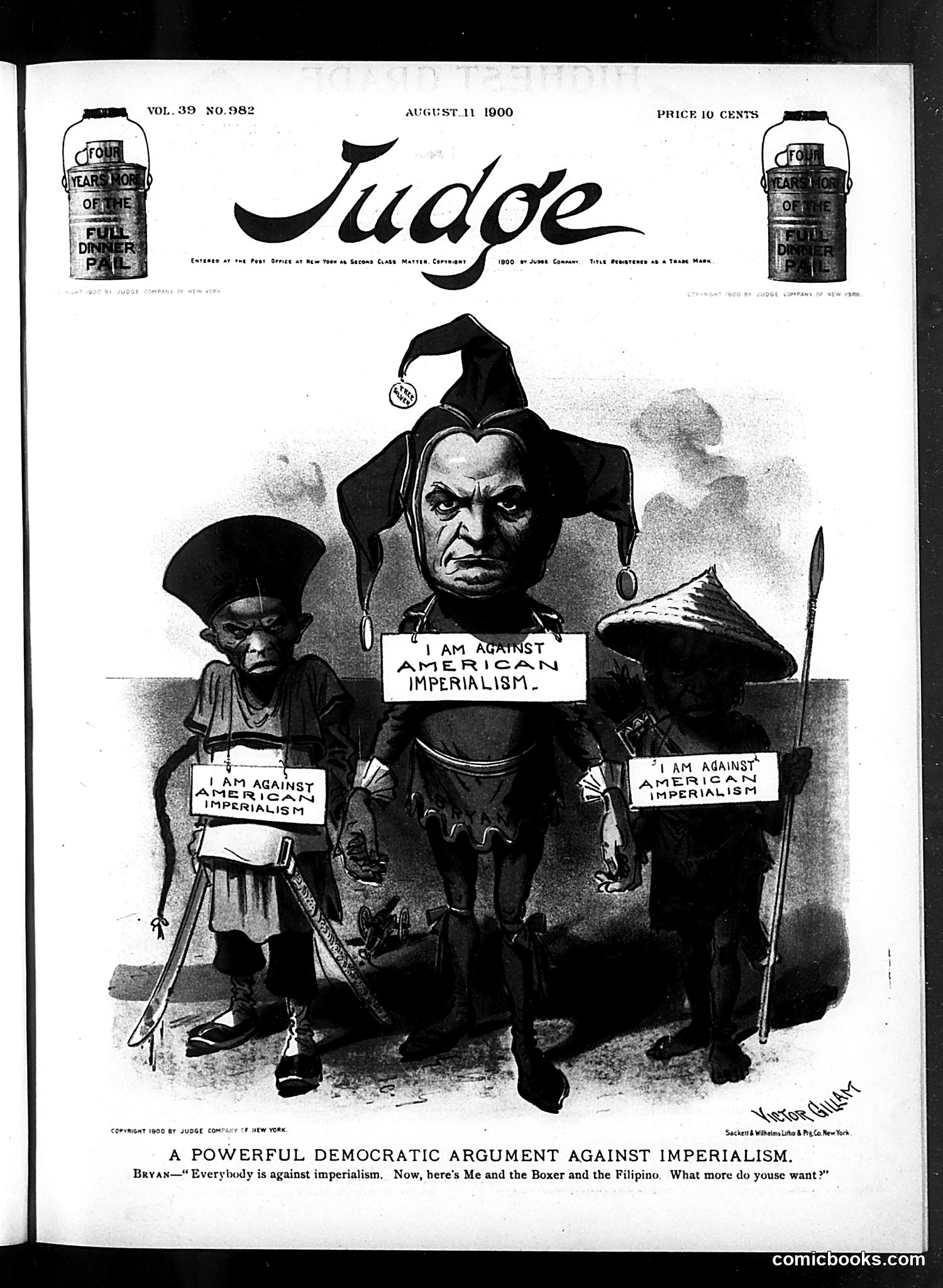
This political cartoon satirizes opposition to American imperialism. The central caricatured figure appears to represent William Jennings Bryan, a Democratic presidential candidate opposing U.S. imperial expansion. He's depicted with two allies labeled as "the Boxer and the Filipino"—references to the Boxer Rebellion in China and Filipino resistance to American colonial rule during the Philippine-American War. The caption quotes Bryan claiming "Everybody is against imperialism," sardonically suggesting that opposing imperialism means aligning with America's enemies. The cartoon ridicules anti-imperialist arguments as absurdly hypocritical, implying that opposing U.S. expansion amounts to siding with foreign adversaries. This reflects the heated 1900 election debate over America's overseas territorial ambitions.
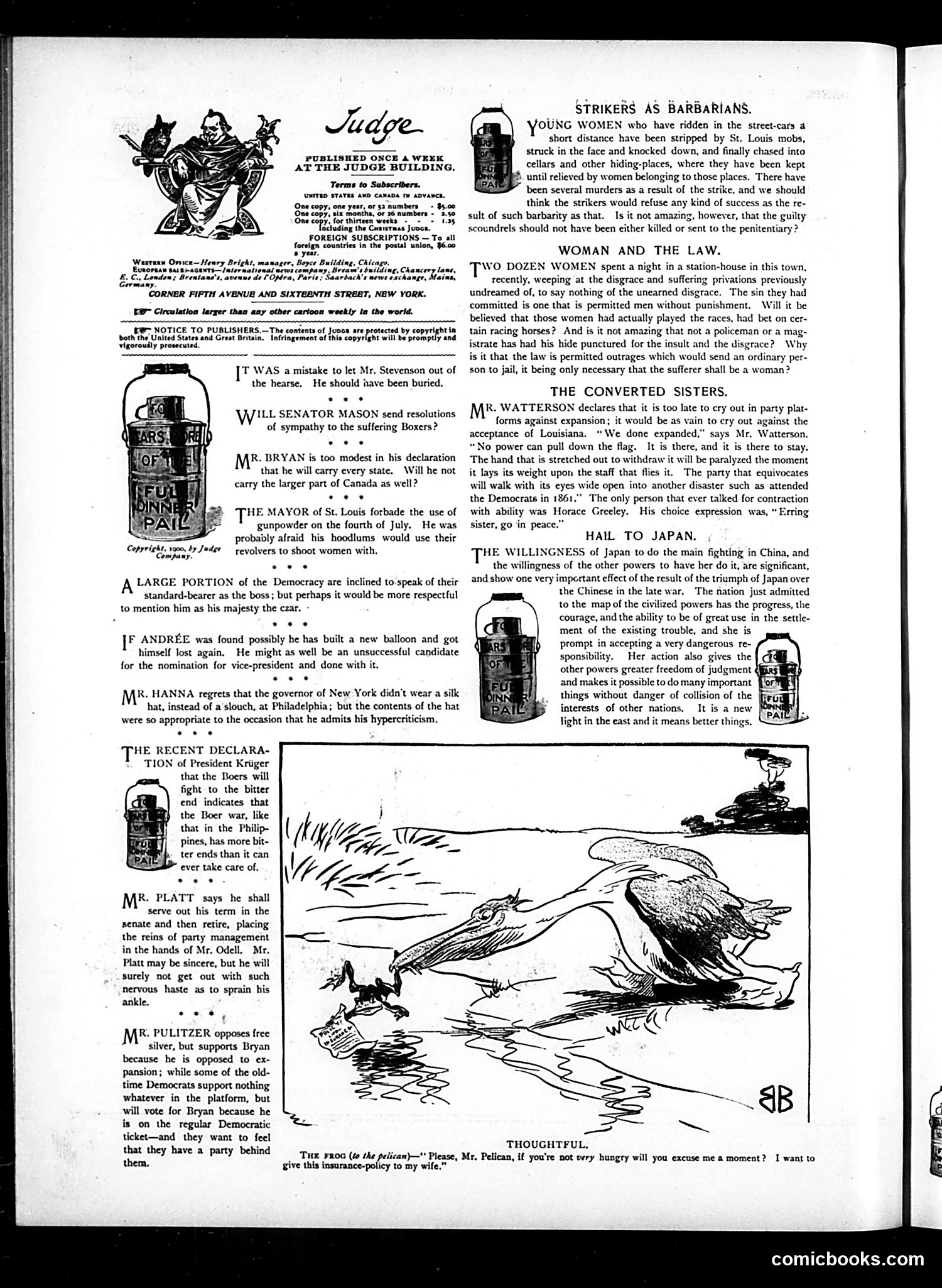
This page contains several brief political commentary items rather than a single coherent cartoon. The main illustrated piece at bottom—captioned "THOUGHTFUL"—depicts a large frog being attacked by a pelican, with the frog saying "Please, Mr. Pelican, if you're not very hungry will you excuse me a moment? I want to give this insurance-policy to my wife." The satire appears to comment on ordinary citizens' anxieties about financial security amid life's dangers (represented by the predatory pelican). The frog's concern for his wife's financial protection even while facing death reflects anxieties about mortality and family welfare—likely resonating with readers during an era of industrial danger and limited social safety nets. The accompanying text items mock various politicians and public figures' recent statements, though without dates or clearer context, specific identities remain unclear.
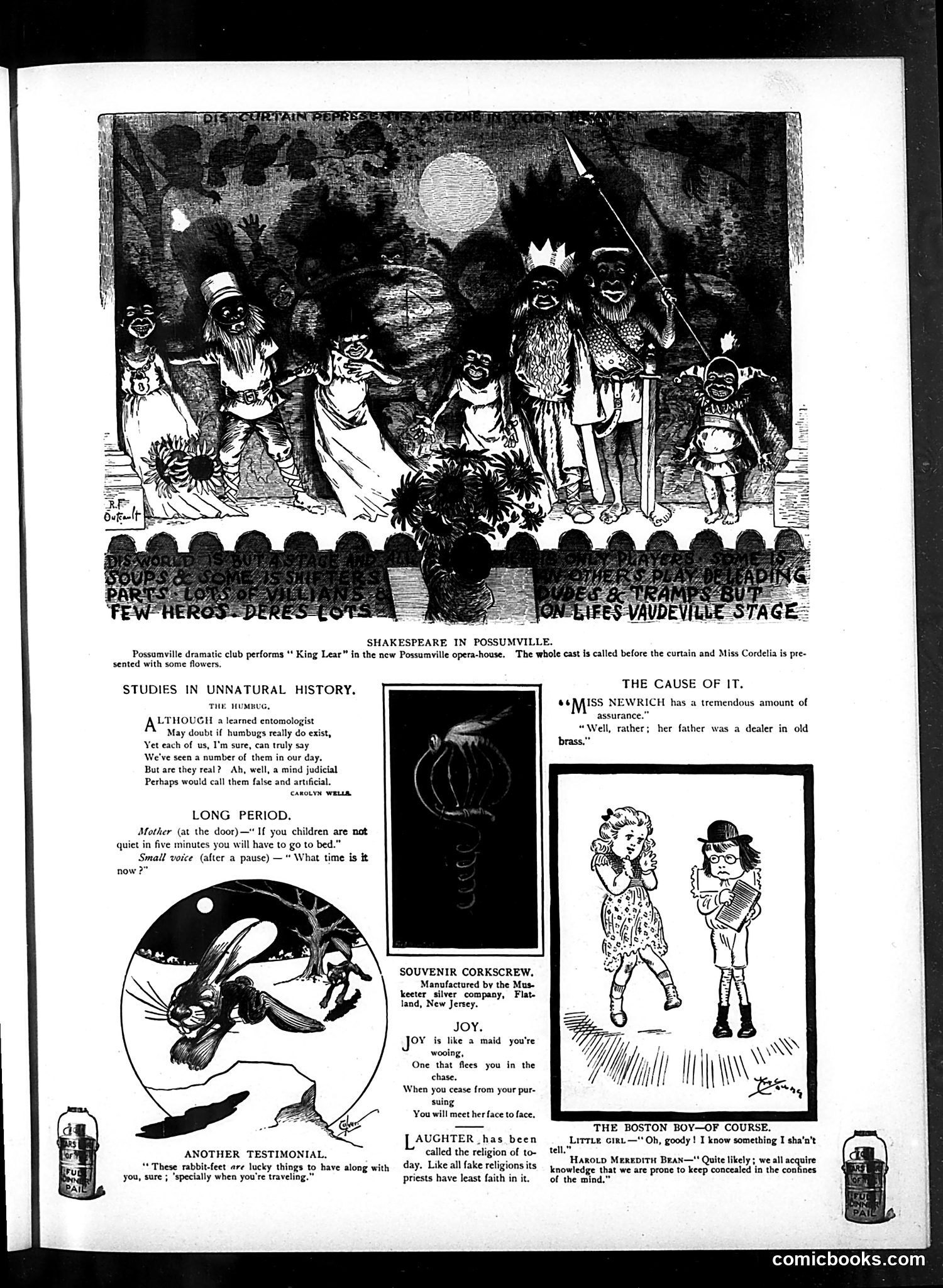
This page from *Judge* magazine contains several satirical pieces lampooning American society circa early 1900s: **Top illustration**: "Shakespeare in Possumville" mocks rural theatrical pretensions—a small-town dramatic club's amateur production of *King Lear*, with the cast taking curtain calls. The satire targets unsophisticated audiences treating mediocre local performances as high art. **"Studies in Unnatural History"**: Philosophers debate whether "humbugs" (fraudsters/deceivers) truly exist—ironic commentary on widespread con artists and charlatans in society. **"The Cause of It"**: A wealthy nouveau-riche woman's arrogance stems from her father's brass-dealing business, mocking the pretensions of the newly rich. **"The Boston Boy"**: Satirizes precocious children who affect superior knowledge and refuse to share information—poking fun at insufferable young show-offs. Additional items include sentimental verses about "Joy" and "Laughter," plus advertisements for novelty corkscrews. The page reflects *Judge's* satirical focus on American social climbing, cultural affectation, and urban wit.
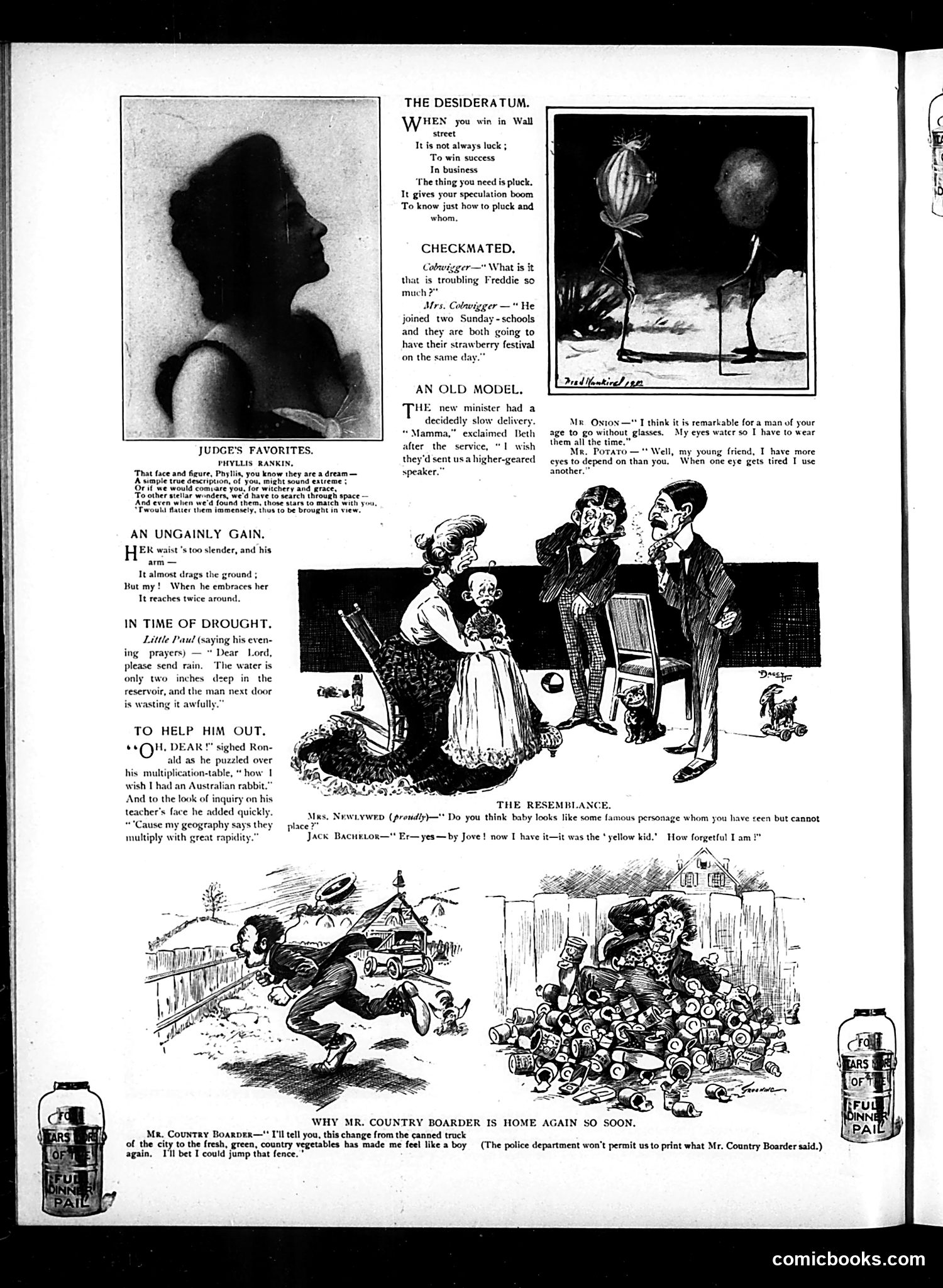
This page from *Judge* contains multiple short humorous pieces typical of the magazine's satirical format: **"The Desideratum"** mocks Wall Street success, suggesting that winning in business requires knowing "how to pluck and whom"—a crude pun implying dishonest manipulation. **"Checkmated"** jokes about a boy caught between two Sunday schools' strawberry festivals on the same day—a mild domestic comedy. **"An Old Model"** features two elderly men comparing eyesight, with one claiming to use his second eye when the first tires—absurdist humor. **"The Resemblance"** references "the yellow kid," a famous cartoon character of the era, suggesting a newborn resembles this well-known figure. **"Why Mr. Country Boarder Is Home Again"** depicts a city visitor so energized by fresh country vegetables that he attempts jumping a fence, with the punchline censored by police—implying his language was profane. The page also includes portrait sketches and advertisements for "Ful" brand products. Overall, it reflects early 1900s middle-class American humor: domestic situations, wordplay, and gentle social observation.
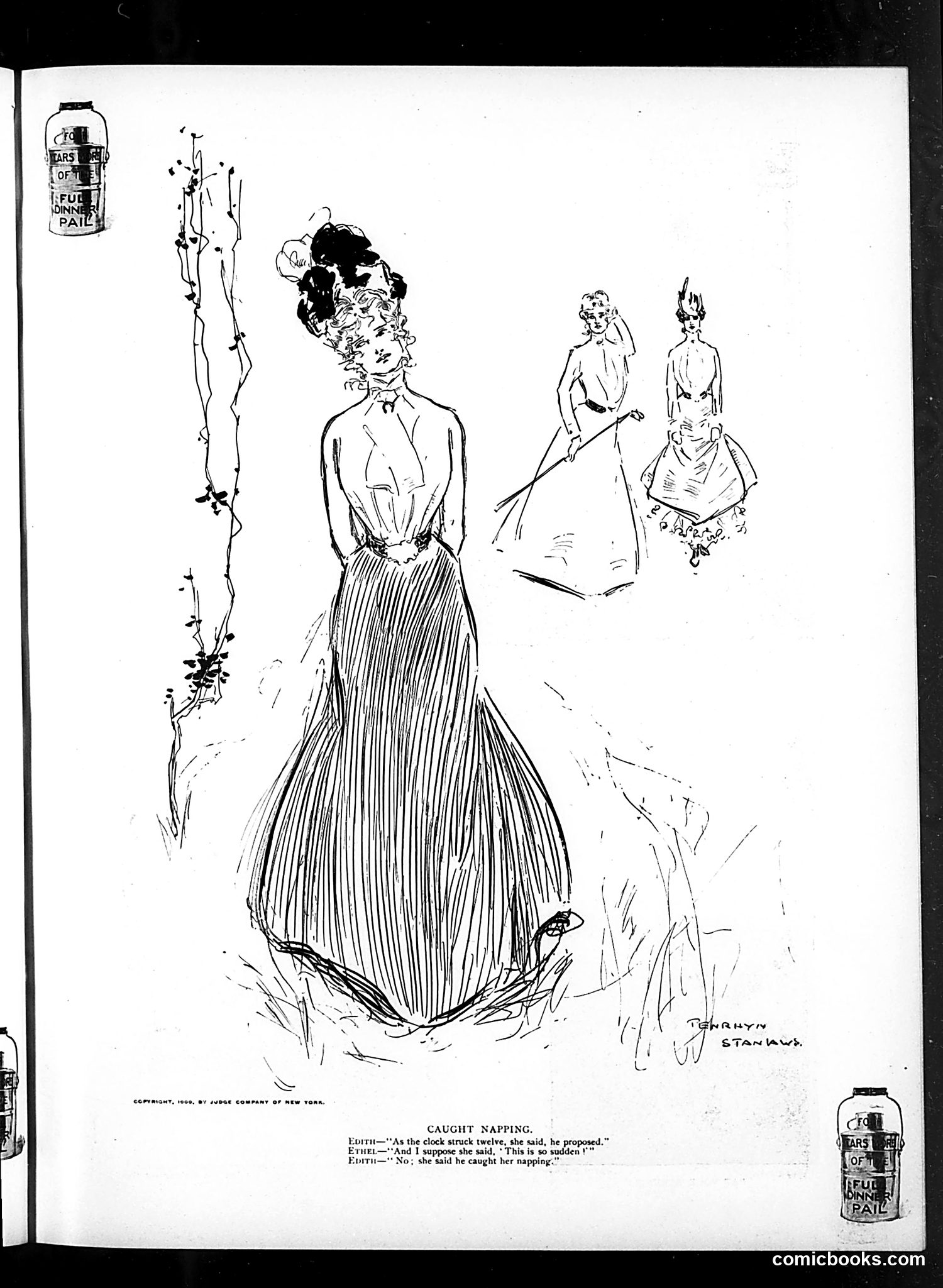
This satirical cartoon, signed by Cesare Stanlaws, depicts a fashionable woman with elaborate upswept hair being observed by two other figures. The title "Caught Napping" references the caption dialogue below, which plays on a proposal scenario: when the clock struck twelve, a proposal was made, and the woman supposedly said "This is so sudden!" — yet she was "caught napping," implying she'd anticipated or accepted it. The satire targets romantic convention and female pretense: the woman's shocked reaction contradicts her prepared appearance and demeanor, mocking both idealized courtship rituals and the performance of feminine modesty. The decorative vine element and fashion-focused rendering emphasize the superficiality being critiqued. The cartoon exemplifies *Judge* magazine's comedic approach to social etiquette and gender relations of the early 1900s.
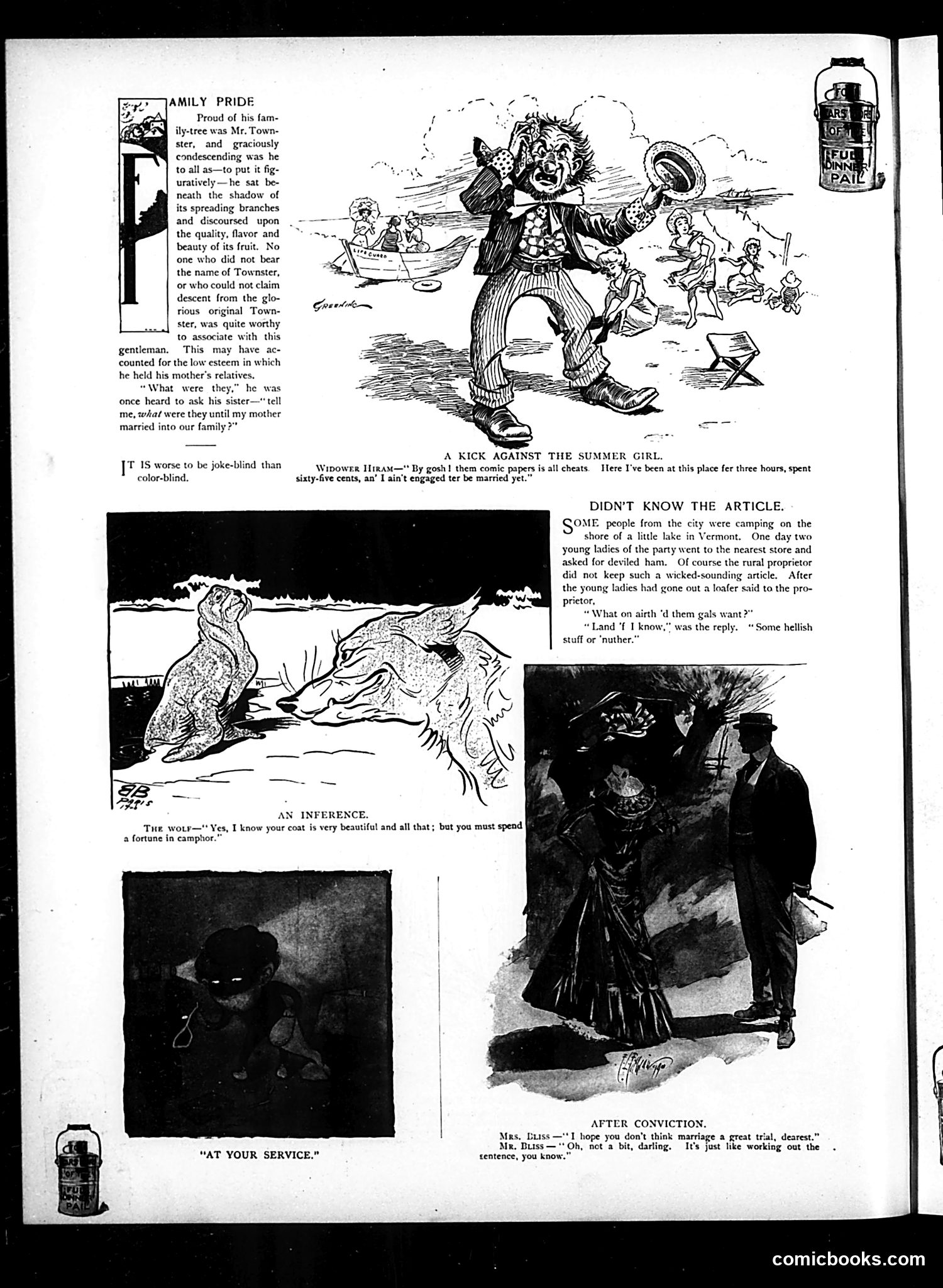
This page contains several satirical humor pieces typical of *Judge* magazine: **"Family Pride"** mocks social snobbery. Mr. Townster obsesses over his family lineage while dismissing his mother's relatives as unworthy—the joke being his hypocrisy: his family tree's value depends entirely on his mother marrying into it, yet he considers *her* side inferior. **"A Kick Against the Summer Girl"** features a rural character (Widower Hiram) complaining that comic papers mislead him—he spent 65 cents at a summer resort expecting comic papers would guarantee marriage prospects, but remained single. **"Didn't Know the Article"** presents urban-rural culture clash: city girls ask a Vermont shopkeeper for "deviled ham." He doesn't stock it, and a local assumes they requested something immoral ("hellish stuff"), not understanding the food item. **"After Conviction"** uses marriage-as-prison wordplay: the newlywed husband compares married life to "working out the sentence"—a darkly humorous dig at matrimony. All pieces employ class or cultural stereotypes typical of early-20th-century American humor.
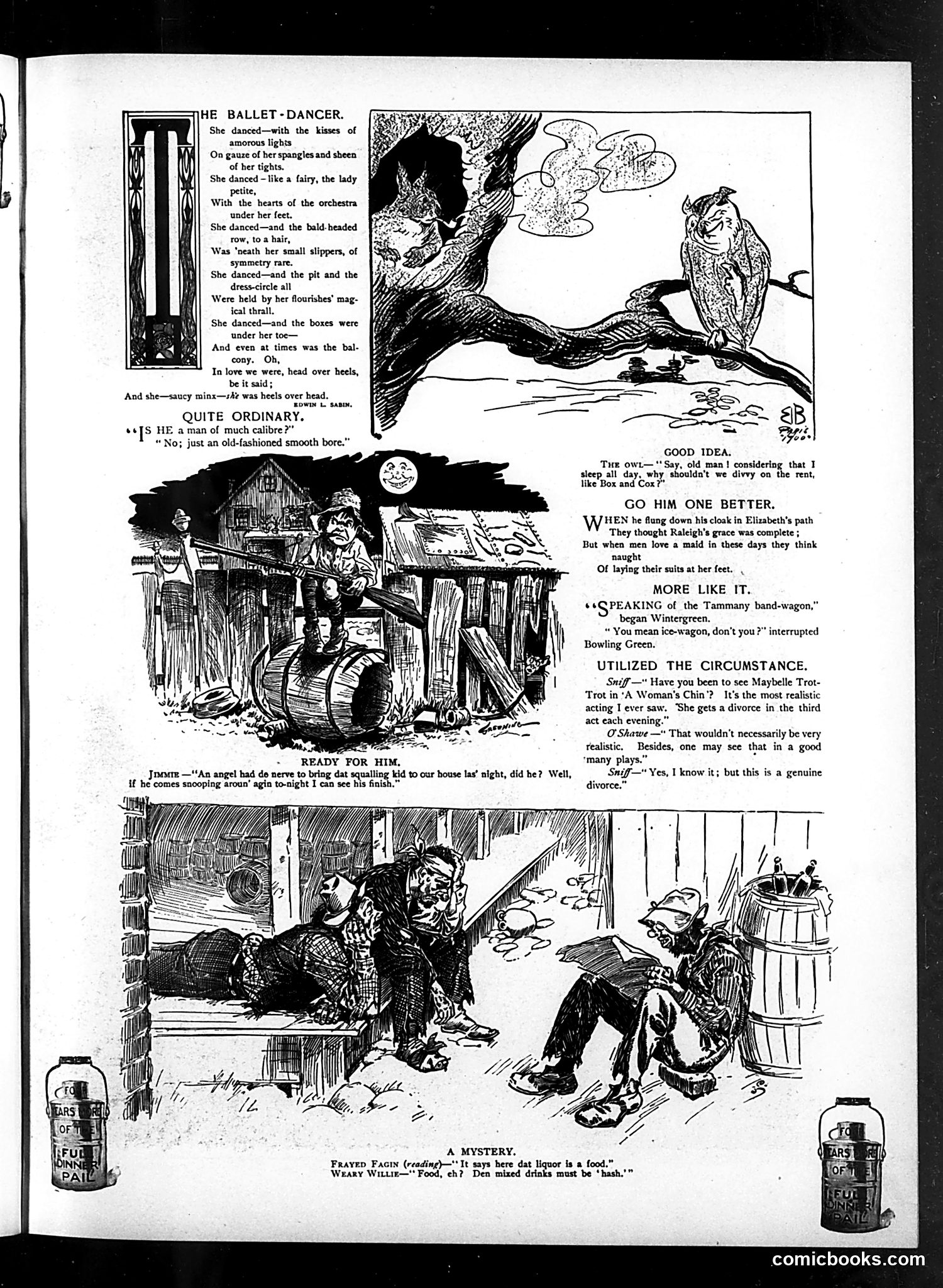
This page from Judge magazine contains several satirical humor pieces typical of early 20th-century American comedy: **"The Ballet-Dancer"** is a romantic poem mocking the infatuation audiences (especially male theatergoers) felt for performers, with wordplay on the dancer being literally "head over heels" in love while her admirers are "heels over head." **"Quite Ordinary"** is a brief joke about a boring man lacking distinction. **"Go Him One Better"** modernizes the famous Sir Walter Raleigh legend, suggesting contemporary suitors are even more devoted than historical precedent. **"More Like It"** contains a political jab: "Tammany band-wagon" references New York's corrupt Democratic machine, while the reply equates it to an "ice-wagon"—likely mocking its cold, mechanical nature or poor public service. **"Ready for Him"** depicts working-class dialect humor about an unwanted visitor. **"A Mystery"** jokes that if liquor counts as food, then mixed drinks are "hash"—absurdist wordplay on nutrition claims. The page exemplifies Judge's satirical approach: social commentary, wordplay, and gentle mockery of contemporary figures and institutions.
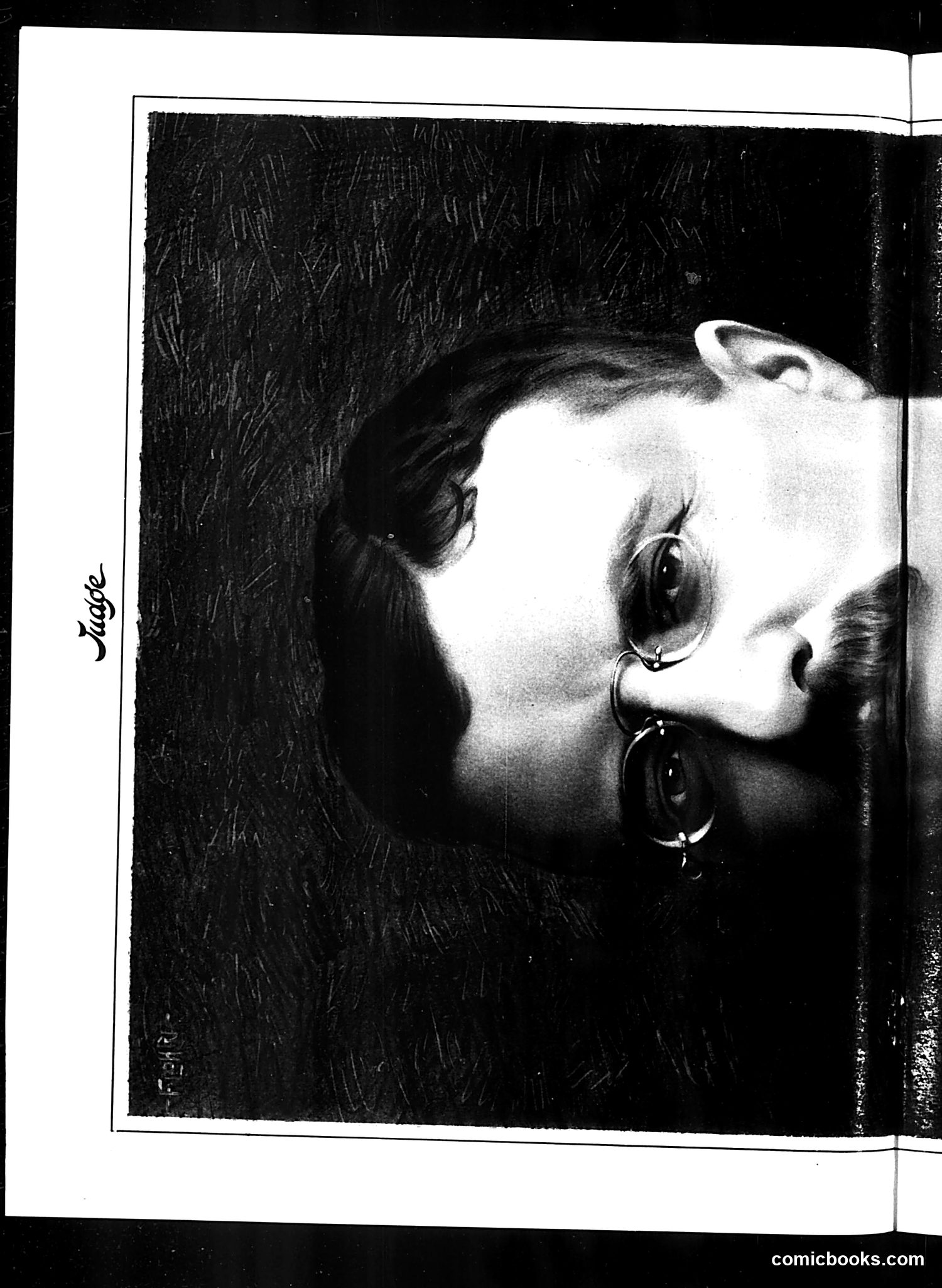
This appears to be a portrait illustration from *Judge* magazine, showing a profile view of a person wearing large hoop earrings against a dark, textured background. The signature "Judge" appears on the left margin. However, without additional OCR text or captions visible on this page beyond the "comicbooks.com" watermark, I cannot definitively identify who is depicted or what political or social commentary this illustration conveys. The artistic style—high contrast black and white with careful shading—is consistent with early-to-mid 20th century satirical portraiture, but the specific target of satire, the historical context, and the intended message remain unclear from the image alone.
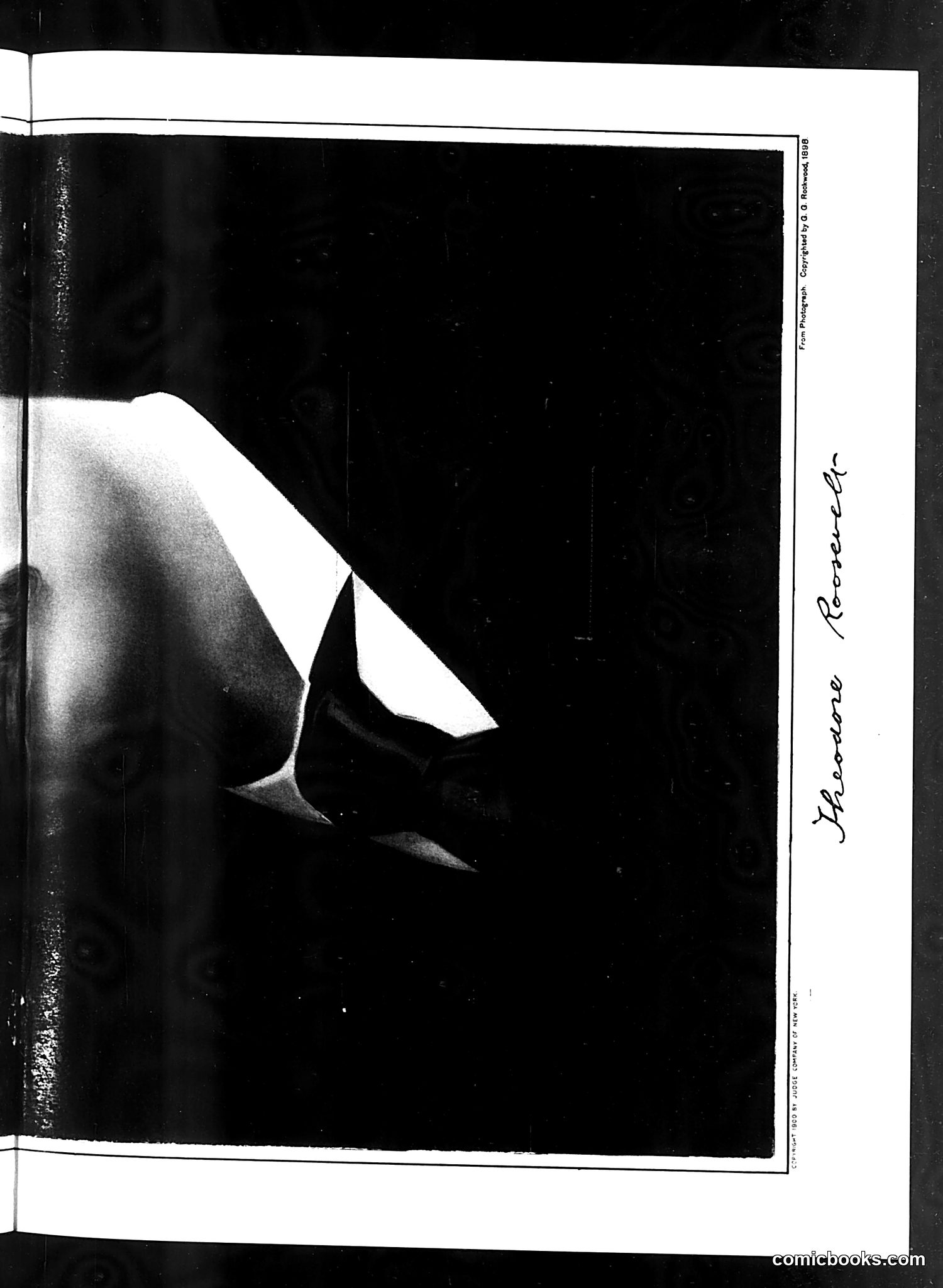
I can see this is a page from Judge magazine with the caption "Spoonery Roosevelt" visible on the right side. However, the image quality and OCR text are too degraded for me to reliably identify the specific cartoon content, figures depicted, or the satirical point being made. The reference to "Roosevelt" suggests this satirizes a Roosevelt-era political figure or policy, likely from the early 20th century. The word "Spoonery" may reference verbal slip-ups or malapropisms, but without clearer visibility of the actual cartoon imagery and text, I cannot confidently explain the specific political or social satire intended. To properly analyze this, I would need a clearer image or more legible OCR text.
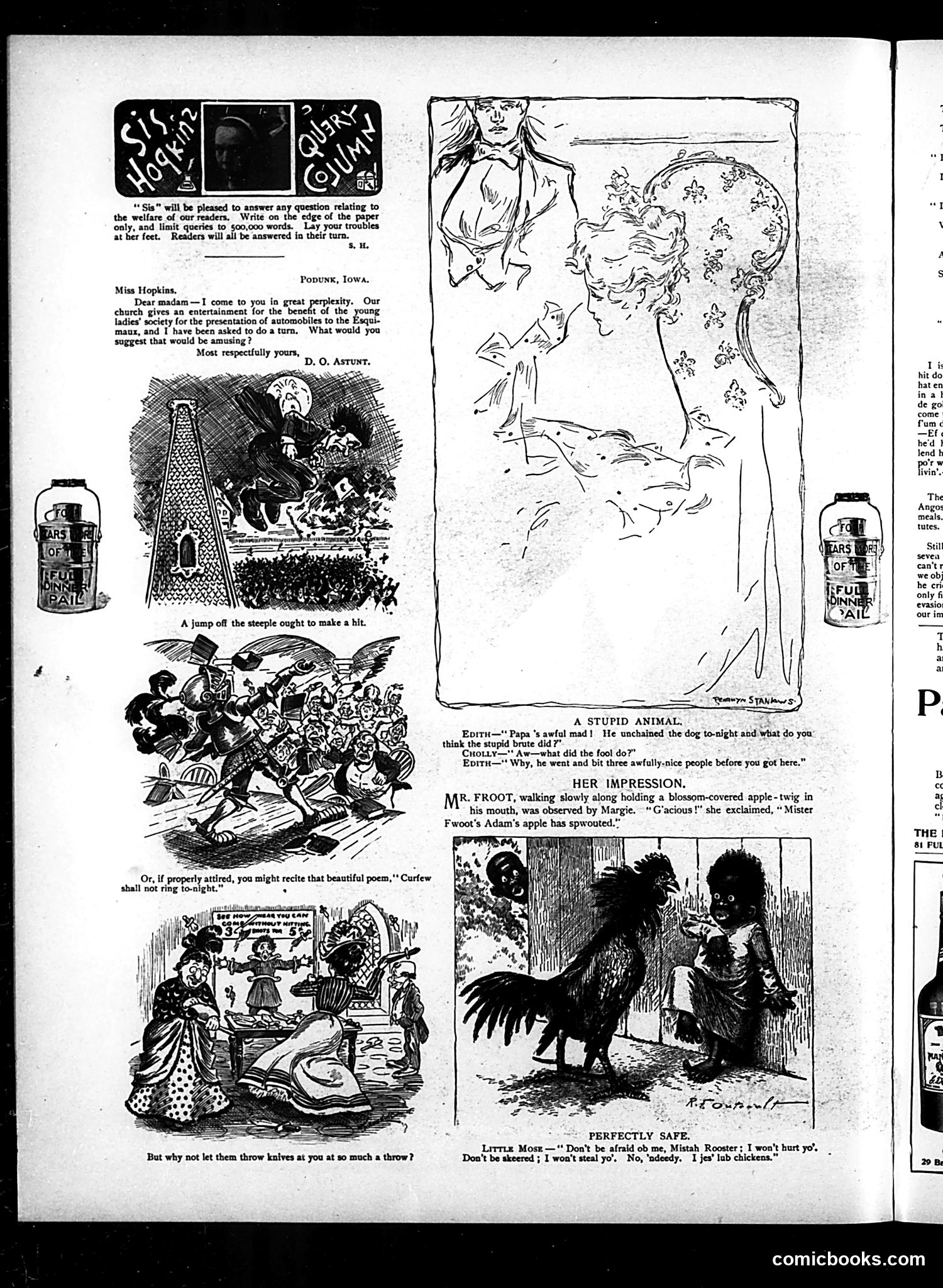
This page from *Judge* magazine contains several brief satirical pieces typical of early 20th-century American humor: **"A Stupid Animal"**: A joke mocking someone (likely a servant or lower-class person) whose unchained dog bit "three awfully-nice people"—the humor relies on the speaker's apparent indifference to injury among the upper classes. **"Her Impression"**: A visual gag where a woman misinterprets Mr. Froot holding a flowering apple branch in his mouth as his "Adam's apple" having sprouted—playing on malapropism and feminine naiveté. **"Perfectly Safe"**: A darkly comedic dialogue between "Little Mose" (a stereotypical Black character, based on the dialect spelling) and a rooster. The joke hinges on the rooster's assurance it won't hurt the child, only to reveal theft concerns—playing on contemporary racial stereotypes about Black people and theft. The page exemplifies *Judge*'s reliance on period-appropriate humor involving class, gender, and racial caricature that modern readers would find offensive.
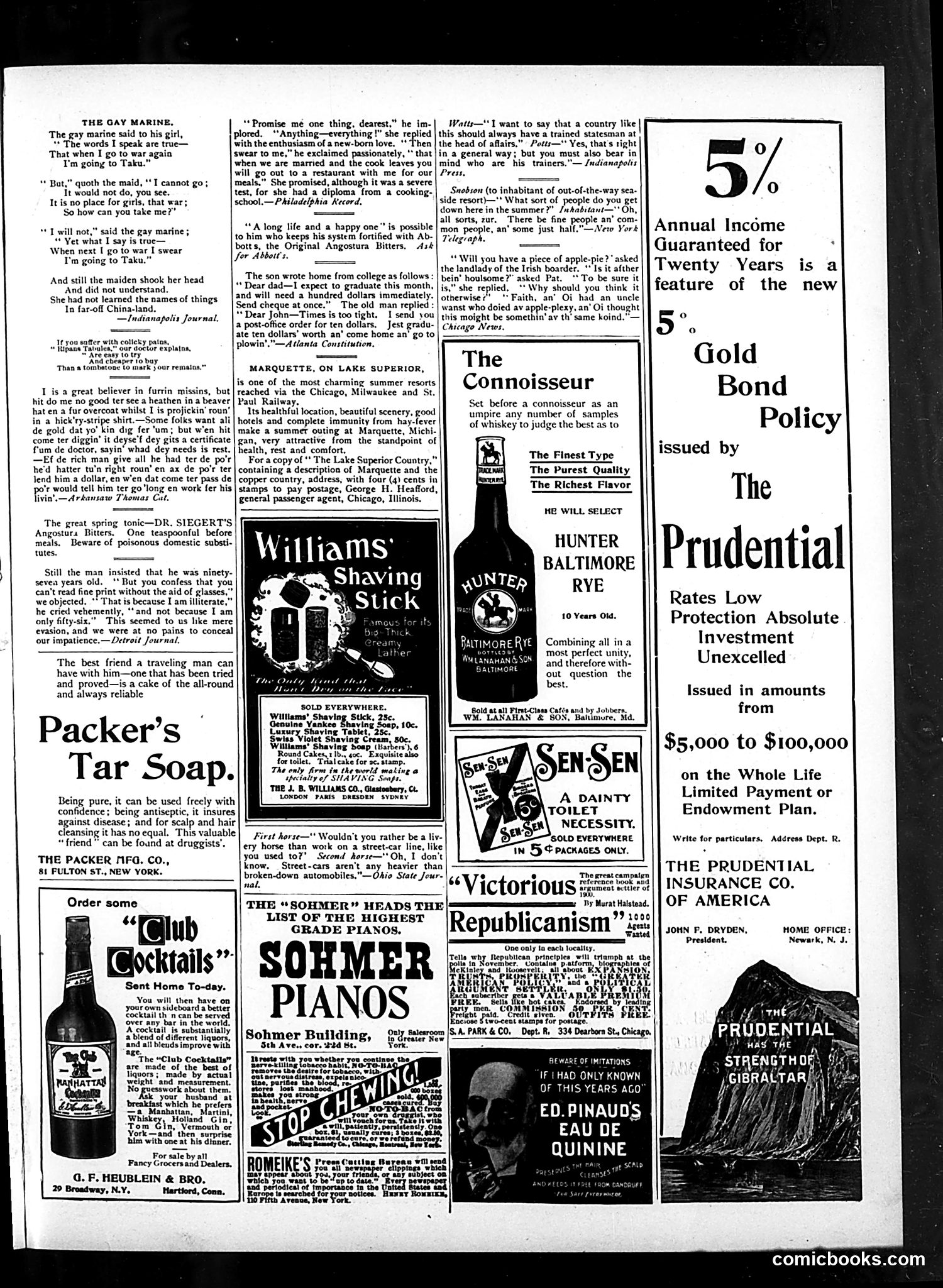
This is primarily a **page of advertisements and humor columns** rather than political cartoons. The main content includes: **"The Gay Marine"** (top left): A joke about a marine courting a girl, using "Taku" (likely referencing the Taku Forts in China from the Boxer Rebellion era, circa 1900) as a double entendre. The humor depends on the girl not understanding geographical references to foreign military conflicts. **Other humor columns** feature dialect jokes and observations about human nature—typical of Judge's satirical style—but contain **no clear political satire or caricature.** The remainder consists of **commercial advertisements** for products like Packer's Tar Soap, Williams' Shaving Stick, Hunter Baltimore Rye whiskey, Sohmer Pianos, and insurance policies. **Bottom section**: References to ed. Pinaud's Eau de Quinquine and other patent medicines. Without identifying specific cartoons or political commentary, this appears to be a standard Judge issue mixing light humor with period advertising.
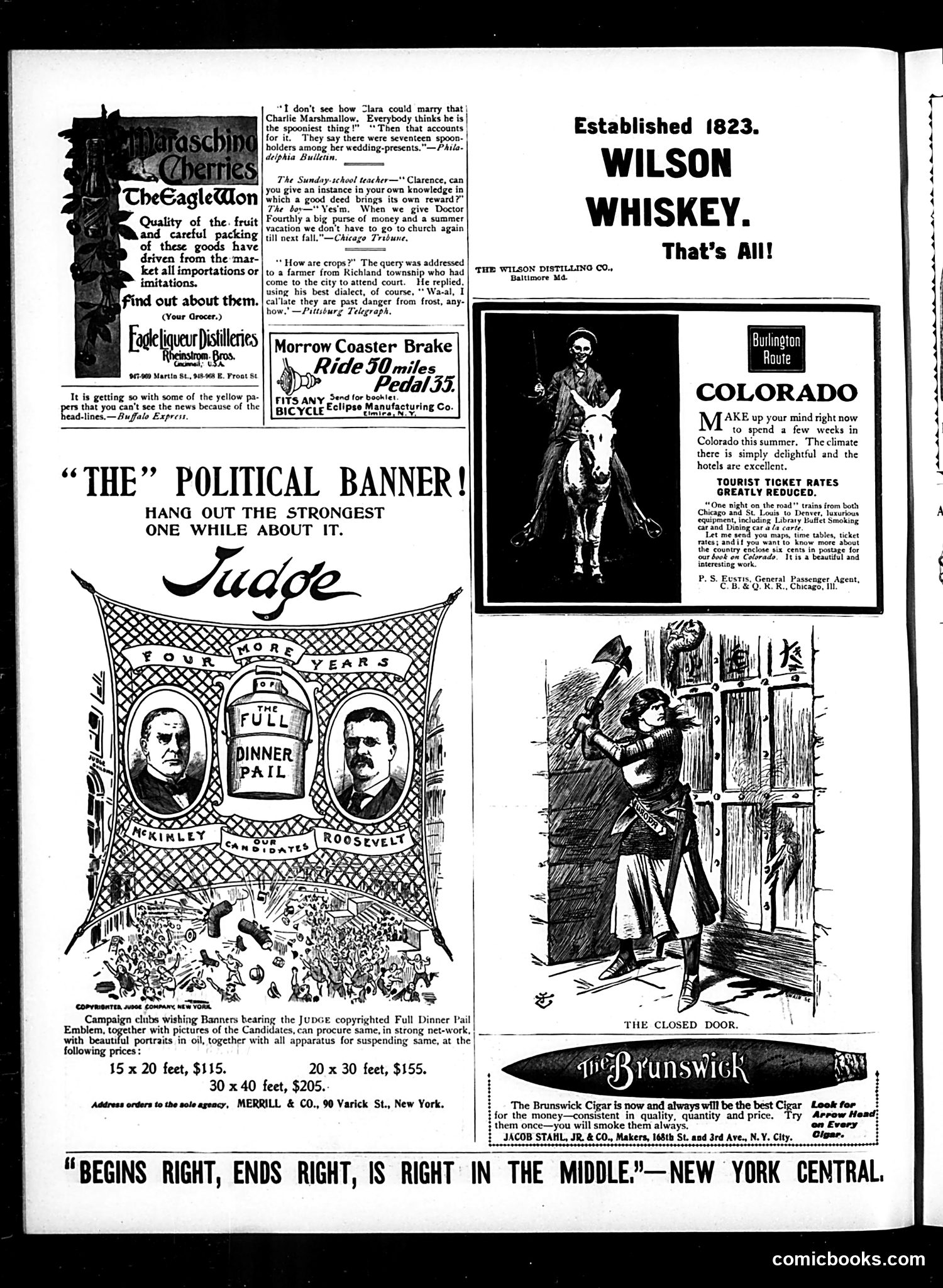
This page is primarily **advertising with some satirical humor shorts**. The main political content is "The Political Banner" section featuring a Judge-branded "Full Dinner Pail" — a reference to McKinley's 1900 campaign slogan promising prosperity. The banner shows two male portraits (likely McKinley and his running mate) flanking a dinner pail, with a crowd below, designed for campaign clubs to display. The shorter humor pieces are typical Judge fare: jokes about Sunday school, farming, and romance that mock middle-class pretensions and naiveté. The page is otherwise filled with product advertisements (whiskey, cigars, bicycles, Colorado tourism) typical of early 1900s magazine monetization. The "Closed Door" illustration appears unrelated to political content — it shows a figure at a doorway, likely accompanying a separate story or social commentary piece.
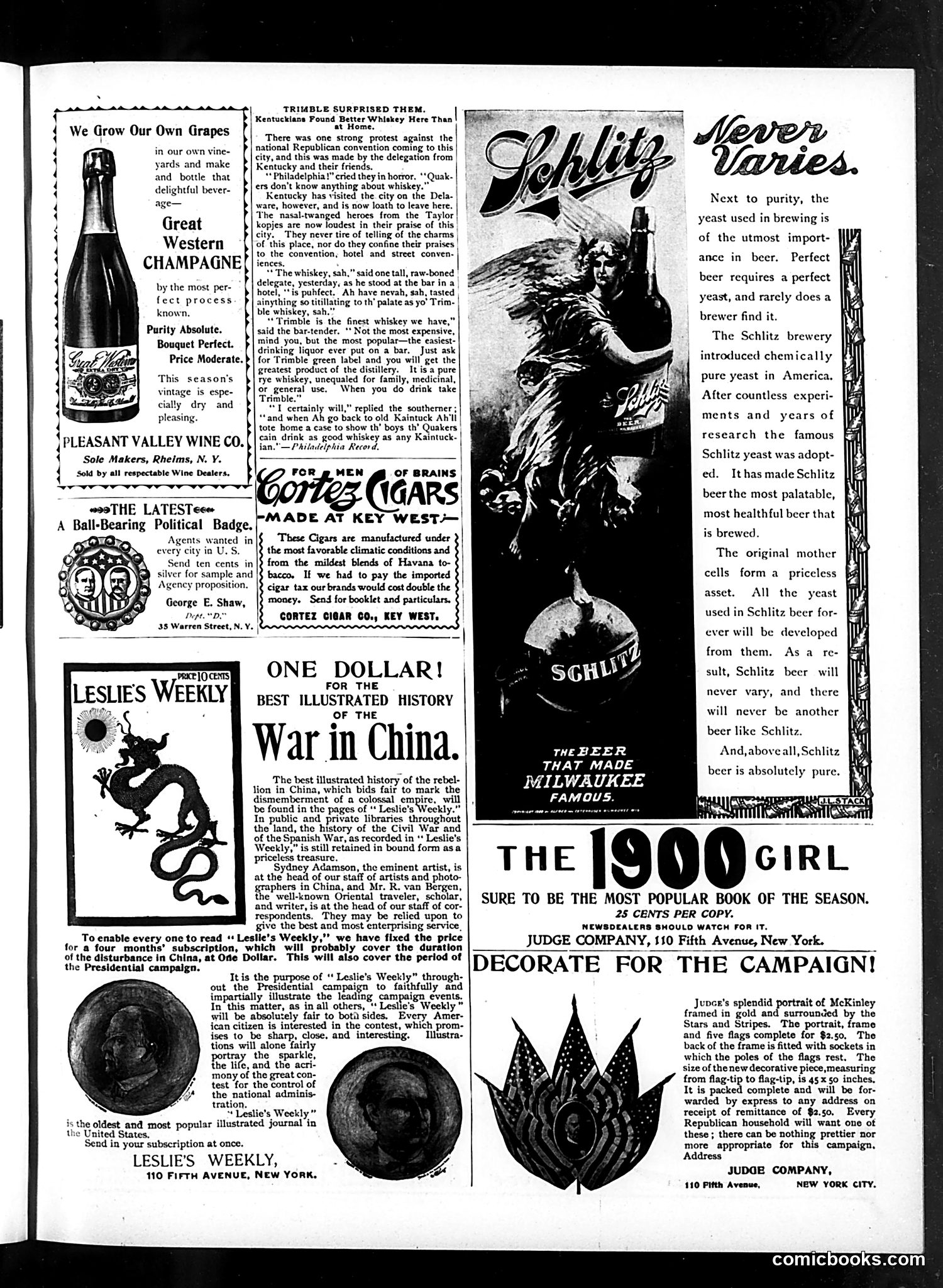
This page is primarily advertising, not political satire or cartoons. The main content consists of product advertisements for: - Great Western Champagne and Pleasant Valley Wine (top left) - Trimble whiskey (center, with anecdotal text about Kentucky delegates praising Philadelphia whiskey) - Cortez cigars (bottom center) - Leslie's Weekly publication and Judge Company decorative campaign items (bottom) - Schlitz beer (right side) - "The 1900 Girl" book (bottom right) The single quasi-political element is the **Trimble whiskey story**: Kentucky Republican convention delegates arrive skeptical of Philadelphia whiskey but are so impressed they praise it enthusiastically and plan to bring cases home. This appears promotional humor for Trimble brand, using the 1900 Republican convention as context, rather than political satire. The page lacks editorial cartoons or substantive political commentary. It functions essentially as a period advertising supplement.
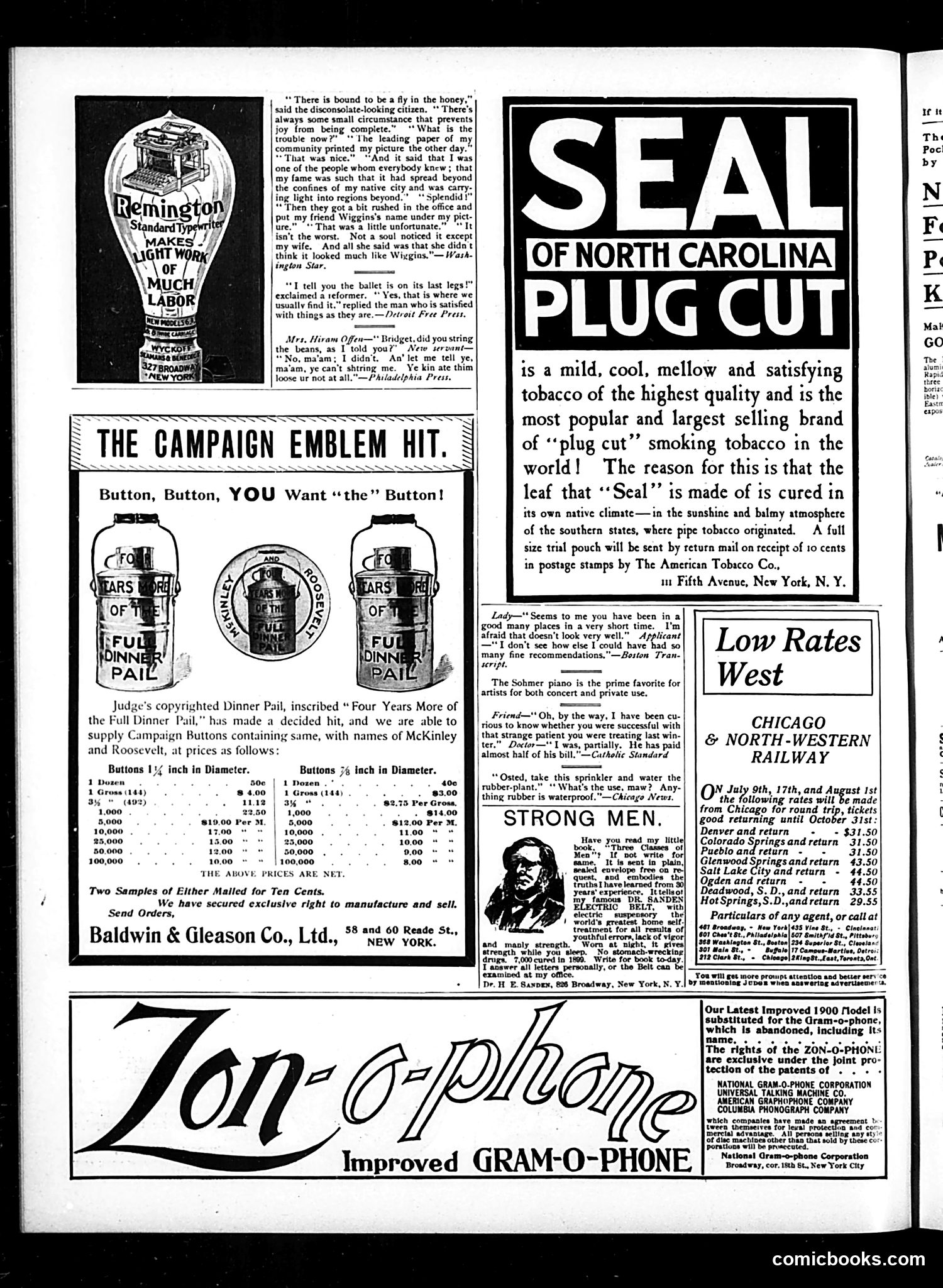
This page contains **mostly advertising** with brief humorous snippets. The main satirical content consists of short jokes rather than political cartoons: **The jokes mock:** - A man whose newspaper photo credit was given to his friend "Wiggins" instead—nobody noticed except his wife, who said it didn't look like Wiggins anyway - A reformer claiming ballet is "on its last legs"; the complacent reply that legs are indeed where you "usually find it" - A servant refusing to string beans, claiming she can't be "shringed" **The advertisements include:** - Remington typewriter ("makes light work of much labor") - Campaign buttons featuring McKinley and Roosevelt's "Full Dinner Pail" slogan (1904 election) - "Seal of North Carolina" plug-cut tobacco - Sohmer pianos - Zon-o-phone gramophones - Chicago & North-Western Railway excursion rates The page reflects early-1900s consumer culture and the 1904 presidential campaign, with gentle, domestic humor rather than sharp political satire.
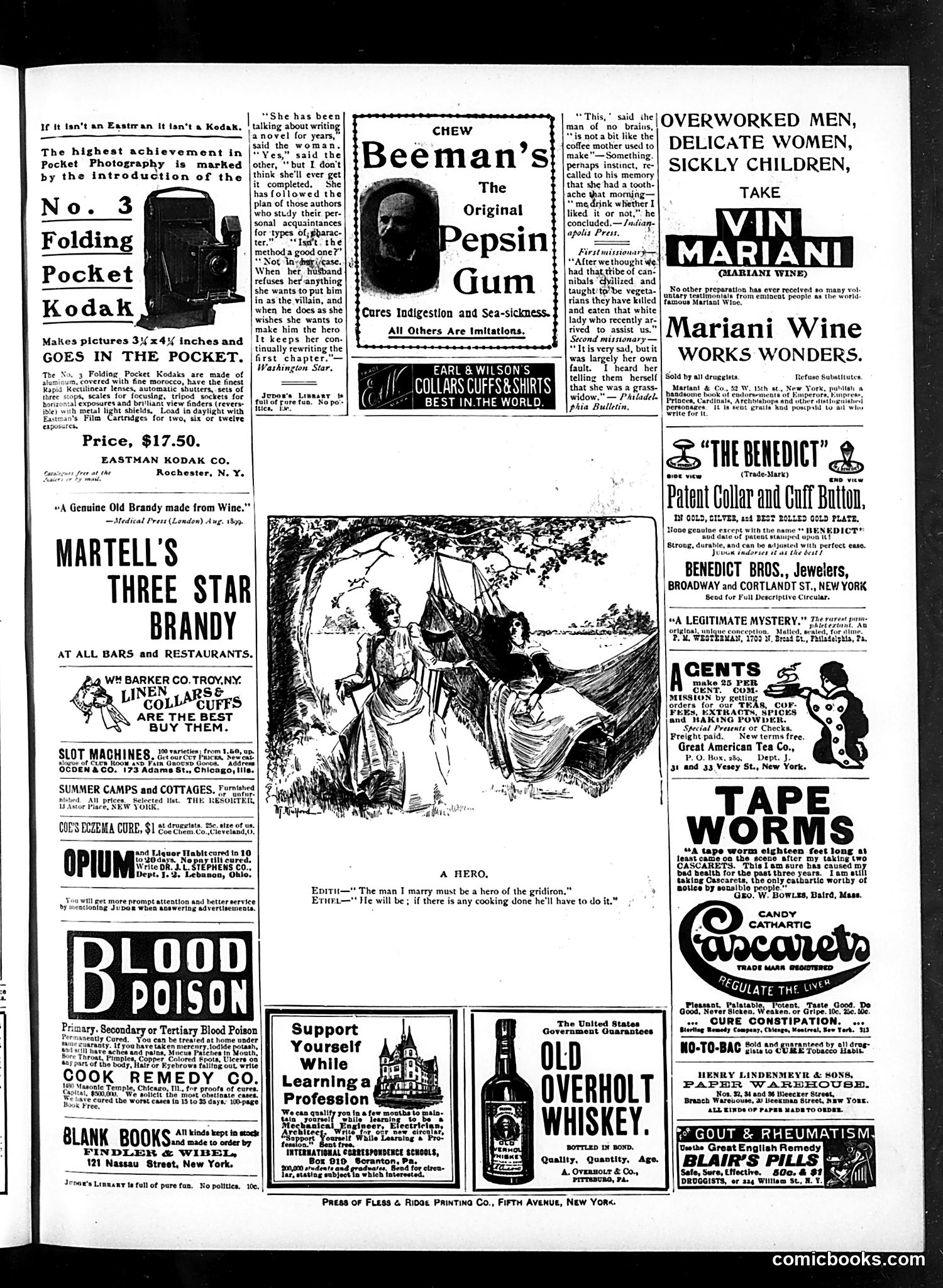
This page is primarily **advertising**, not editorial or satirical content. However, it opens with two brief comic exchanges that illustrate period humor: 1. **The novel-writing joke** (top left): A woman wants to write a novel but keeps rewriting the first chapter because her husband's behavior keeps changing her mind about whether he's a hero or villain—commentary on marital domestic disputes. 2. **The coffee joke** (right): A man complains his wife's coffee isn't like his mother's; the humor suggests his wife has a toothache, implying his tactlessness. 3. **The missionary joke** (center): A "grass widow" (separated woman) is eaten by "civilized" cannibals she's been teaching vegetarianism—dark satire about missionary work and social pretension. The remainder is **period advertisements** for products now recognizable as dubious or harmful: opium remedies, "blood poison" cures, tapeworm treatments, and wines with cocaine derivatives (Mariani Wine). These reveal contemporary attitudes toward patent medicine and unregulated pharmaceutical sales.
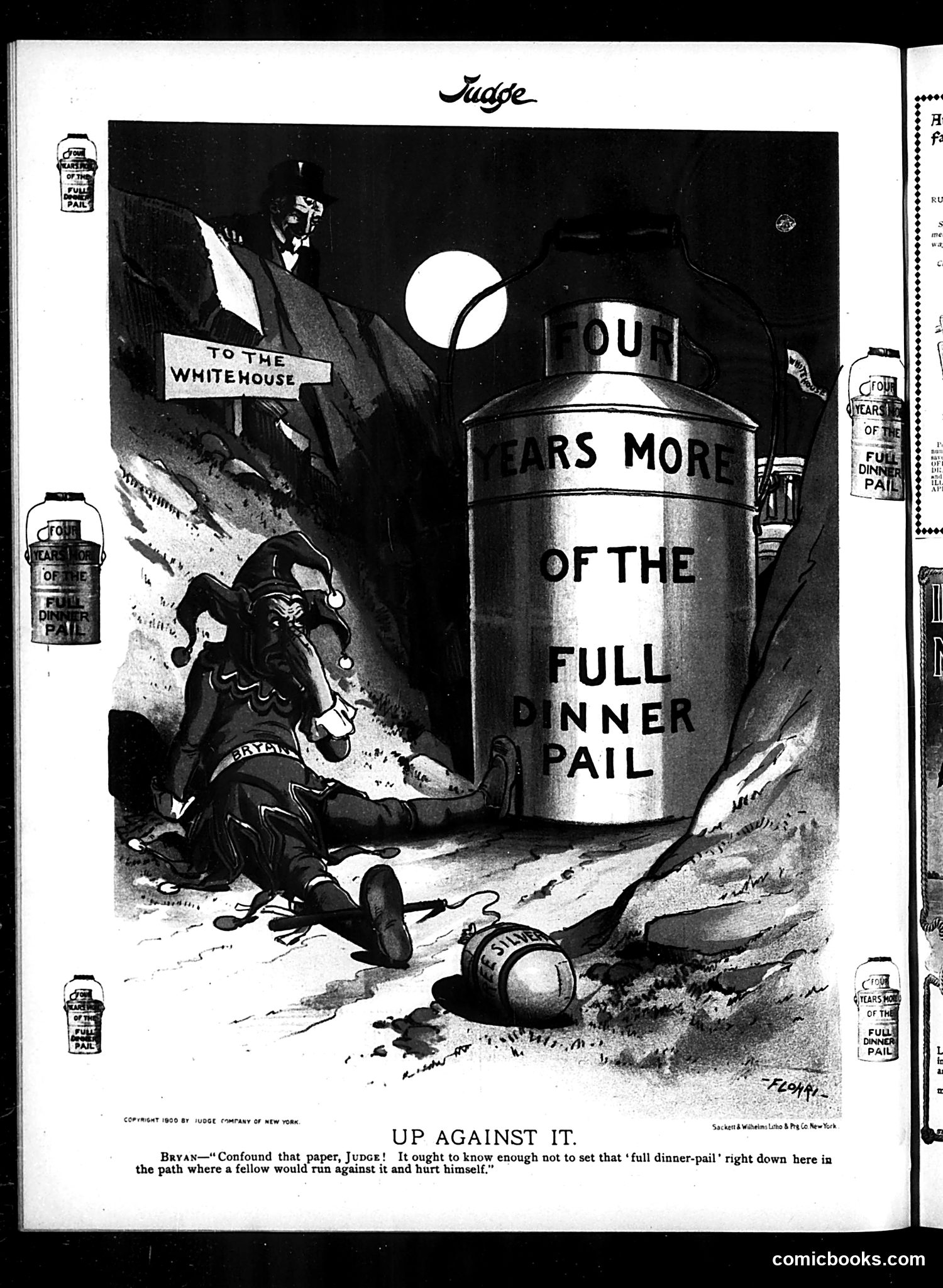
This Judge magazine cartoon satirizes William Jennings Bryan, the Democratic presidential candidate, during the 1900 election. The "full dinner pail" was the Republican campaign slogan promoting economic prosperity under President McKinley's administration. The cartoon depicts Bryan as a figure literally stumbling over a large pail labeled "Full Dinner Pail," suggesting he cannot escape or dismiss the Republicans' successful economic messaging. Bryan complains to Judge (the magazine itself) that this positive economic narrative shouldn't be placed "in his path" where it damages his campaign. The satire mocks Bryan's inability to counter the Republicans' core argument: that their policies delivered material prosperity to working Americans. The cartoon positions Bryan as victim of his own political weakness rather than blaming external circumstances.
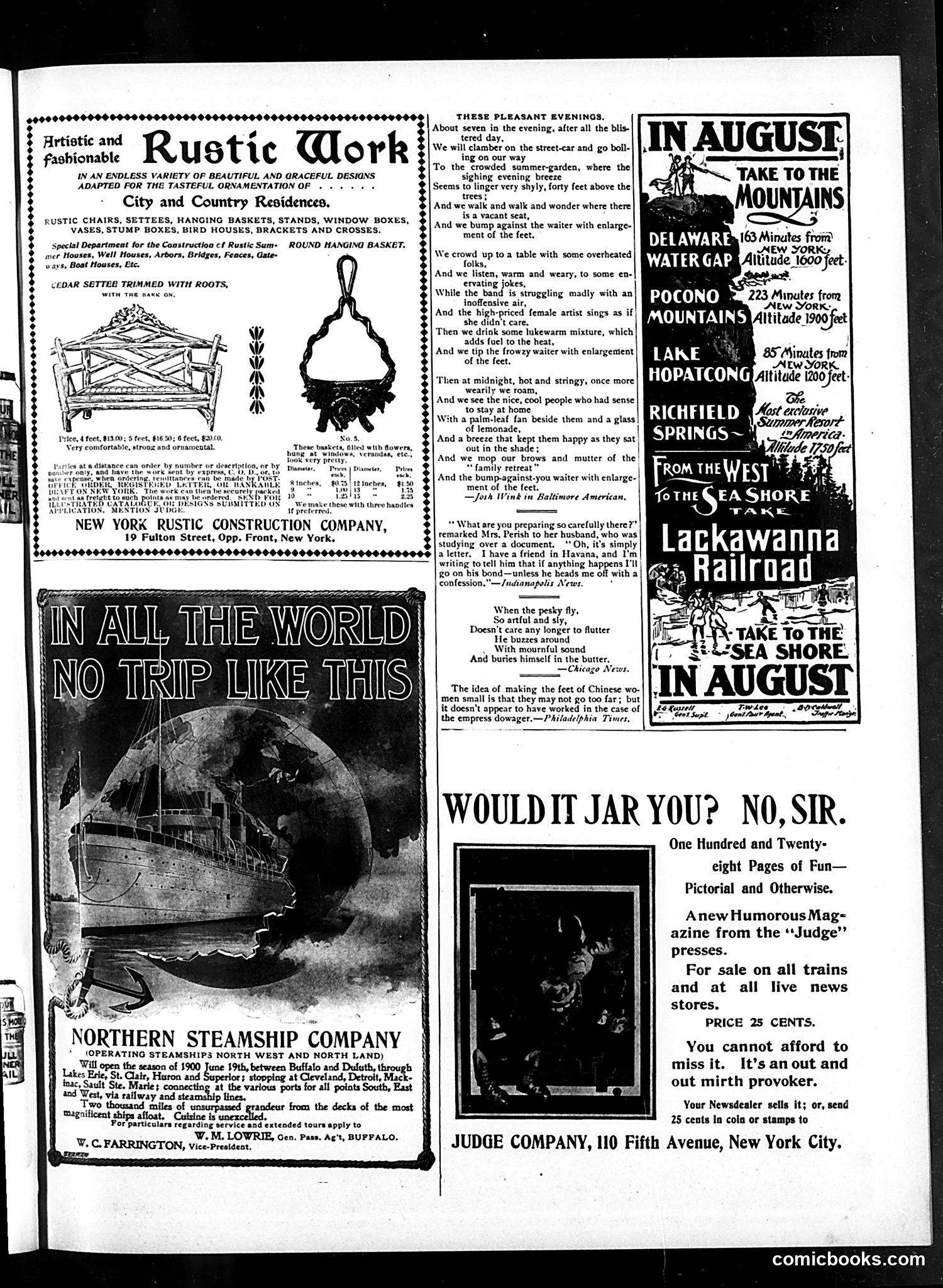
This page is primarily **advertisements and filler content** rather than political satire. The main elements are: **Advertisements:** - Rustic furniture and garden construction company - Northern Steamship Company (Great Lakes travel) - Lackawanna Railroad (mountain and seaside resort destinations) - Judge Magazine's new humorous publication **Editorial Content:** The page includes light verse and jokes typical of Judge's era: - "These Pleasant Evenings" — a humorous poem mocking the crowded, uncomfortable summer experience at public gardens (sweaty crowds, expensive overheated venues, tipping poorly-paid staff) - Brief quips about Chinese foot-binding and flies in butter — typical of period humor **Social Context for Modern Readers:** The content reflects early 1900s leisure: steam travel, resort destinations, and public summer gardens as entertainment. The complaints about crowds and heat suggest these venues were extremely popular and increasingly commercialized — suggesting satire of the commodification of leisure and the gap between advertised relaxation and actual crowded, sweaty reality. The page is essentially a **commercial/promotional issue** with light editorial humor supporting the advertisements.
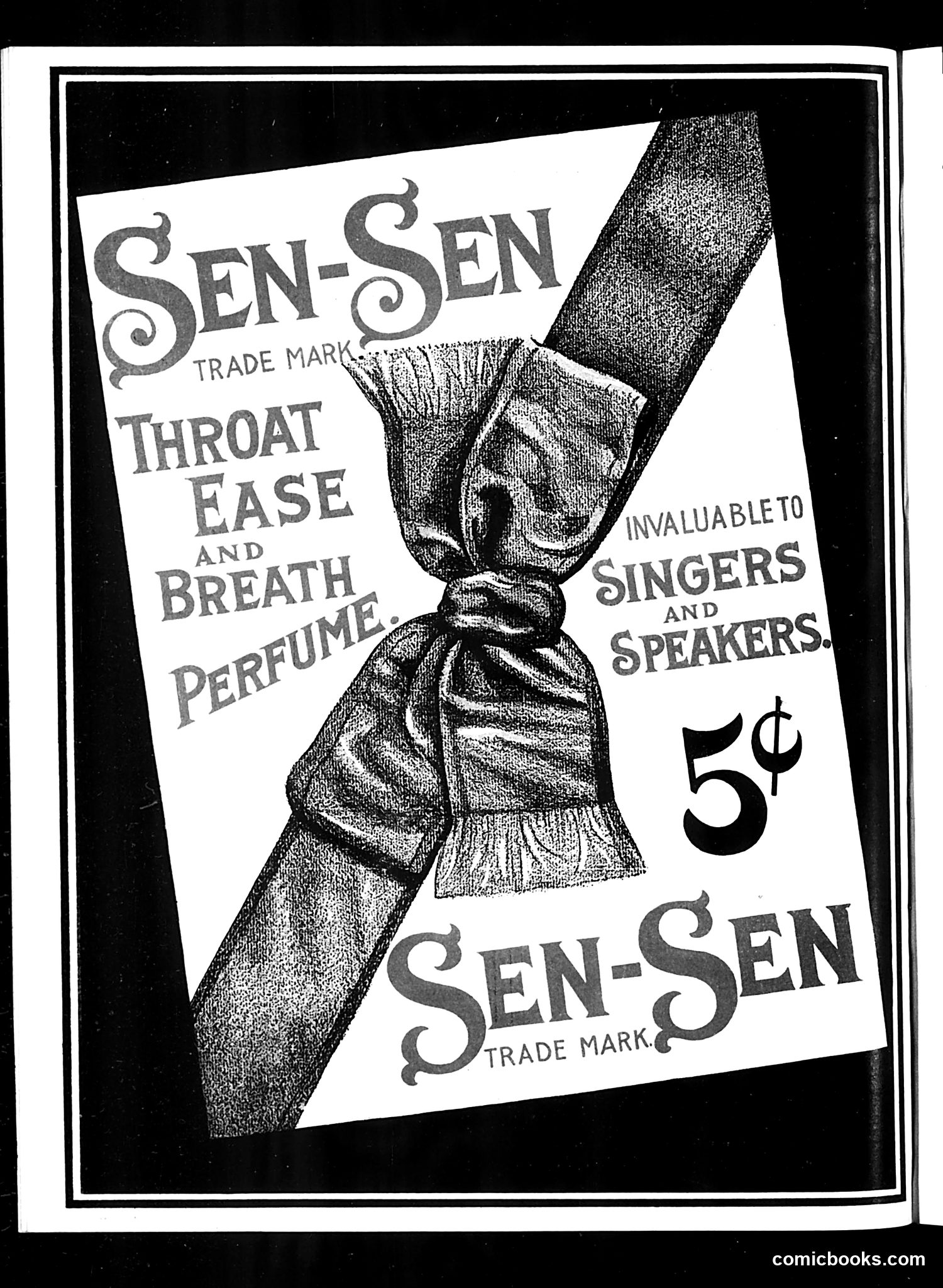
This is a vintage advertisement for Sen-Sen, a breath perfume/lozenge product marketed at 5 cents. The ad uses an illustration of a neck/throat with a decorative bow to visually emphasize the product's target area. The copy highlights Sen-Sen as "invaluable to singers and speakers"—positioning the product as essential for performers who need fresh breath and clear throats. The claims of "throat ease and breath perfume" suggest the product promised to soothe the throat while freshening breath, addressing practical concerns for professional vocalists and public speakers. This appears to be a straightforward product advertisement rather than political satire, typical of Judge magazine's commercial content alongside its editorial cartoons. The visual focus on the throat region serves as product branding rather than commentary.