
Pulp Fiction, 1956 · page 6 of 162
Authentic Science Fiction Monthly, No. 65 — page 6: what you’re looking at
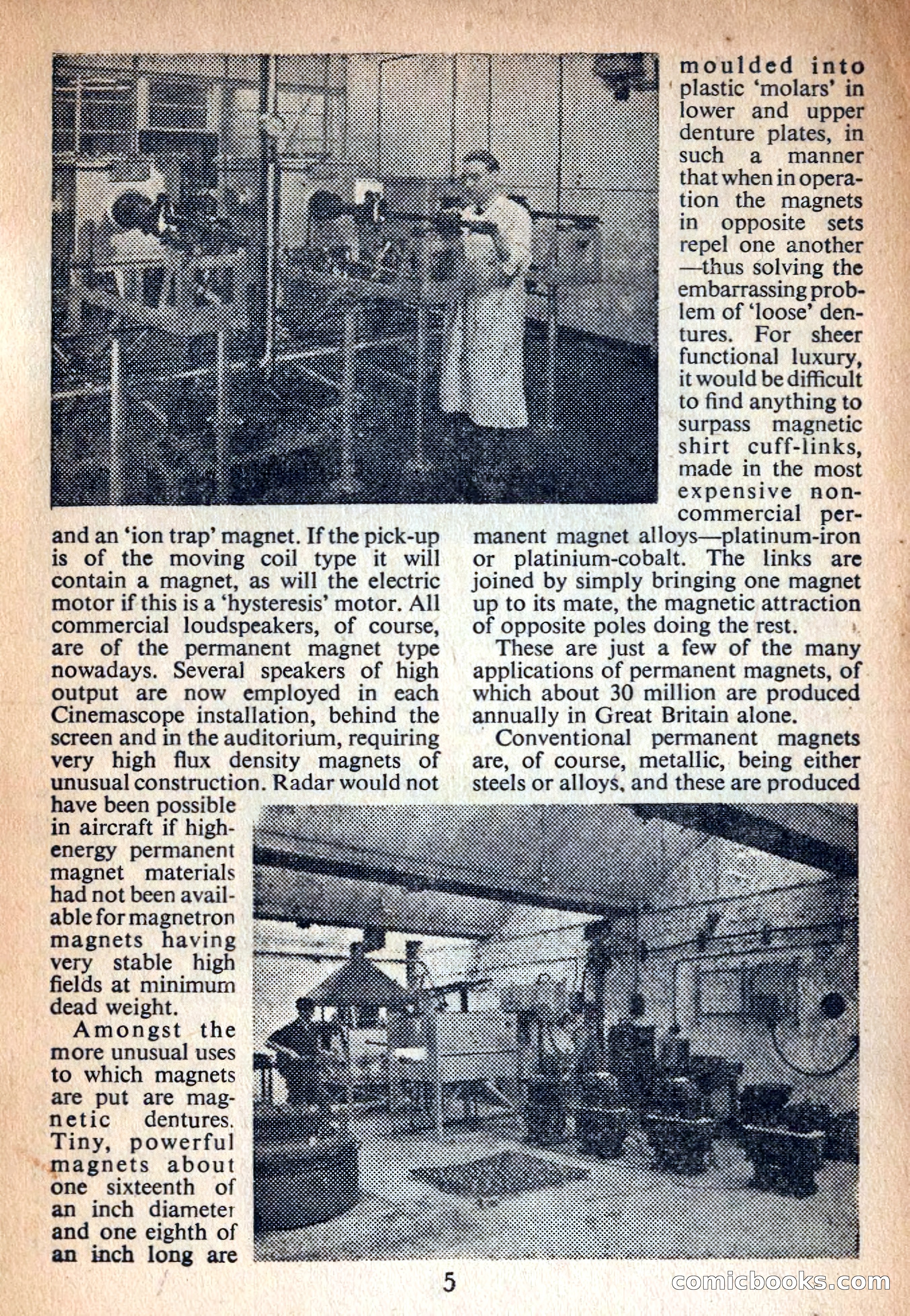
A restored page from Pulp Fiction, 1956. Page through the whole issue in the reader above.
📄 Transcribed text from this page (OCR, searchable)
Machine-transcribed from the original scan — historical spelling and the odd misread are preserved.
and an ‘ion trap’ magnet. If the pick-up is of the moving coil type it will contain a magnet, as will the electric motor if this is a ‘hysteresis’ motor. All commercial loudspeakers, of course, are of the permanent magnet type nowadays. Several speakers of high Output are now employed in each Cinemascope installation, behind the screen and in the auditorium, requiring very high flux density magnets of unusual construction. Radar would not have been possible in aircraft if high- energy permanent magnet materials had not been avail- able for magnetron magnets having very stable high fields at minimum dead weight. Amongst the more unusual uses to which magnets are put are mag- metic dentures. Tiny, powerful “magnets about one sixteenth of an inch diameter and one eighth of an inch long are ‘ plastic “role in denture plates, in that when in opera- tion the magnets in opposite sets repel one another —thus solving the embarrassing prob- lem of ‘loose’ den- tures. For sheer functional luxury, it would be difficult to find anything to surpass magnetic shirt cuff-links, made in the most expensive non- commercial per- manent magnet alloys—platinum-iron or platinium-cobalt. The links are joined by simply bringing one magnet up to its mate, the magnetic attraction of opposite poles doing the rest. , These are just a few of the many applications of permanent magnets, of which about 30 million are produced annually in Great Britain alone. Conventional permanent magnets are, of course, metallic, being either steels or Bihoys. on these are procpeeg comiiclooks.comnn moulded into ™ lower and upper such a manner