
Pulp Fiction, 1956 · page 7 of 162
Authentic Science Fiction Monthly, No. 65 — page 7: what you’re looking at
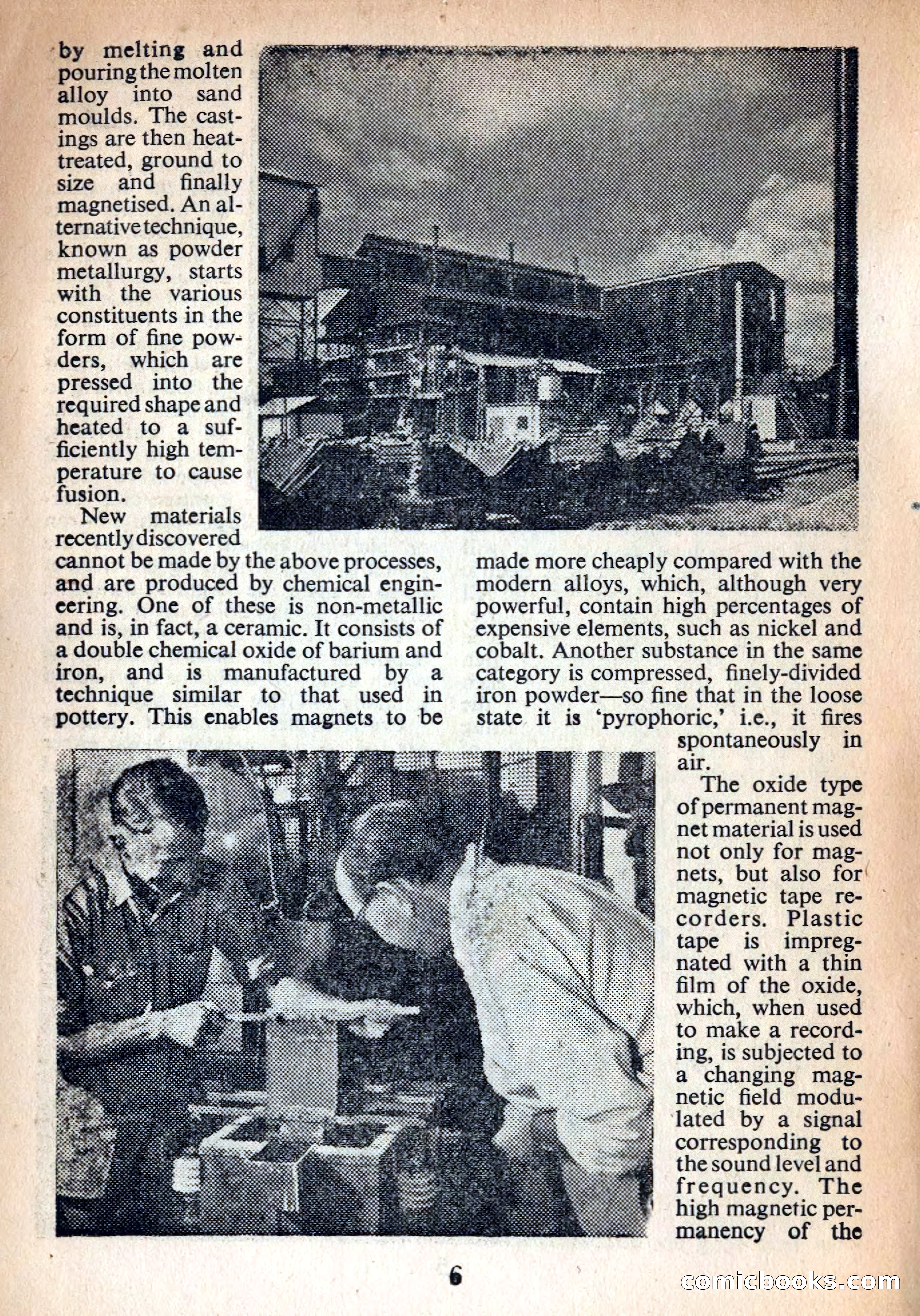
A restored page from Pulp Fiction, 1956. Page through the whole issue in the reader above.
📄 Transcribed text from this page (OCR, searchable)
Machine-transcribed from the original scan — historical spelling and the odd misread are preserved.
«by melting and pouring the molten alloy into sand moulds. The cast- ings are then heat- treated, ground to size and finally magnetised. An al- ternative technique, known as powder metallurgy, starts with the various constituents in the form of fine pow- ders, which are pressed into the required shape and heated to a suf- ficiently high tem- perature to cause fusion. New materials recently discovered cannot be made by the above processes, and are produced by chemical engin- eering. One of these is non-metallic and is, in fact, a ceramic. It consists of a double chemical oxide of barium and iron, and is manufactured by a technique similar to that used in pottery. This enables magnets to be made more cheaply compared with the modern alloys, which, although very powerful, contain high percentages of expensive elements, such as nickel and cobalt. Another substance in the same category is compressed, finely-divided iron powder—so fine that in the loose state it is ‘pyrophoric,’ i.e., it fires spontaneously in air. The oxide type of permanent mag- net material is used not only for mag- nets, but also for' magnetic tape re- corders. Plastic tape is impreg- nated with a thin film of the oxide, which, when used to make a record- ing, is subjected to a changing mag- netic field modu- lated by a signal corresponding to the sound level and frequency. The high magnetic per- manency of the commicbooks.comn