
Pulp Fiction, 1955 · page 127 of 146
Authentic Science Fiction Monthly No. 53 — page 127: what you’re looking at
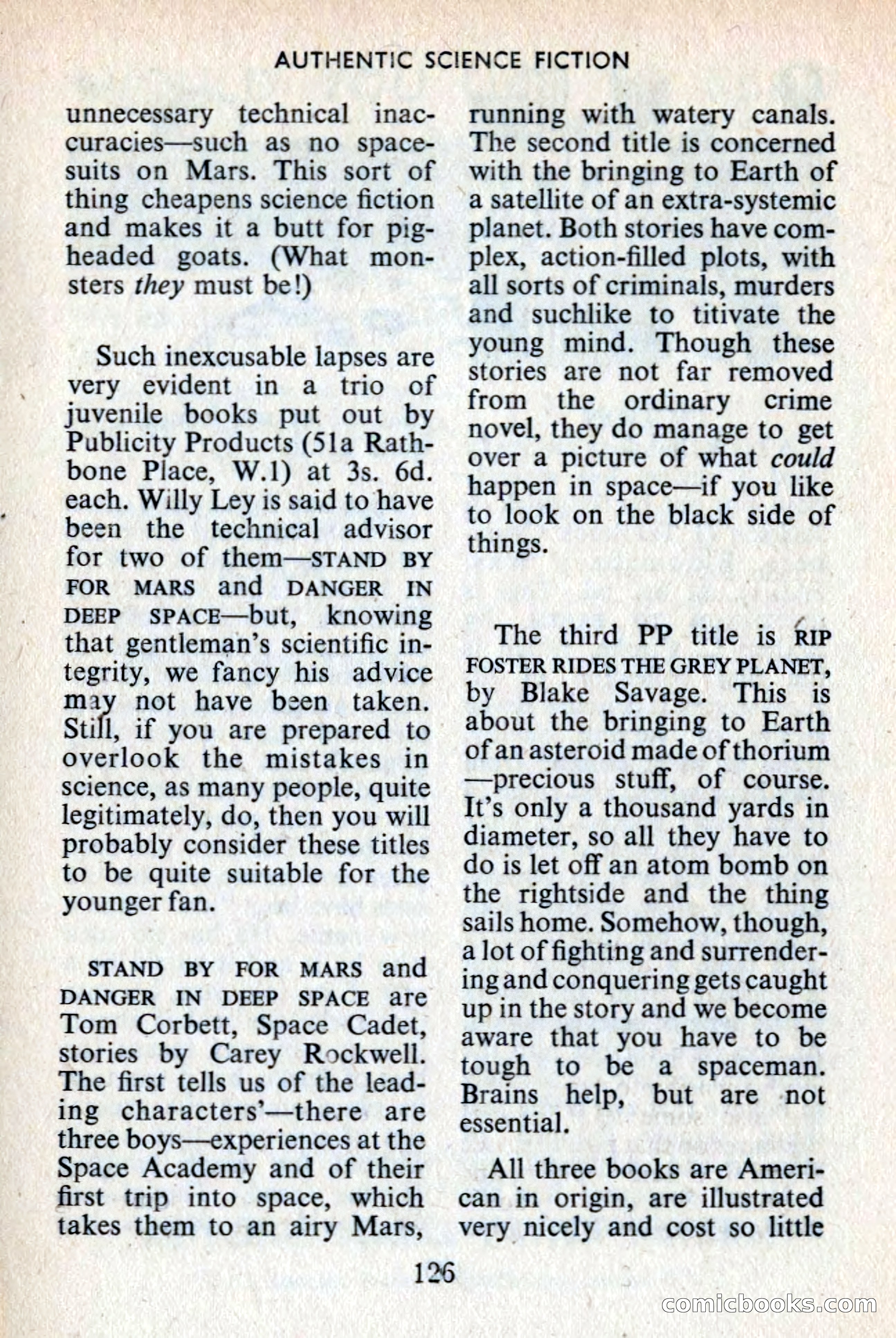
A restored page from Pulp Fiction, 1955. Page through the whole issue in the reader above.
📄 Transcribed text from this page (OCR, searchable)
Machine-transcribed from the original scan — historical spelling and the odd misread are preserved.
AUTHENTIC SCIENCE FICTION unnecessary technical inac- curacies—such as no space- suits on Mars. This sort of thing cheapens science fiction and makes it a butt for pig- headed goats. (What mon- sters they must be!) Such inexcusable lapses are very evident in a trio of juvenile books put out by Publicity Products (S5la Rath- bone Place, W.1) at 3s. 6d. each. Willy Ley is said to have been the technical advisor for two of them—STAND BY FOR MARS and DANGER IN DEEP SPACE—but, knowing that gentleman’s scientific in- tegrity, we fancy his advice may not have been taken. Stull, if you are prepared to overlook the mistakes in science, as many people, quite legitimately, do, then you will probably consider these titles to be quite suitable for the younger fan. STAND BY FOR MARS and DANGER IN DEEP SPACE are Tom Corbett, Space Cadet, stories by Carey Rockwell. The first tells us of the lead- ing characters’—there are three boys—experiences at the Space Academy and of their first trip into space, which takes them to an airy Mars, 126 running with watery canals. The second title is concerned with the bringing to Earth of a satellite of an extra-systemic planet. Both stories have com- plex, action-filled plots, with all sorts of criminals, murders and suchlike to titivate the young mind. Though these stories are not far removed from the ordinary crime novel, they do manage to get over a picture of what could happen in space—if you like to look on the black side of things. The third PP title is RiP FOSTER RIDES THE GREY PLANET, by Blake Savage. This is about the bringing to Earth of an asteroid made of thorium —precious stuff, of course. It’s only a thousand yards in diameter, so all they have to do is let off an atom bomb on the rightside and the thing sails home. Somehow, though, a lot of fighting and surrender- ing and conquering gets caught up in the story and we become aware that you have to be tough to be a spaceman. Brains help, but are -not essential. All three books are Ameri- can in origin, are illustrated very nicely and cost so little comicloooks.conm