
Pulp Fiction, 1955 · page 126 of 146
Authentic Science Fiction Monthly No. 53 — page 126: what you’re looking at
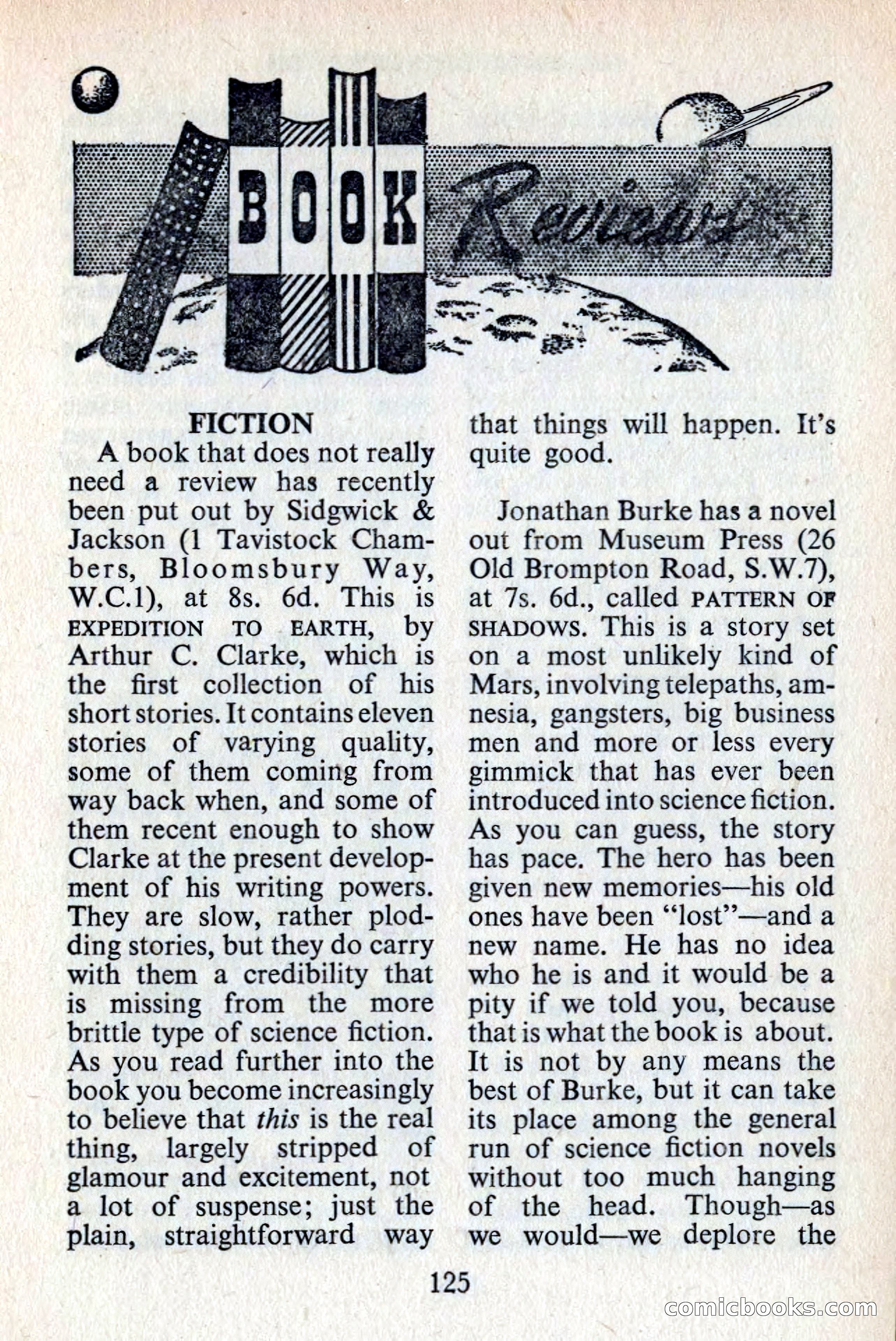
A restored page from Pulp Fiction, 1955. Page through the whole issue in the reader above.
📄 Transcribed text from this page (OCR, searchable)
Machine-transcribed from the original scan — historical spelling and the odd misread are preserved.
FICTION A book that does not really need a review has recently been put out by Sidgwick & Jackson (1 Tavistock Cham- bers, Bloomsbury Way, W.C.1), at 8s. 6d. This is EXPEDITION TO EARTH, by Arthur C. Clarke, which is the first collection of his short stories. It contains eleven stories of varying quality, some of them coming from way back when, and some of them recent enough to show Clarke at the present develop- ment of his writing powers. They are slow, rather plod- ding stories, but they do carry with them a credibility that is missing from the more brittle type of science fiction. As you read further into the book you become increasingly to believe that this is the real thing, largely stripped of glamour and excitement, not a lot of suspense; just the plain, straightforward way * hy a AL ah that things will happen. It’s quite good. : Jonathan Burke has a novel out from Museum Press (26 Old Brompton Road, S.W.7), at 7s. 6d., called PATTERN OF SHADOWS. This is a story set on a most unlikely kind of Mars, involving telepaths, am- nesia, gangsters, big business men and more or less every gimmick that has ever been introduced into science fiction. As you can guess, the story has pace. The hero has been given new memories—his old ones have been “‘lost”—and a new name. He has no idea who he is and it would be a pity if we told you, because that is what the book is about. It is not by any means the best of Burke, but it can take its place among the general run of science fiction novels without too much hanging of the head. Though—as we would—we deplore the 125 comiclbooks.conn