
Pulp Fiction, 1954 · page 84 of 146
Authentic Science Fiction Monthly No. 47 — page 84: what you’re looking at
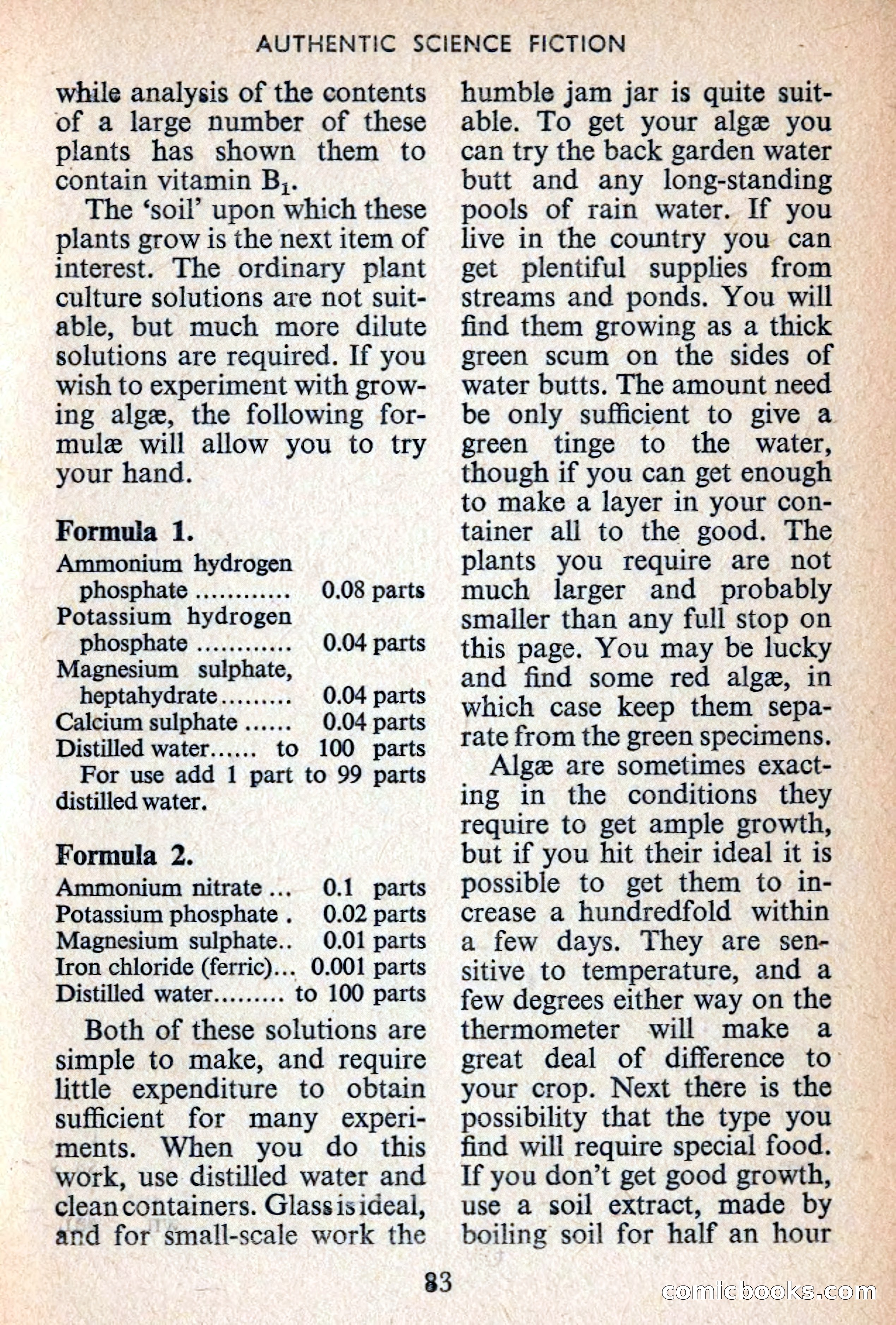
A restored page from Pulp Fiction, 1954. Page through the whole issue in the reader above.
📄 Transcribed text from this page (OCR, searchable)
Machine-transcribed from the original scan — historical spelling and the odd misread are preserved.
AUTHENTIC SCIENCE FICTION while analysis of the contents of a large number of these plants has shown them to contain vitamin B,. The ‘soil’ upon which these plants grow is the next item of interest. The ordinary plant culture solutions are not suit- able, but much more dilute solutions are required. If you wish to experiment with grow- ing alge, the following for- mule will allow you to try your hand. Formula 1. Ammonium hydrogen phosphate ............ 0.08 parts Potassium hydrogen phosphate ............ 0.04 parts Magnesium sulphate, heptahydrate......... 0.04 parts Calcium sulphate ...... 0.04 parts Distilled water...... to 100 parts For use add 1 part to 99 parts distilled water. Formula 2. Ammonium nitrate... 0.1 parts Potassium phosphate. 0.02 parts Magnesium sulphate.. 0.01 parts Iron chloride (ferric)... 0.001 parts Distilled water......... to 100 parts Both of these solutions are simple to make, and require little expenditure to obtain sufficient for many experi- ments. When you do this work, use distilled water and clean containers. Glass isideal, and for small-scale work the 83 humble jam jar is quite suit- able. To get your alge you can try the back garden water butt and any long-standing pools of rain water. If you live in the country you can get plentiful supplies from streams and ponds. You will find them growing as a thick green scum on the sides of water butts. The amount need be only sufficient to give a green tinge to the water, though if you can get enough to make a layer in your con- tainer all to the good. The plants you require are not much larger and probably smaller than any full stop on this page. You may be lucky and find some red alge, in which case keep them sepa- rate from the green specimens. Alge are sometimes exact- ing in the conditions they require to get ample growth, but if you hit their ideal it is possible to get them to in- crease a hundredfold within a few days. They are sen- sitive to temperature, and a few degrees either way on the thermometer will make a great deal of difference to your crop. Next there is the possibility that the type you find will require special food. If you don’t get good growth, use a soil extract, made by boiling soil for half an hour connicloooks.conrn