
Pulp Fiction, 1954 · page 83 of 146
Authentic Science Fiction Monthly No. 47 — page 83: what you’re looking at
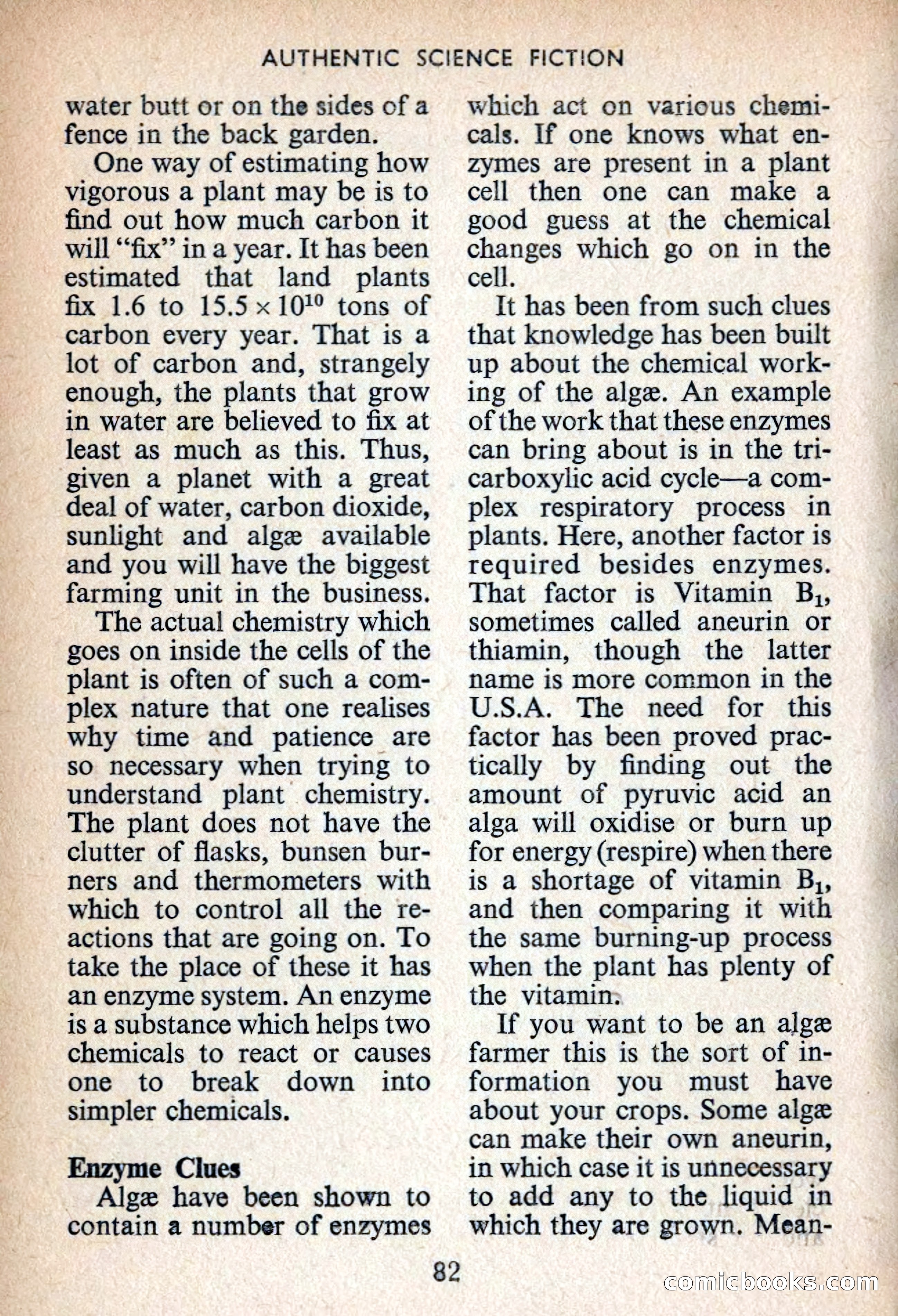
A restored page from Pulp Fiction, 1954. Page through the whole issue in the reader above.
📄 Transcribed text from this page (OCR, searchable)
Machine-transcribed from the original scan — historical spelling and the odd misread are preserved.
AUTHENTIC SCIENCE FICTION water butt or on the sides of a fence in the back garden. One way of estimating how vigorous a plant may be is to find out how much carbon it will “‘fix”’ in a year. It has been estimated that land plants fix 1.6 to 15.5 x 10% tons of carbon every year. That is a lot of carbon and, strangely enough, the plants that grow in water are believed to fix at least as much as this. Thus, given a planet with a great deal of water, carbon dioxide, sunlight and alge available and you will have the biggest farming unit in the business. The actual chemistry which goes on inside the cells of the plant is often of such a com- plex nature that one realises why time and patience are sO necessary when trying to understand plant chemistry. The plant does not have the clutter of flasks, bunsen bur- ners and thermometers with which to control all the re- actions that are going on. To take the place of these it has an enzyme system. An enzyme is a substance which helps two chemicals to react or causes one to break down into simpler chemicals. Enzyme Clues Alge have been shown to contain a number of enzymes 82 which act on various chemi- cals. If one knows what en- zymes are present in a plant cell then one can make a good guess at the chemical changes which go on in the cell. It has been from such clues that knowledge has been built up about the chemical work- ing of the alge. An example of the work that these enzymes can bring about is in the tri- carboxylic acid cycle—a com- plex respiratory process in plants. Here, another factor is required besides enzymes. That factor is Vitamin B,, sometimes called aneurin or thiamin, though the latter name is more common in the U.S.A. The need for this factor has been proved prac- tically by finding out the amount of pyruvic acid an alga will oxidise or burn up for energy (respire) when there is a shortage of vitamin B,, and then comparing it with the same burning-up process when the plant has plenty of the vitamin: : If you want to be an alge farmer this is the sort of in- formation you must have about your crops. Some alge can make their own aneurin, in which case it is unnecessary to add any to the liquid in which they are grown. Mean- connicloooks.comn)