
Pulp Fiction, 1954 · page 131 of 162
Authentic Science Fiction Monthly, Issue 45 — page 131: what you’re looking at
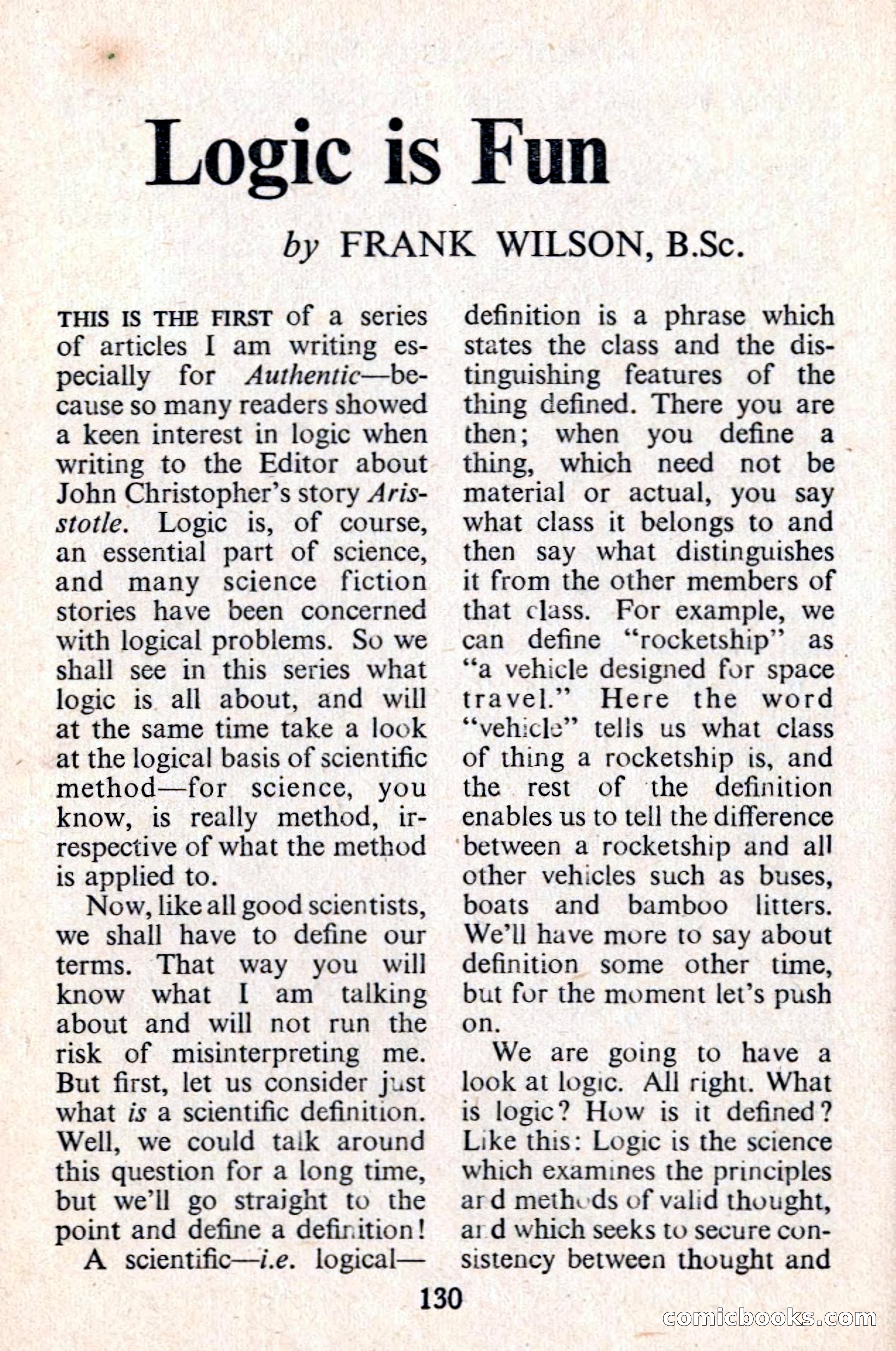
A restored page from Pulp Fiction, 1954. Page through the whole issue in the reader above.
📄 Transcribed text from this page (OCR, searchable)
Machine-transcribed from the original scan — historical spelling and the odd misread are preserved.
Logic is Fun by FRANK WILSON, BSc. THIS IS THE FIRST Of a series of articles [ am writing es- pecially for Authentic—be- cause so many readers showed a keen interest in logic when writing to the Editor about John Christopher’s story Aris- Stotle. Logic is, of course, an essential part of science, and many science fiction stories have been concerned with logical problems. So we shall see in this series what logic is all about, and will at the same time take a look at the logical basis of scientific method—for science, you know, is really method, ir- respective of what the method is applied to. Now, like all good scientists, we shall have to define our terms. That way you will know what I[ am talking about and will not run the risk of misinterpreting me. But first, let us consider just what is a scientific definition. Well, we could taik around this question for a long time, but we'll go straight to the point and define a definition! A scientific—i.e. logical— definition is a phrase which states the class and the dis- tinguishing features of the thing defined. There you are then; when you define a thing, which need not be material or actual, you say what class it belongs to and then say what distinguishes it from the other members of that class. For example, we can define “rocketship” as “‘a vehicle designed for space travel.”” Here the word “vehicle” telis us what class of thing a rocketship is, and the rest of the definition enables us to tell the difference ‘between a rocketship and all other vehicles such as buses, boats and bamboo litters. We’ll have more to say about definition some other time, but for the moment let’s push on. We are going to have a look at logic. All right. What is logic? How is it defined? Like this: Logic is the science which examines the principles ard metheds of valid thought, ar d which seeks to secure con- sistency between thought and 130 commicloooks.com