
Pulp Fiction, 1954 · page 138 of 162
Authentic Science Fiction Monthly No. 44 — page 138: what you’re looking at
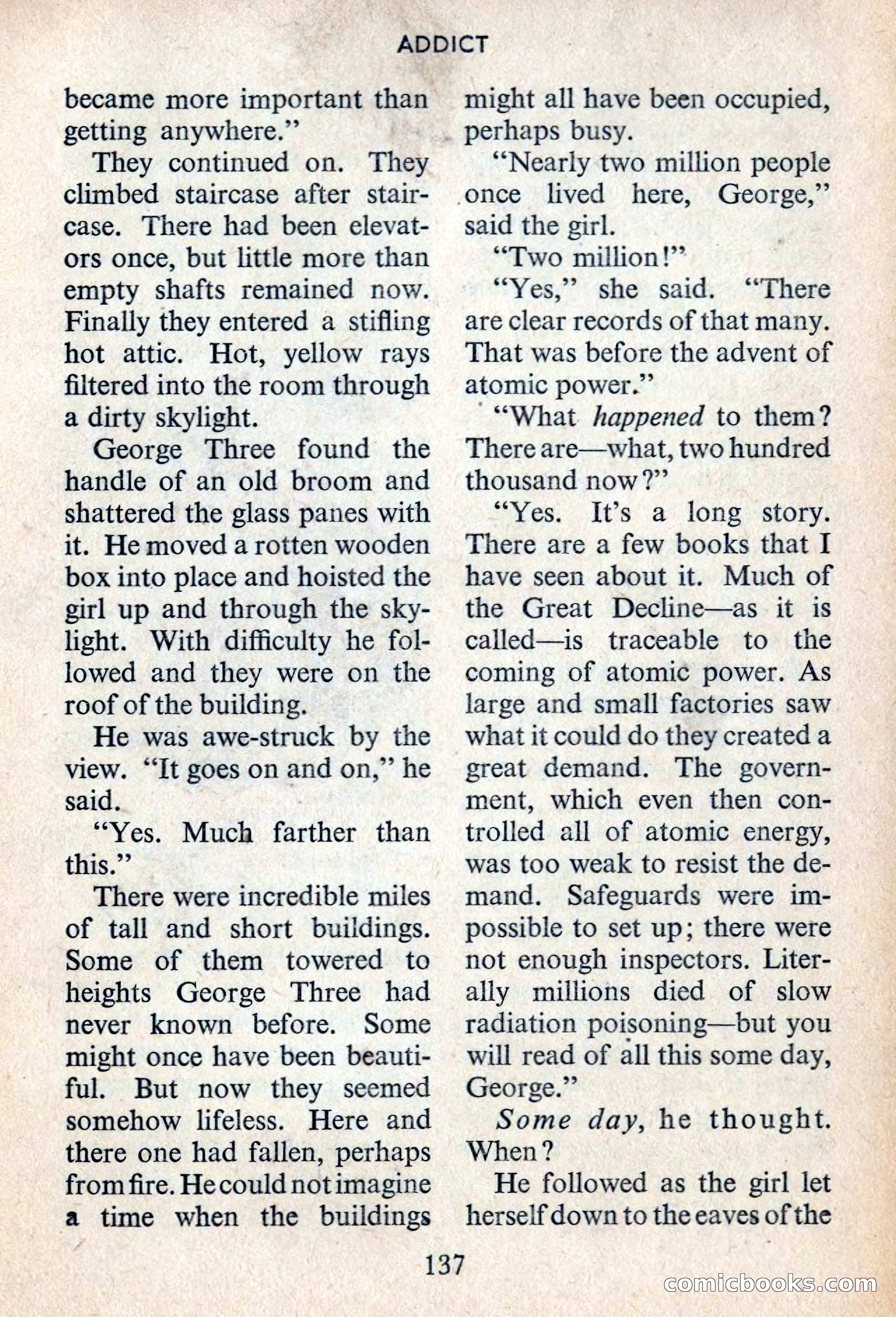
A restored page from Pulp Fiction, 1954. Page through the whole issue in the reader above.
📄 Transcribed text from this page (OCR, searchable)
Machine-transcribed from the original scan — historical spelling and the odd misread are preserved.
ADDICT became more important than getting anywhere.” They continued on. They climbed staircase after stair- case. There had been elevat- ors once, but little more than empty shafts remained now. Finally they entered a stifling hot attic. Hot, yellow rays filtered into the room through a dirty skylight. George Three found the handle of an old broom and shattered the glass panes with it. He moved a rotten wooden box into place and hoisted the girl up and through the sky- light. With difficulty he fol- lowed and they were on the roof of the building. He was awe-struck by the view. ““It goes on and on,” he said. . Much farther than There were incredible miles of tall and short buiidings. Some of them towered to heights George Three had never known before. Some might once have been beauti- ful. But now they seemed somehow lifeless. Here and there one had fallen, perhaps from fire. He could not imagine a time when the buildings 137 might all have been occupied, _ perhaps busy. “Nearly two million people once lived here, George,” said the girl. “‘Two million!” *Yes,”’ she said. “There are clear records of that many. That was before the advent of atomic power.” “What happened to them? There are—what, two hundred thousand now?” “Yes. It’s a long story. There are a few books that I have seen about it. Much of the Great Decline—as it is called—is traceable to the coming of atomic power. As large and small factories saw what it could do they created a great demand. The govern- ment, which even then con- trolled all of atomic energy, was too weak to resist the de- mand. Safeguards were im- possible to set up; there were not enough inspectors. Liter- ally millions died of slow radiation poisoning—but you will read of all this some day, George.” Some day, he thought. When? He followed as the girl let herself down to the eaves of the comicloooks.conn