
Pulp Fiction, 1954 · page 123 of 132
Astounding Science Fiction (British edition) — page 123: what you’re looking at
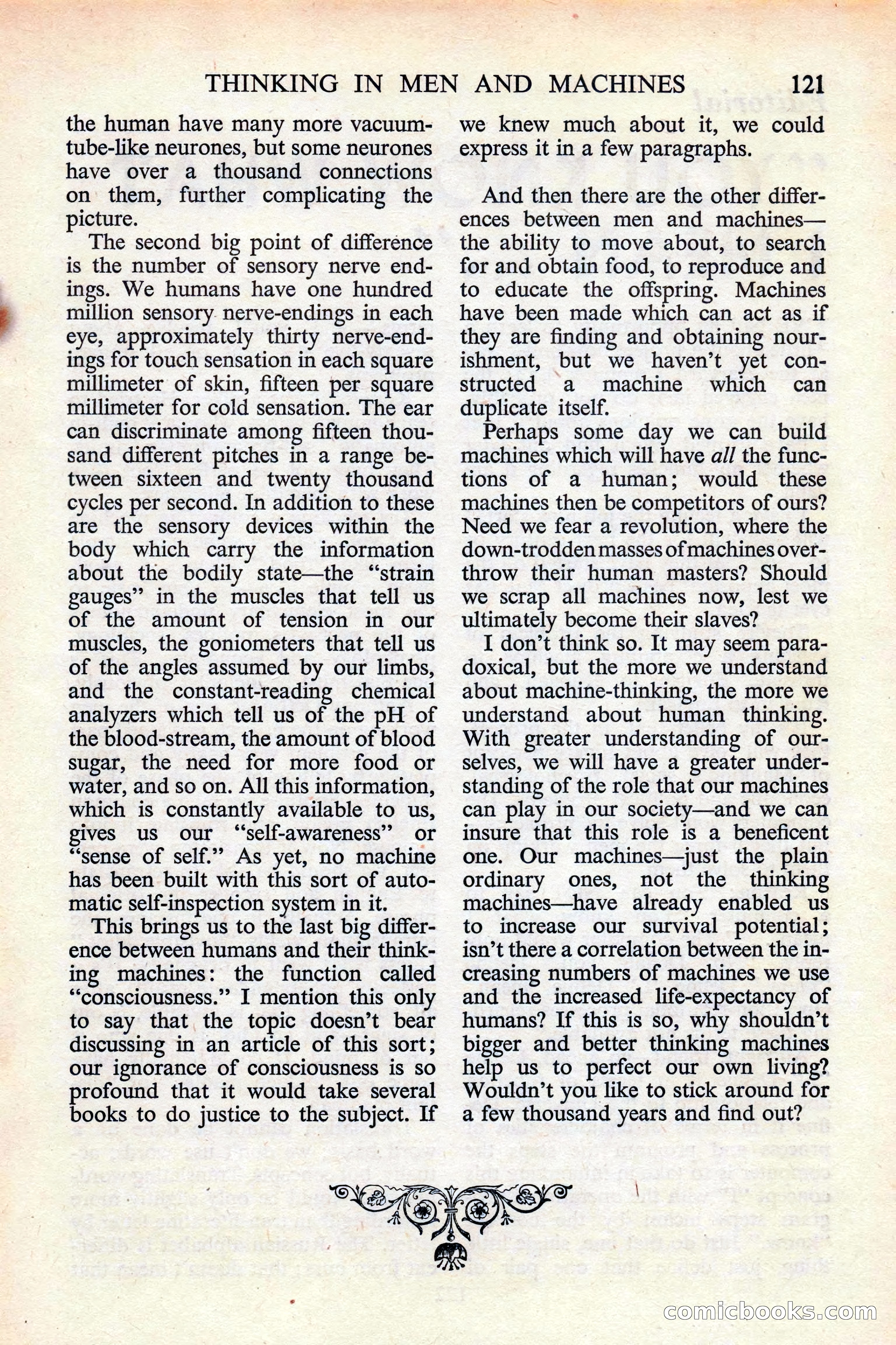
A restored page from Pulp Fiction, 1954. Page through the whole issue in the reader above.
📄 Transcribed text from this page (OCR, searchable)
Machine-transcribed from the original scan — historical spelling and the odd misread are preserved.
THINKING IN MEN AND MACHINES the human have many more vacuum- tube-like neurones, but some neurones have over a thousand connections on them, further complicating the picture. The second big point of difference is the number of sensory nerve end- ings. We humans have one hundred million sensory. nerve-endings in each eye, approximately thirty nerve-end- ings for touch sensation in each square millimeter of skin, fifteen per square millimeter for cold sensation. The ear can discriminate among fifteen thou- sand different pitches in a range be- tween sixteen and twenty thousand cycles per second. In addition to these are the sensory devices within the body which carry the information about the bodily state—the “strain gauges” in the muscles that tell us of the amount of tension in our muscles, the goniometers that tell us of the angles assumed by our limbs, and the constant-reading chemical analyzers which tell us of the pH of the blood-stream, the amount of blood sugar, the need for more food or water, and so on. All this information, which is constantly available to us, gives us our “‘self-awareness’ or “‘sense of self.”? As yet, no machine has been built with this sort of auto- matic self-inspection system in it. This brings us to the last big differ- ence between humans and their think- ing machines: the function called “consciousness.” I mention this only to say that the topic doesn’t bear discussing in an article of this sort; our ignorance of consciousness is SO profound that it would take several books to do justice to the subject. If 121 we knew much about it, we could express it in a few paragraphs. And then there are the other differ- ences between men and machines— the ability to move about, to search for and obtain food, to reproduce and to educate the offspring. Machines have been made which can act as if they are finding and obtaining nour- ishment, but we haven’t yet con- structed a machine which can duplicate itself. Perhaps some day we can build machines which will have a// the func- tions of a human; would these machines then be competitors of ours? Need we fear a revolution, where the down-trodden masses of machines over- throw their human masters? Should we scrap all machines now, lest we ultimately become their slaves? I don’t think so. It may seem para- doxical, but the more we understand about machine-thinking, the more we understand about human thinking. With greater understanding of our- selves, we will have a greater under- standing of the role that our machines can play in our society—and we can insure that this role is a beneficent one. Our machines—just the plain ordinary ones, not the thinking machines—have already enabled us to increase our survival potential; isn’t there a correlation between the in- creasing numbers of machines we use and the increased life-expectancy of humans? If this is so, why shouldn’t bigger and better thinking machines help us to perfect our own living? Wouldn’t you like to stick around for a few thousand years and find out? comiiclooolks. cor