
Pulp Fiction, 1953 · page 69 of 132
Astounding Science Fiction, British Edition — page 69: what you’re looking at
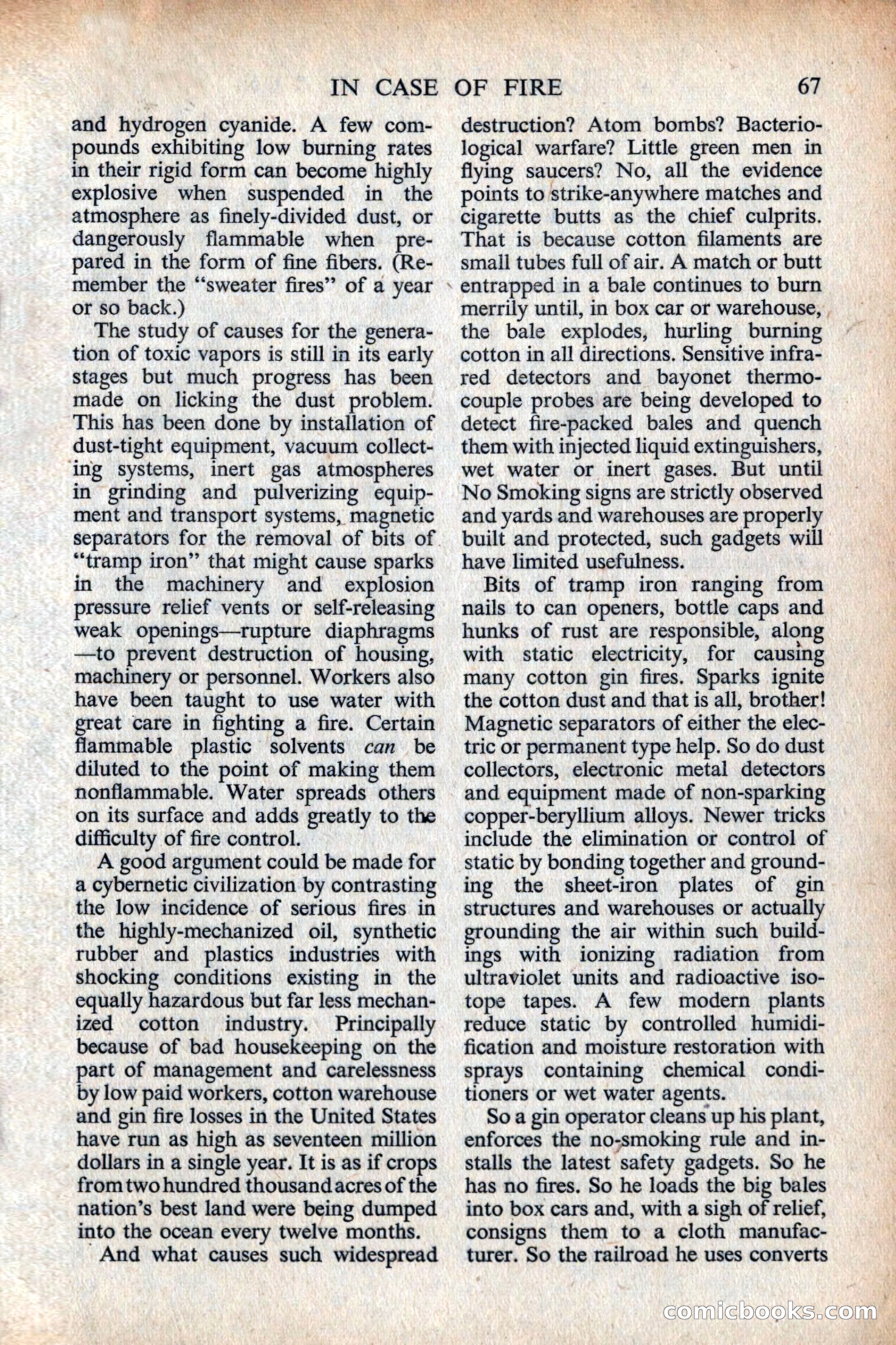
A restored page from Pulp Fiction, 1953. Page through the whole issue in the reader above.
📄 Transcribed text from this page (OCR, searchable)
Machine-transcribed from the original scan — historical spelling and the odd misread are preserved.
IN CASE and hydrogen cyanide. A few com- pounds exhibiting low burning rates in their rigid form can become highly explosive when suspended in the atmosphere as finely-divided dust, or dangerously flammable when _pre- pared in the form of fine fibers. (Re- member the “sweater fires” of a year or so back.) The study of causes for the genera- tion of toxic vapors is still in its early stages but much progress has been made on licking the dust problem. This has been done by installation of dust-tight equipment, vacuum collect- Ing systems, inert gas atmospheres in grinding and pulverizing equip- ment and transport systems, magnetic separators for the removal of bits of. “tramp iron” that might cause sparks in the machinery and _ explosion pressure relief vents or self-releasing weak openings—rupture diaphragms —to prevent destruction of housing, machinery or personnel. Workers also have been taught to use water with great care in fighting a fire. Certain flammable plastic solvents can be diluted to the point of making them nonflammable. Water spreads others on its surface and adds greatly to the difficulty of fire control. A good argument could be made for a cybernetic civilization by contrasting the low incidence of serious fires in the highly-mechanized oil, synthetic rubber and plastics industries with shocking conditions existing in the equally hazardous but far less mechan- ized cotton industry. Principally because of bad housekeeping on the part of management and carelessness by low paid workers, cotton warehouse and gin fire losses in the United States have run as high as seventeen million dollars in a single year. It is as if crops from two hundred thousand acres of the nation’s best land were being dumped into the ocean every twelve months. And what causes such widespread OF FIRE 67 destruction? Atom bombs? Bacterio- logical warfare? Little green men in flying saucers? No, all the evidence points to strike-anywhere matches and cigarette butts as the chief culprits. That is because cotton filaments are smail tubes full of air. A match or butt ‘ entrapped in a bale continues to burn merrily until, in box car or warehouse, , the bale explodes, hurling burning cotton in all directions. Sensitive infra- red detectors and bayonet thermo- couple probes are being developed to detect fire-packed bales and quench them with injected liquid extinguishers, wet water or inert gases. But until No Smoking signs are strictly observed and yards and warehouses are properly built and protected, such gadgets will have limited usefulness. Bits of tramp iron ranging from nails to can openers, bottle caps and hunks of rust are responsible, along with static electricity, for causing many cotton gin fires. Sparks ignite the cotton dust and that is all, brother! Magnetic separators of either the elec- tric or permanent type help. So do dust collectors, electronic metal detectors and equipment made of non-sparking copper-beryllium alloys. Newer tricks include the elimination or control of static by bonding together and ground- ing the sheet-iron plates of gin structures and warehouses or actually grounding the air within such build- ings with ionizing radiation from ultraviolet units and radioactive iso- tope tapes. A few modern plants reduce static by controlled humidi- fication and moisture restoration with sprays containing chemical condi- tioners or wet water agents. So a gin operator cleans up his plant, enforces the no-smoking rule and in- stalls the latest safety gadgets. So he has no fires. So he loads the big bales into box cars and, with a sigh of relief, consigns them to a cloth manufac- turer. So the railroad he uses converts comic loOolks.CcOmal