
Pulp Fiction, 1955 · page 123 of 133
Astounding Science Fiction, August 1955 (British Edition) — page 123: what you’re looking at
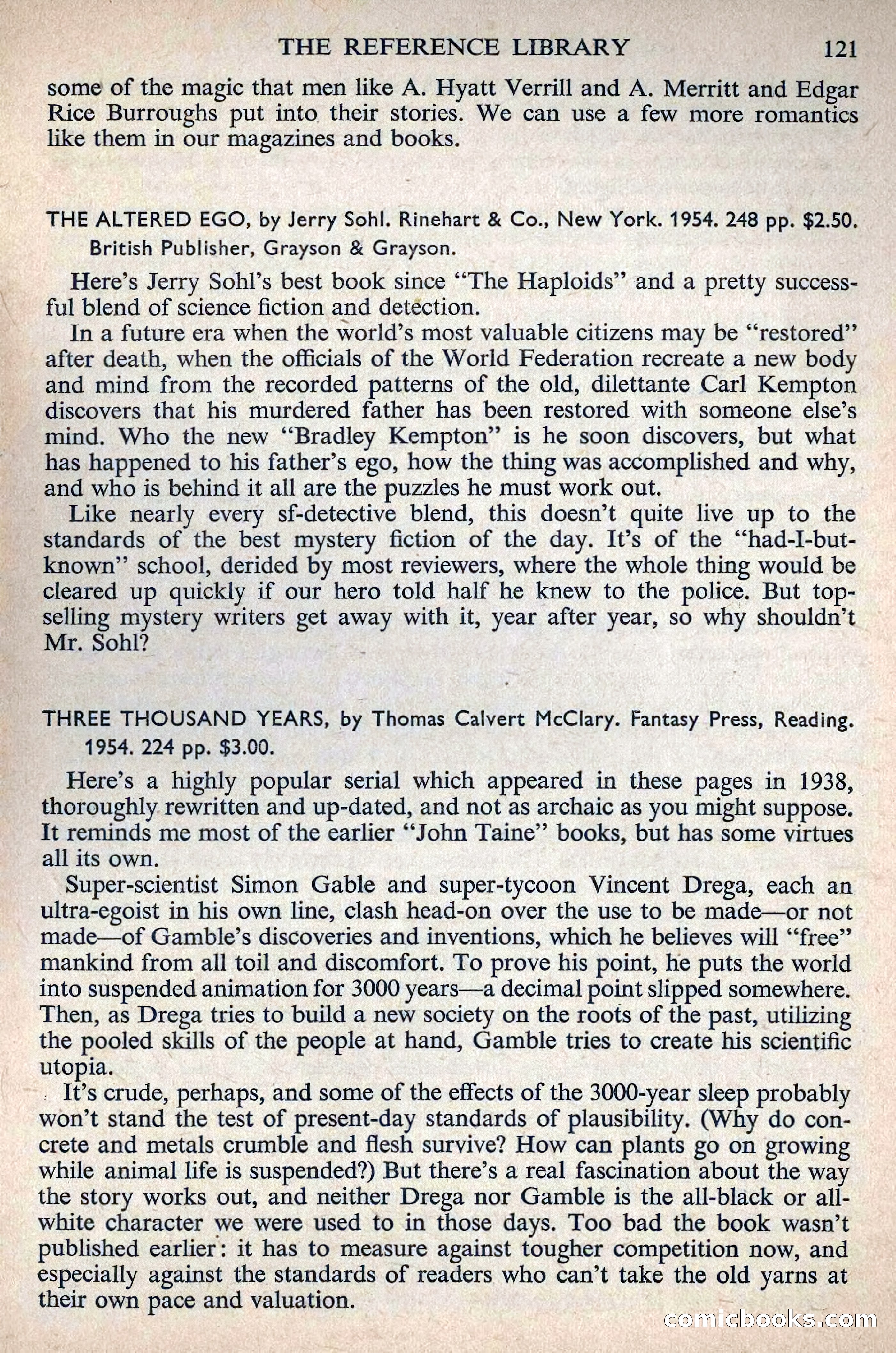
A restored page from Pulp Fiction, 1955. Page through the whole issue in the reader above.
📄 Transcribed text from this page (OCR, searchable)
Machine-transcribed from the original scan — historical spelling and the odd misread are preserved.
THE REFERENCE LIBRARY 121 some of the magic that men like A. Hyatt Verrill and A. Merritt and Edgar Rice Burroughs put into their stories. We can use a few more romantics like them in our magazines and books. THE ALTERED EGO, by Jerry Sohl. Rinehart & Co., New York. 1954. 248 pp. $2.50. British Publisher, Grayson & Grayson. Here’s Jerry Sohl’s best book since ““The Haploids’’ and a pretty success- ful blend of science fiction and detection. In a future era when the world’s most valuable citizens may be “restored” after death, when the officials of the World Federation recreate a new body and mind from the recorded patterns of the old, dilettante Carl Kempton discovers that his murdered father has been restored with someone else’s mind. Who the new “Bradley Kempton” is he soon discovers, but what has happened to his father’s ego, how the thing was accomplished and why, and who is behind it all are the puzzles he must work out. Like nearly every sf-detective blend, this doesn’t quite live up to the standards of the best mystery fiction of the day. It’s of the “‘had-I-but- known’’ school, derided by most reviewers, where the whole thing would be cleared up quickly if our hero told half he knew to the police. But top- selling mystery writers get away with it, year after year, so why shouldn’t Mr. Sohl? THREE THOUSAND YEARS, by Thomas Calvert McClary. Fantasy Press, Reading. 1954. 224 pp. $3.00. Here’s a highly popular serial which appeared in these pages in 1938, thoroughly rewritten and up-dated, and not as archaic as you might suppose. It reminds me most of the earlier “John Taine’’ books, but has some virtues all its own. Super-scientist Simon Gable and super-tycoon Vincent Drega, each an ultra-egoist in his own line, clash head-on over the use to be made—or not made—of Gamble’s discoveries and inventions, which he believes will ‘‘free”’ mankind from all toil and discomfort. To prove his point, he puts the world into suspended animation for 3000 years—a decimal point slipped somewhere. Then, as Drega tries to build a new society on the roots of the past, utilizing the pooled skills of the people at hand, Gamble tries to create his scientific utopia. It’s crude, perhaps, and some of the effects of the 3000-year sleep probably won’t stand the test of present-day standards of plausibility. (Why do con- crete and metals crumble and flesh survive? How can plants go on growing while animal life is suspended?) But there’s a real fascination about the way the story works out, and neither Drega nor Gamble is the all-black or all- white character we were used to in those days. Too bad the book wasn’t published earlier: it has to measure against tougher competition now, and especially against the standards of readers who can’t take the old yarns at their own pace and valuation. = | Commicoooks.conn