
Pulp Fiction, 1865 · page 314 of 399
The Argosy — page 314: what you’re looking at
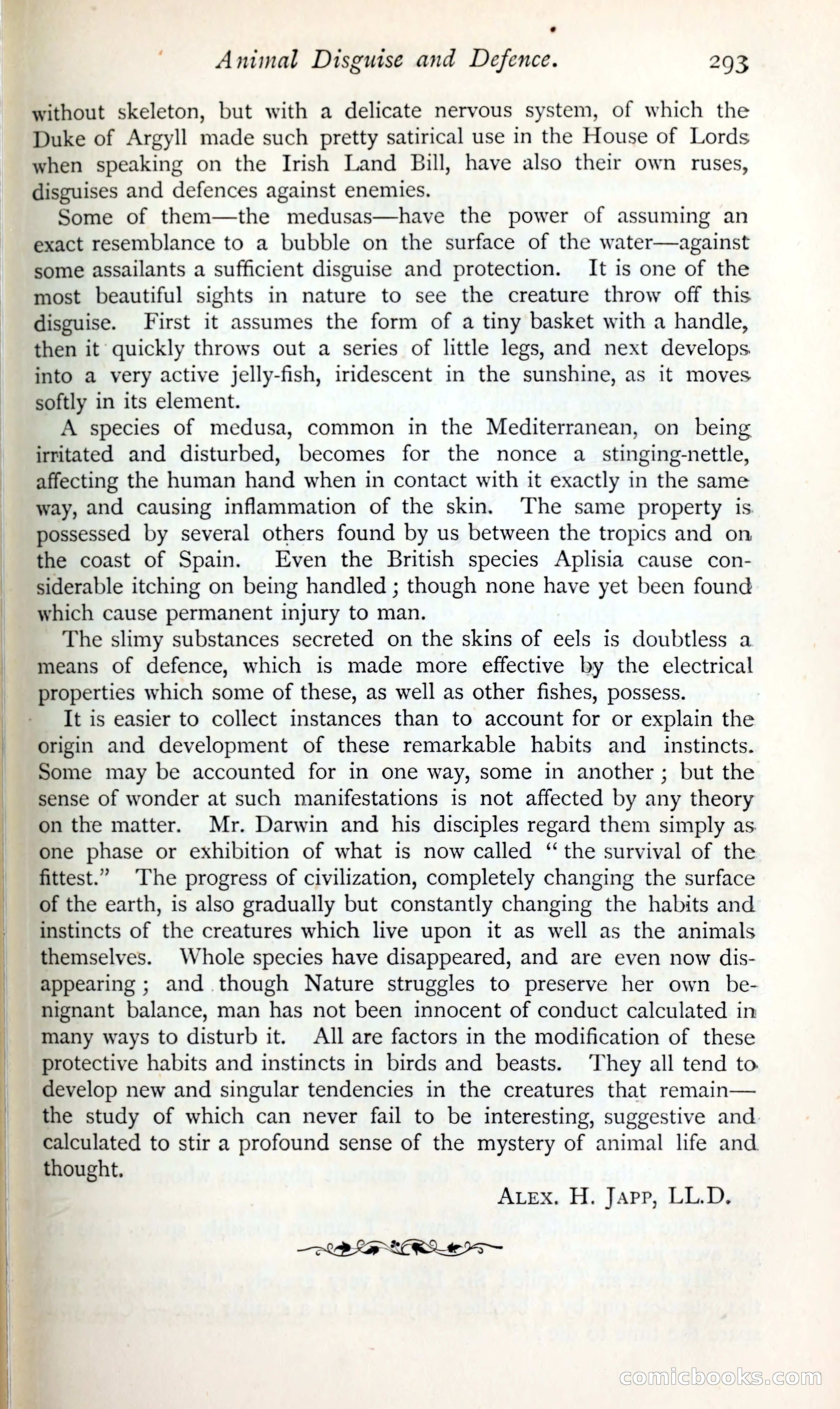
A restored page from Pulp Fiction, 1865. Page through the whole issue in the reader above.
📄 Transcribed text from this page (OCR, searchable)
Machine-transcribed from the original scan — historical spelling and the odd misread are preserved.
) | } ) | | Ammal Disguise and Defence. 293 without skeleton, but with a delicate nervous system, of which the Duke of Argyll made such pretty satirical use in the House of Lords when speaking on the Irish Land Bill, have also their own ruses, disguises and defences against enemies. Some of them—the medusas—have the power of assuming an exact resemblance to a bubble on the surface of the water—against some assailants a sufficient disguise and protection. It is one of the most beautiful sights in nature to see the creature throw off this disguise. First it assumes the form of a tiny basket with a handle, then it quickly throws out a series of little legs, and next develops. into a very active jelly-fish, iridescent in the sunshine, as it moves softly in its element. A species of medusa, common in the Mediterranean, on being irritated and disturbed, becomes for the nonce a stinging-nettle, affecting the human hand when in contact with it exactly in the same way, and causing inflammation of the skin. The same property is possessed by several others found by us between the tropics and on the coast of Spain. Even the British species Aplisia cause con- siderable itching on being handled ; though none have yet been found which cause permanent injury to man. The slimy substances secreted on the skins of eels is doubtless a means of defence, which is made more effective by the electrical properties which some of these, as well as other fishes, possess. It is easier to collect instances than to account for or explain the origin and development of these remarkable habits and instincts. Some may be accounted for in one way, some in another; but the sense of wonder at such manifestations is not affected by any theory on the matter. Mr. Darwin and his disciples regard them simply as one phase or exhibition of what is now called ‘the survival of the fittest.” The progress of civilization, completely changing the surface of the earth, is also gradually but constantly changing the habits and instincts of the creatures which live upon it as well as the animals themselves. Whole species have disappeared, and are even now dis- appearing ; and though Nature struggles to preserve her own be- nignant balance, man has not been innocent of conduct calculated in many ways to disturb it. All are factors in the modification of these protective habits and instincts in birds and beasts. ‘They all tend to develop new and singular tendencies in the creatures that remain— the study of which can never fail to be interesting, suggestive and calculated to stir a profound sense of the mystery of animal life and thought, ALEX. H. Japp, LL.D. PLP KER GomiilGcyaooks ) (SO) im