
Pulp Fiction, 1865 · page 313 of 399
The Argosy — page 313: what you’re looking at
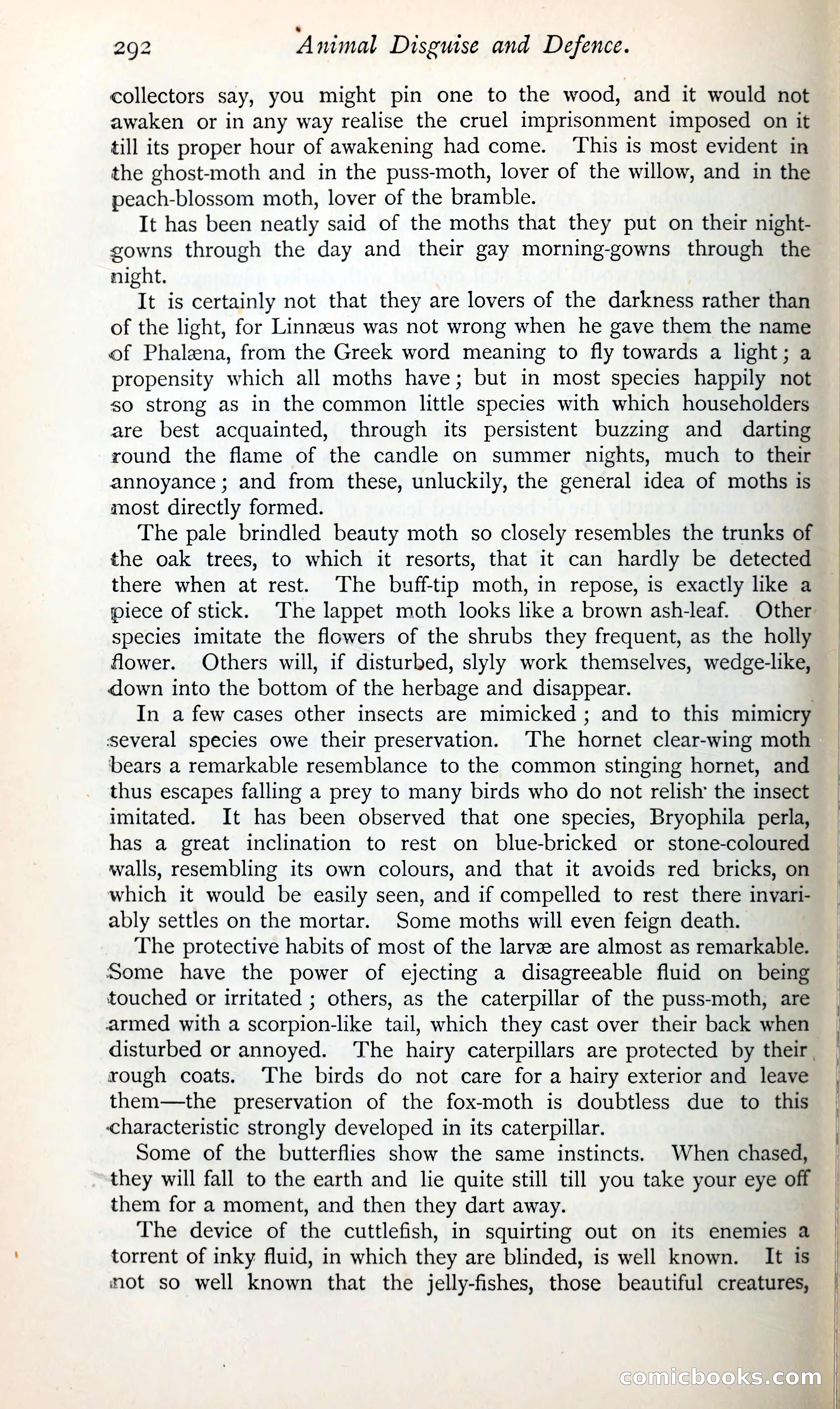
A restored page from Pulp Fiction, 1865. Page through the whole issue in the reader above.
📄 Transcribed text from this page (OCR, searchable)
Machine-transcribed from the original scan — historical spelling and the odd misread are preserved.
292 Animal Disguise and Defence. collectors say, you might pin one to the wood, and it would not awaken or in any way realise the cruel imprisonment imposed on it till its proper hour of awakening had come. ‘This is most evident in the ghost-moth and in the puss-moth, lover of the willow, and in the peach-blossom moth, lover of the bramble. It has been neatly said of the moths that they put on their night- gowns through the day and their gay morning-gowns through the night. Tt is certainly not that they are lovers of the darkness rather than of the light, for Linnzeus was not wrong when he gave them the name of Phalena, from the Greek word meaning to fly towards a light; a propensity which all moths have; but in most species happily not so strong as in the common little species with which householders are best acquainted, through its persistent buzzing and darting round the flame of the candle on summer nights, much to their annoyance ; and from these, unluckily, the general idea of moths is most directly formed. The pale brindled beauty moth so closely resembles the trunks of the oak trees, to which it resorts, that it can hardly be detected there when at rest. The buff-tip moth, in repose, is exactly like a piece of stick. ‘The lappet moth looks like a brown ash-leaf. Other species imitate the flowers of the shrubs they frequent, as the holly flower. Others will, if disturbed, slyly work themselves, wedge-like, down into the bottom of the herbage and disappear. | In a few cases other insects are mimicked ; and to this mimicry several species owe their preservation. ‘The hornet clear-wing moth bears a remarkable resemblance to the common stinging hornet, and thus escapes falling a prey to many birds who do not relish’ the insect imitated. It has been observed that one species, Bryophila perla, has a great inclination to rest on blue-bricked or stone-coloured walls, resembling its own colours, and that it avoids red bricks, on which it would be easily seen, and if compelled to rest there invari- ably settles on the mortar. Some moths will even feign death. The protective habits of most of the larvz are almost as remarkable. some have the power of ejecting a disagreeable fluid on being touched or irritated ; others, as the caterpillar of the puss-moth, are armed with a scorpion-like tail, which they cast over their back when disturbed or annoyed. The hairy caterpillars are protected by their. rough coats. The birds do not care for a hairy exterior and leave them—the preservation of the fox-moth is doubtless due to this ‘characteristic strongly developed in its caterpillar. Some of the butterflies show the same instincts. When chased, they will fall to the earth and lie quite still till you take your eye off them for a moment, and then they dart away. The device of the cuttlefish, in squirting out on its enemies a torrent of inky fluid, in which they are blinded, is well known. It is mot so well known that the jelly-fishes, those beautiful creatures, Gomicbooks.com | ee _— i | |