
Pulp Fiction, 1865 · page 312 of 399
The Argosy — page 312: what you’re looking at
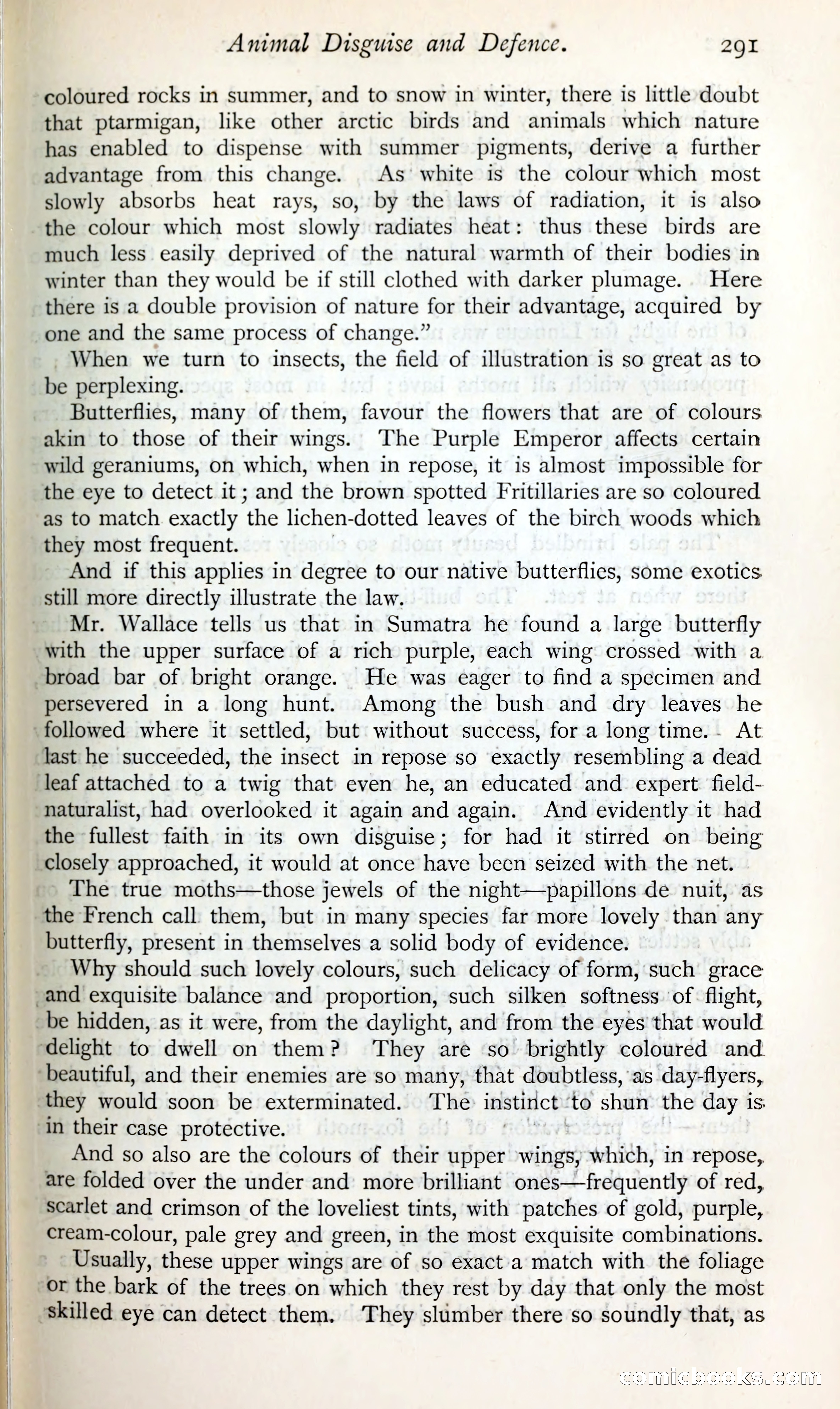
A restored page from Pulp Fiction, 1865. Page through the whole issue in the reader above.
📄 Transcribed text from this page (OCR, searchable)
Machine-transcribed from the original scan — historical spelling and the odd misread are preserved.
) | | | Ammal Disguise and Defence. 291 coloured rocks in summer, and to snow in winter, there is little doubt that ptarmigan, like other arctic birds and animals which nature has enabled to dispense with summer pigments, derive a further advantage from this change. As’ white is the colour which most slowly absorbs heat rays, so, by the laws of radiation, it is also the colour which most slowly radiates heat: thus these birds are much less easily deprived of the natural warmth of their bodies in winter than they would be if still clothed with darker plumage. Here there is a double provision of nature for their advantage, acquired by one and the same process of change.” When we turn to insects, the field of illustration is so great as to be perplexing. Butterflies, many of them, favour the flowers that are of colours akin to those of their wings. ‘The Purple Emperor affects certain wild geraniums, on which, when in repose, it is almost impossible for the eye to detect it; and the brown spotted Fritillaries are so coloured as to match exactly ‘the lichen-dotted leaves of the birch woods which they most frequent. And if this applies in degree to our native butterflies, some exotics still more directly illustrate the law. Mr. Wallace tells us that in Sumatra he found a large butterfly with the upper surface of a rich purple, each wing crossed with a broad bar of bright orange. He was eager to find a specimen and persevered in a long hunt. Among the bush and dry leaves he followed where it settled, but without success, for a long time.- At last he succeeded, the insect in repose so exactly resembling a dead leaf attached to a twig that even he, an educated and expert. field- naturalist, had overlooked it again and again. And evidently it had the fullest faith in its own disguise; for had it stirred on being closely approached, it would at once have been seized with the net. _ The true moths—those jewels of the night—papillons de nuit, as the French call them, but in many species far more lovely than any butterfly, present in themselves a solid body of evidence. Why should such lovely colours, such delicacy of form, such grace and exquisite balance and proportion, such silken softness. of: flight, _be hidden, as it were, from the daylight, and from the eyes that would ‘delight to dwell on them? ‘They are so brightly coloured and ‘beautiful, and their enemies are so many, that doubtless, as day-flyers, they would soon be exterminated. The instinct ‘to shah the day is ‘in their case protective. And so also are the colours of their upper sichaei which, in repose, are folded over the under and more brilliant ones—frequently of red, scarlet and crimson of the loveliest tints, with patches of gold, purple, cream-colour, pale grey and green, in the most exquisite combinations. Usually, these upper wings are of so exact a match with the foliage or the bark of the trees on which they rest by day that only the most “skilled eye can detect them. They slumber there so soundly that, as ECOMICOOoOKS () (©) mM