
Pulp Fiction, 1865 · page 147 of 399
The Argosy — page 147: what you’re looking at
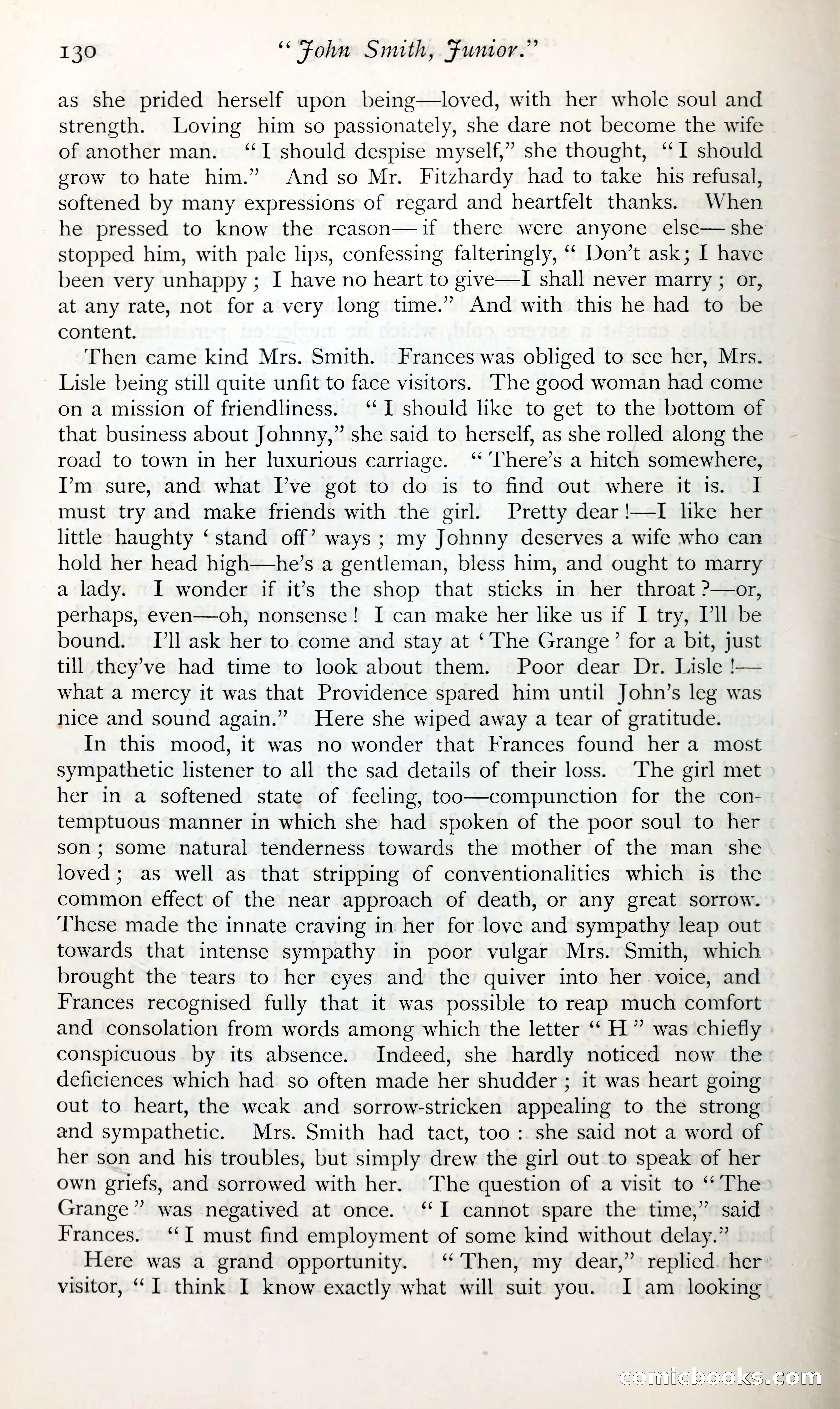
A restored page from Pulp Fiction, 1865. Page through the whole issue in the reader above.
📄 Transcribed text from this page (OCR, searchable)
Machine-transcribed from the original scan — historical spelling and the odd misread are preserved.
130 “Fohn Smith, Fumor.” as she prided herself upon being—loved, with her whole soul and strength. Loving him so passionately, she dare not become the wife of another man. “I should despise myself,” she thought, ‘I should grow to hate him.” Andso Mr. Fitzhardy had to take his refusal, softened by many expressions of regard and heartfelt thanks. When he pressed to know the reason—if there were anyone else— she stopped him, with pale lips, confessing falteringly, ‘‘ Don’t ask; I have been very unhappy ; I have no heart to give—I shall never marry ; or, at any rate, not for a very long time.” And with this he had to be content. Then came kind Mrs. Smith. Frances was obliged to see her, Mrs. Lisle being still quite unfit to face visitors. ‘The good woman had come on a mission of friendliness. ‘I should like to get to the bottom of that business about Johnny,” she said to herself, as she rolled along the road to town in her luxurious carriage. ‘‘ There’s a hitch somewhere, I’m sure, and what I’ve got to do is to find out where it is. I must try and make friends with the girl. Pretty dear !—I lke her little haughty ‘stand off’ ways ; my Johnny deserves a wife who can hold her head high—he’s a gentleman, bless him, and ought to marry a lady. JI wonder if it’s the shop that sticks in her throat ?—or, perhaps, even—oh, nonsense! I can make her like us if I try, Dll be bound. IT’ll ask her to come and stay at ‘The Grange’ for a bit, just till they’ve had time to look about them. Poor dear Dr. Lisle !— what a mercy it was that Providence spared him until John’s leg was nice and sound again.” Here she wiped away a tear of gratitude. In this mood, it was no wonder that Frances found her a most sympathetic listener to all the sad details of their loss. ‘The girl met her in a softened state of feeling, too—compunction for the con- temptuous manner in which she had spoken of the poor soul to her son; some natural tenderness towards the mother of the man she loved; as well as that stripping of conventionalities which is the common effect of the near approach of death, or any great sorrow. ‘These made the innate craving in her for love and sympathy leap out towards that intense sympathy in poor vulgar Mrs. Smith, which brought the tears to her eyes and the quiver into her voice, and Frances recognised fully that it was possible to reap much comfort and consolation from words among which the letter “‘ H” was chiefly conspicuous by its absence. Indeed, she hardly noticed now the deficiences which had so often made her shudder ; it was heart going out to heart, the weak and sorrow-stricken appealing to the strong and sympathetic. Mrs. Smith had tact, too: she said not a word of her son and his troubles, but simply drew the girl out to speak of her own griefs, and sorrowed with her. The question of a visit to ‘ The» Grange” was negatived at once. ‘I cannot spare the time,” said Frances. ‘‘I must find employment of some kind without delay.” Here was a grand opportunity. ‘Then, my dear,” replied. her visitor, “I think I know exactly what will suit you. I am looking Gomicsooks | a» m