
Pulp Fiction, 1865 · page 146 of 399
The Argosy — page 146: what you’re looking at
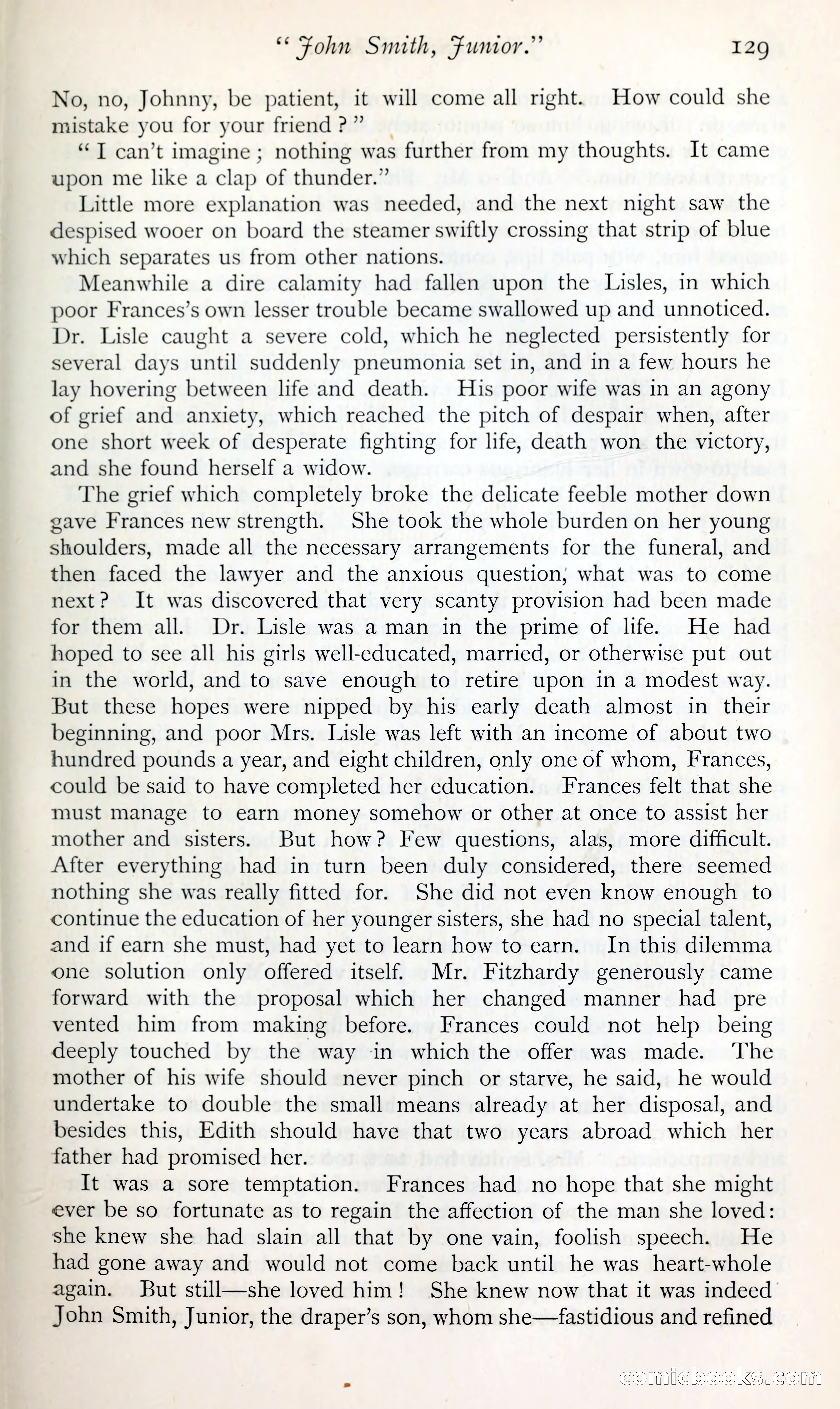
A restored page from Pulp Fiction, 1865. Page through the whole issue in the reader above.
📄 Transcribed text from this page (OCR, searchable)
Machine-transcribed from the original scan — historical spelling and the odd misread are preserved.
“ Fohn Smith, Fumor.” 129 No, no, Johnny, be patient, it will come all right. How could she mistake you for your friend?” — “T can’t imagine ; nothing was further from my thoughts. It came upon me like a clap of thunder.” Little more explanation was needed, and the next night saw the despised wooer on board the steamer swiftly crossing that strip of blue which separates us from other nations. Meanwhile a dire calamity had fallen upon the Lisles, in which poor Frances’s own lesser trouble became swallowed up and unnoticed. Dr. Lisle caught a severe cold, which he neglected persistently for several days until suddenly pneumonia set in, and in a few hours he lay hovering between life and death. His poor wife was in an agony of grief and anxiety, which reached the pitch of despair when, after one short week of desperate fighting for life, death won the victory, and she found herself a widow. The grief which completely broke the delicate feeble mother down gave Frances new strength. She took the whole burden on her young shoulders, made all the necessary arrangements for the funeral, and then faced the lawyer and the anxious question, what was to come next? It was discovered that very scanty provision had been made for them all. Dr. Lisle was a man in the prime of life. He had hoped to see all his girls well-educated, married, or otherwise put out in the world, and to save enough to retire upon in a modest way. But these hopes were nipped by his early death almost in their beginning, and poor Mrs. Lisle was left with an income of about two hundred pounds a year, and eight children, only one of whom, Frances, could be said to have completed her education. Frances felt that she must manage to earn money somehow or other at once to assist her mother and sisters. But how? Few questions, alas, more difficult. After everything had in turn been duly considered, there seemed nothing she was really fitted for. She did not even know enough to continue the education of her younger sisters, she had no special talent, and if earn she must, had yet to learn how to earn. In this dilemma one solution only offered itself. Mr. Fitzhardy generously came forward with the proposal which her changed manner had pre vented him from making before. Frances could not help being deeply touched by the way in which the offer was made. ‘The mother of his wife should never pinch or starve, he said, he would undertake to double the small means already at her disposal, and besides this, Edith should have that two years abroad which her father had promised her. It was a sore temptation. Frances had no hope that she might ever be so fortunate as to regain the affection of the man she loved: she knew she had slain all that by one vain, foolish speech. He had gone away and would not come back until he was heart-whole again. But still—she loved him! She knew now that it was indeed John Smith, Junior, the draper’s son, whom she—fastidious and refined a CONnNICGLOOKS.EO mM