
Pulp Fiction, 1865 · page 148 of 399
The Argosy — page 148: what you’re looking at
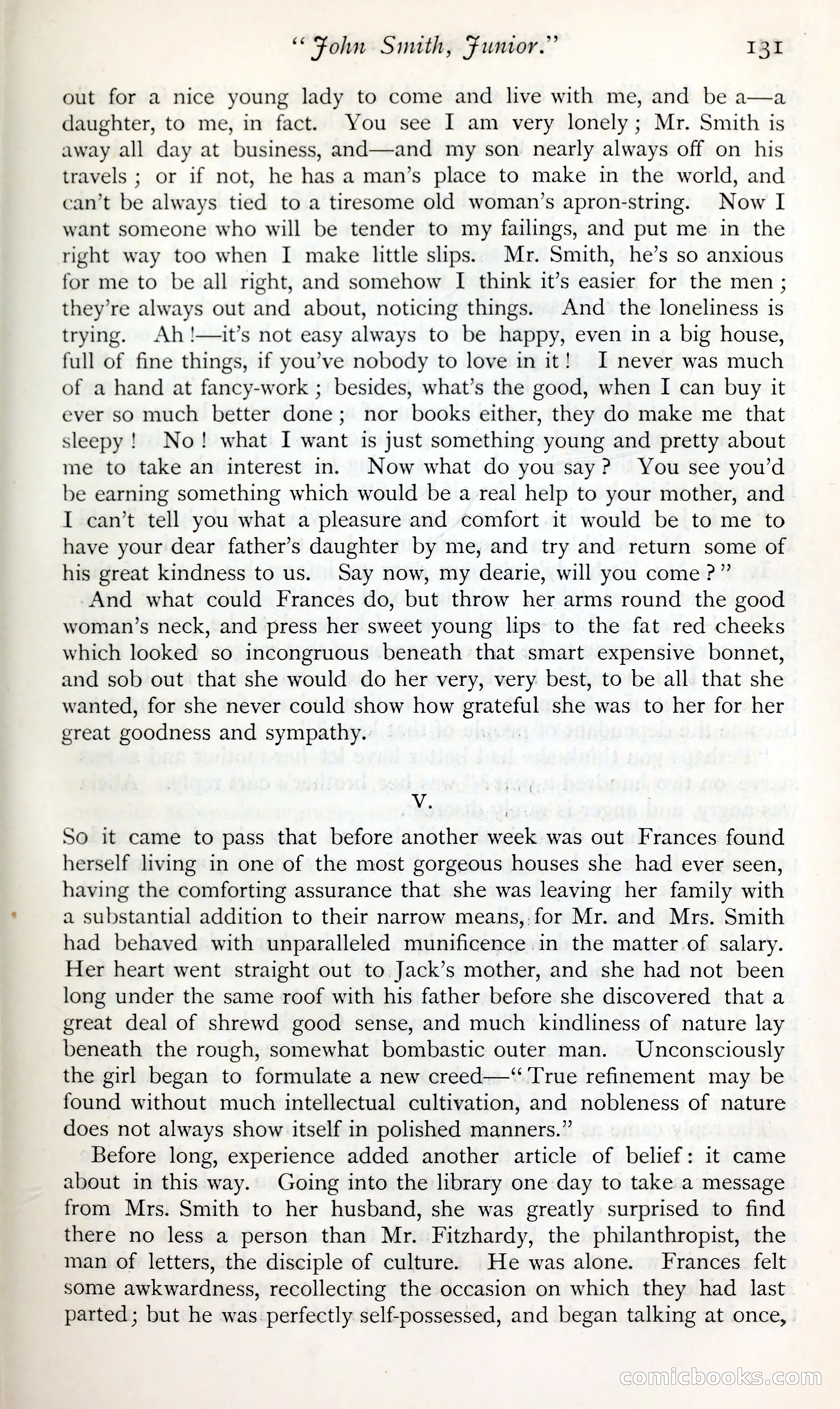
A restored page from Pulp Fiction, 1865. Page through the whole issue in the reader above.
📄 Transcribed text from this page (OCR, searchable)
Machine-transcribed from the original scan — historical spelling and the odd misread are preserved.
“Foln Sintth, Funror.” 131 out for a nice young lady to come and live with me, and be a—a daughter, to me, in fact. You see I am very lonely; Mr. Smith is away all day at business, and—and my son nearly always off on his travels ; or if not, he has a man’s place to make in the world, and can’t be always tied to a tiresome old woman’s apron-string. Now I want someone who will be tender to my failings, and put me in the right way too when I make little slips. Mr. Smith, he’s so anxious for me to be all right, and somehow I think it’s easier for the men ; they’re always out and about, noticing things. And the loneliness is trying. Ah!—it’s not easy always to be happy, even in a big house, full of fine things, if you’ve nobody to love in it! I never was much of a hand at fancy-work ; besides, what’s the good, when I can buy it ever so much better done; nor books either, they do make me that sleepy! No! what I want is just something young and pretty about me to take an interest in. Now what do you say? You see you’d be earning something which would be a real help to your mother, and I can’t tell you what a pleasure and comfort it would be to me to have your dear father’s daughter by me, and try and return some of his great kindness to us. Say now, my dearie, will you come ?” And what could Frances do, but throw her arms round the good woman’s neck, and press her sweet young lips to the fat red cheeks which looked so incongruous beneath that smart expensive bonnet, and sob out that she would do her very, very best, to be all that she wanted, for she never could show how grateful she was to her for her great goodness and sympathy. : V. So it came to pass that before another week was out Frances found herself living in one of the most gorgeous houses she had ever seen, having the comforting assurance that she was leaving her family with a substantial addition to their narrow means,:for Mr. and Mrs. Smith had behaved with unparalleled munificence in the matter of salary. Her heart went straight out to Jack’s mother, and she had not been long under the same roof with his father before she discovered that a great deal of shrewd good sense, and much kindliness of nature lay beneath the rough, somewhat bombastic outer man. Unconsciously the girl began to formulate a new creed—‘“ ‘True refinement may be found without much intellectual cultivation, and nobleness of nature does not always show itself in polished manners.” Before long, experience added another article of belief: it came about in this way. Going into the library one day to take a message from Mrs. Smith to her husband, she was greatly surprised to find there no less a person than Mr. Fitzhardy, the philanthropist, the man of letters, the disciple of culture. He was alone. Frances felt some awkwardness, recollecting the occasion on which they had last parted; but he was. perfectly self-possessed, and began talking at once, COMICOOOKS.EO