
Pulp Fiction, 1865 · page 126 of 399
The Argosy — page 126: what you’re looking at
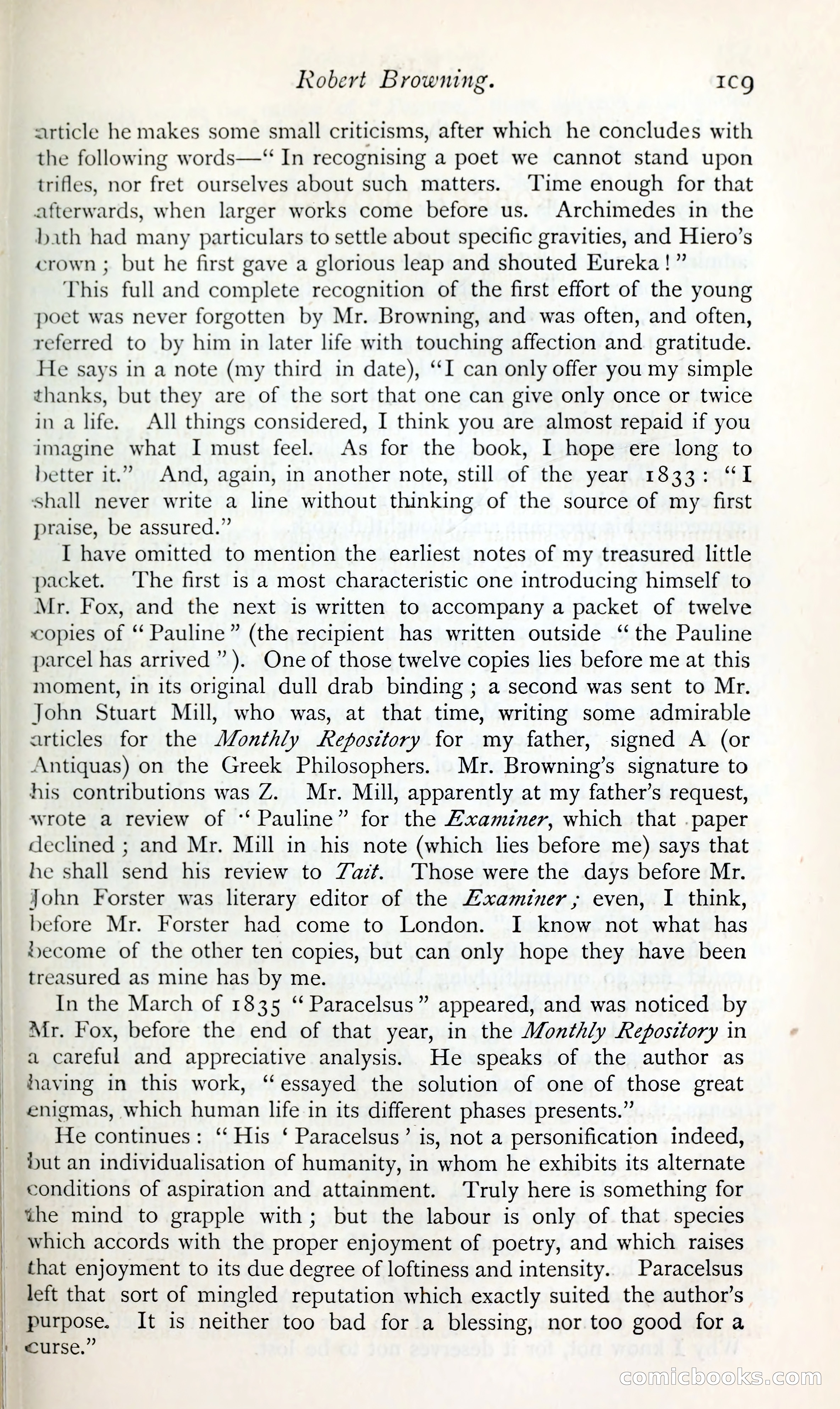
A restored page from Pulp Fiction, 1865. Page through the whole issue in the reader above.
📄 Transcribed text from this page (OCR, searchable)
Machine-transcribed from the original scan — historical spelling and the odd misread are preserved.
Robert Browning. ICQ article he makes some small criticisms, after which he concludes with the following words—“ In recognising a poet we cannot stand upon trifles, nor fret ourselves about such matters. ‘Time enough for that afterwards, when larger works come before us. Archimedes in the bath had many particulars to settle about specific gravities, and Hiero’s crown ; but he first gave a glorious leap and shouted Eureka!” This full and complete recognition of the first effort of the young poet was never forgotten by Mr. Browning, and was often, and often, referred to by him in later life with touching affection and gratitude. He says in a note (my third in date), ‘‘I can only offer you my simple thanks, but they are of the sort that one can give only once or twice in a life. All things considered, I think you are almost repaid if you imagine what I must feel. As for the book, I hope ere long to better it.” And, again, in another note, still of the year 1833: “I shall never write a line without thinking of the source of my first praise, be assured.” I have omitted to mention the earliest notes of my treasured little packet. ‘The first 1s a most characteristic one introducing himself to Mr. Fox, and the next is written to accompany a packet of twelve copies of “‘ Pauline” (the recipient has written outside ‘the Pauline parcel has arrived”). One of those twelve copies lies before me at this moment, in its original dull drab binding ; a second was sent to Mr. John Stuart Mill, who was, at that time, writing some admirable articles for the Monthly Repository for my father, signed A (or Antiquas) on the Greek Philosophers. Mr. Browning’s signature to his contributions was Z. Mr. Mill, apparently at my father’s request, wrote a review of *‘ Pauline” for the Hxamuiner, which that .paper declined ; and Mr. Mill in his note (which lies before me) says that he shall send his review to Zazt. Those were the days before Mr. John Forster was literary editor of the Axamziner,; even, I think, before Mr. Forster had come to London. I know not what has Hecome of the other ten copies, but can only hope they have been treasured as mine has by me. In the March of 1835 ‘“‘ Paracelsus” appeared, and was noticed by Mr. Fox, before the end of that year, in the Monthly Reposttory in a careful and appreciative analysis. He speaks of the author as having in this work, “‘essayed the solution of one of those great enigmas, which human life in its different phases presents.” He continues: ‘‘ His ‘ Paracelsus’ is, not a personification indeed, but an individualisation of humanity, in whom he exhibits its alternate conditions of aspiration and attainment. ‘Truly here is something for the mind to grapple with; but the labour is only of that species which accords with the proper enjoyment of poetry, and which raises that enjoyment to its due degree of loftiness and intensity. Paracelsus left that sort of mingled reputation which exactly suited the author’s purpose. It is neither too bad for a blessing, nor too good fora curse.” GomiilGcyaooks im