
Pulp Fiction, 1865 · page 214 of 399
The Argosy — page 214: what you’re looking at
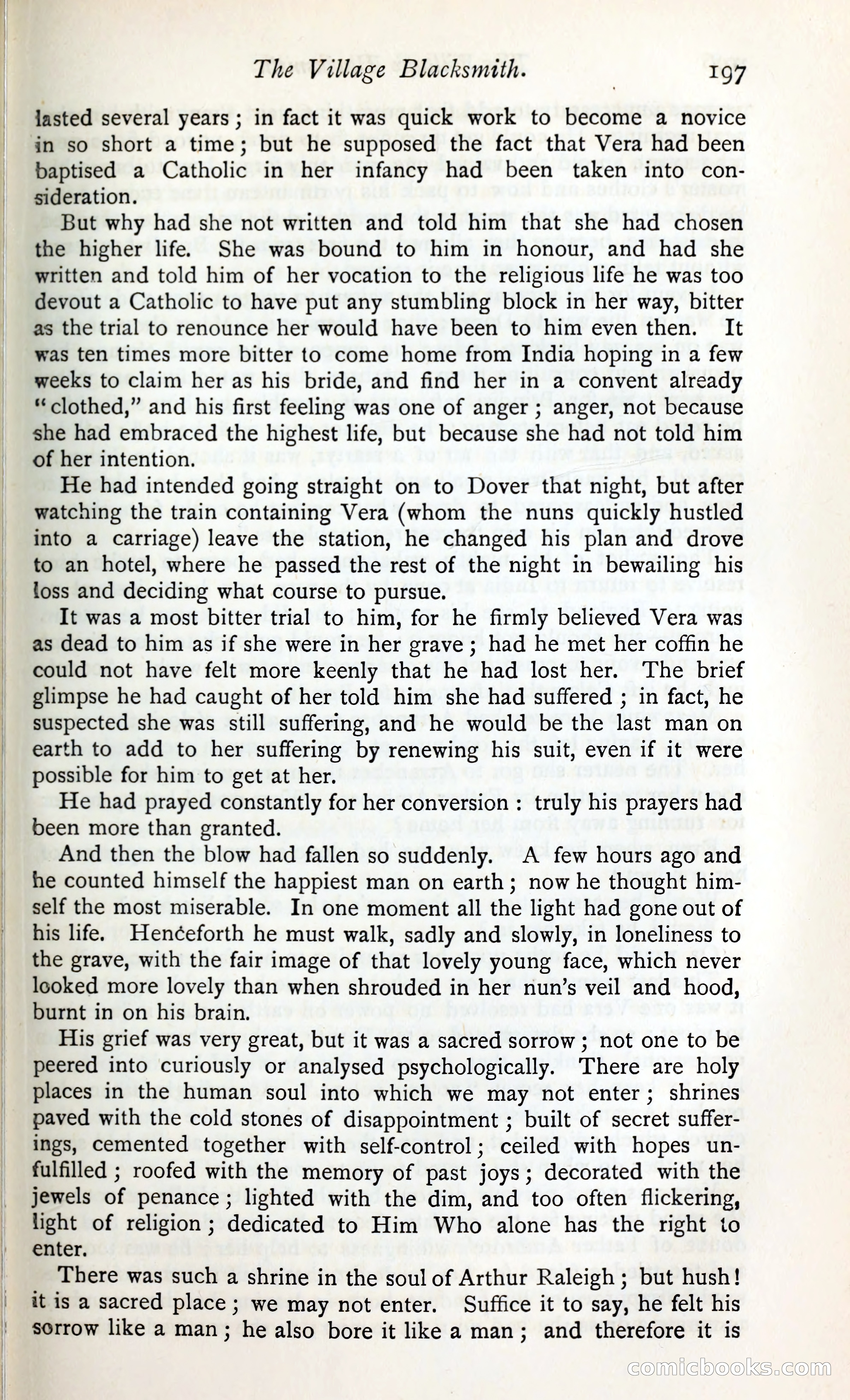
A restored page from Pulp Fiction, 1865. Page through the whole issue in the reader above.
📄 Transcribed text from this page (OCR, searchable)
Machine-transcribed from the original scan — historical spelling and the odd misread are preserved.
—— = The Village Blacksmith. | 197 lasted several years ; in fact it was quick work to become a novice in so short a time; but he supposed the fact that Vera had been baptised a Catholic in her infancy had been taken into con- sideration. But why had she not written and told him that she had chosen the higher life. She was bound to him in honour, and had she written and told him of her vocation to the religious life he was too devout a Catholic to have put any stumbling block in her way, bitter as the trial to renounce her would have been to him even then. It was ten times more bitter to come home from India hoping in a few weeks to claim her as his bride, and find her in a convent already “clothed,” and his first feeling was one of anger ; anger, not because she had embraced the highest life, but because she had not told him of her intention. He had intended going straight on to Dover that night, but after watching the train containing Vera (whom the nuns quickly hustled into a carriage) leave the station, he changed his plan and drove to an hotel, where he passed the rest of the night in bewailing his foss and deciding what course to pursue. It was a most bitter trial to him, for he firmly believed Vera was as dead to him as if she were in her grave; had he met her coffin he could not have felt more keenly that he had lost her. The brief glimpse he had caught of her told him she had suffered ; in fact, he suspected she was still suffering, and he would be the last man on earth to add to her suffering by renewing his suit, even if it were possible for him to get at her. He had prayed constantly for her conversion : truly his prayers had been more than granted. And then the blow had fallen so suddenly. A few hours ago and he counted himself the happiest man on earth; now he thought him- self the most miserable. In one moment all the light had gone out of his life. Henceforth he must walk, sadly and slowly, in loneliness to the grave, with the fair image of that lovely young face, which never looked more lovely than when shrouded in her nun’s veil and hood, burnt in on his brain. His grief was very great, but it was a sacred sorrow ; not one to be peered into curiously or analysed psychologically. There are holy places in the human soul into which we may not enter; shrines paved with the cold stones of disappointment ; built of secret suffer- ings, cemented together with self-control; ceiled with hopes un- fulfilled ; roofed with the memory of past joys; decorated with the jewels of penance; lighted with the dim, and too often flickering, light of religion; dedicated to Him Who alone has the right to enter. There was such a shrine in the soul of Arthur Raleigh ; but hush! it is a sacred place ; we may not enter. Suffice it to say, he felt his sorrow like a man; he also bore it like a man; and therefore it is CORNICLOO cS (FO) am