
Pulp Fiction, 1865 · page 215 of 399
The Argosy — page 215: what you’re looking at
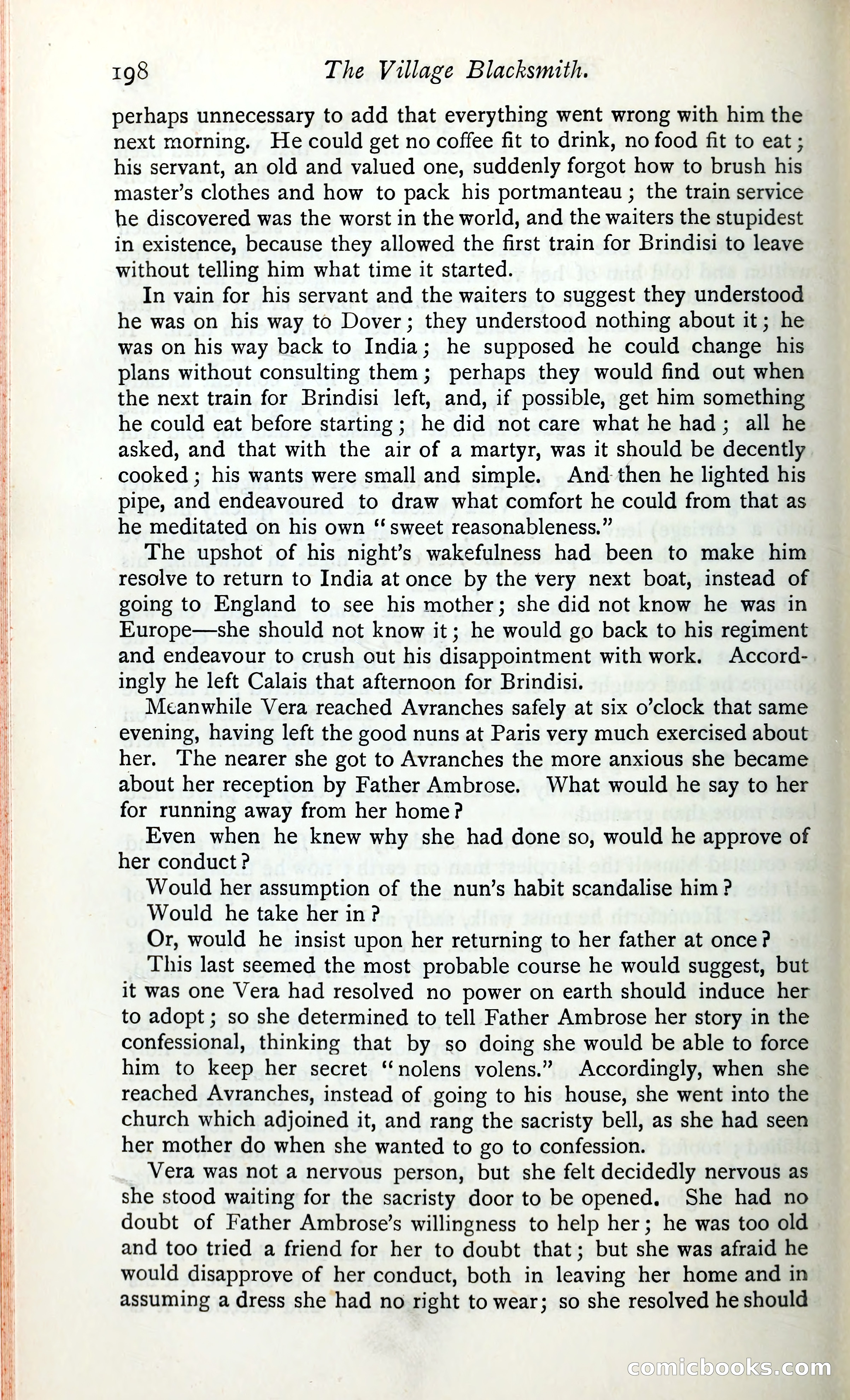
A restored page from Pulp Fiction, 1865. Page through the whole issue in the reader above.
📄 Transcribed text from this page (OCR, searchable)
Machine-transcribed from the original scan — historical spelling and the odd misread are preserved.
198 The Village Blacksmith. perhaps unnecessary to add that everything went wrong with him the next morning. He could get no coffee fit to drink, no food fit to eat ; his servant, an old and valued one, suddenly forgot how to brush his master’s clothes and how to pack his portmanteau ; the train service he discovered was the worst in the world, and the waiters the stupidest in existence, because they allowed the first train for Brindisi to leave without telling him what time it started. In vain for his servant and the waiters to suggest they understood he was on his way to Dover; they understood nothing about it; he was on his way back to India; he supposed he could change his plans without consulting them; perhaps they would find out when the next train for Brindisi left, and, if possible, get him something he could eat before starting ; he did not care what he had; all he asked, and that with the air of a martyr, was it should be decently cooked ; his wants were small and simple. And then he lighted his pipe, and endeavoured to draw what comfort he could from that as he meditated on his own ‘‘ sweet reasonableness,” The upshot of his night’s wakefulness had been to make him resolve to return to India at once by the very next boat, instead of going to England to see his mother; she did not know he was in Europe—she should not know it; he would go back to his regiment and endeavour to crush out his disappointment with work. Accord- ingly he left Calais that afternoon for Brindisi. Meanwhile Vera reached Avranches safely at six o’clock that same evening, having left the good nuns at Paris very much exercised about her. The nearer she got to Avranches the more anxious she became about her reception by Father Ambrose. What would he say to her for running away from her home? Eiven when he knew why she had done so, would he approve of her conduct? Would her assumption of the nun’s habit scandalise him ? Would he take her in? | Or, would he insist upon her returning to her father at once? This last seemed the most probable course he would suggest, but it was one Vera had resolved no power on earth should induce her to adopt ; so she determined to tell Father Ambrose her story in the confessional, thinking that by so doing she would be able to force him to keep her secret ‘‘nolens volens.” Accordingly, when she reached Avranches, instead of going to his house, she went into the church which adjoined it, and rang the sacristy bell, as she had seen her mother do when she wanted to go to confession. Vera was not a nervous person, but she felt decidedly nervous as she stood waiting for the sacristy door to be opened. She had no doubt of Father Ambrose’s willingness to help her; he was too old and too tried a friend for her to doubt that; but she was afraid he would disapprove of her conduct, both in leaving her home and in assuming a dress she had no right to wear; so she resolved he should CONNIE KS A(eo)