
Pulp Fiction, 1865 · page 326 of 400
The Argosy — page 326: what you’re looking at
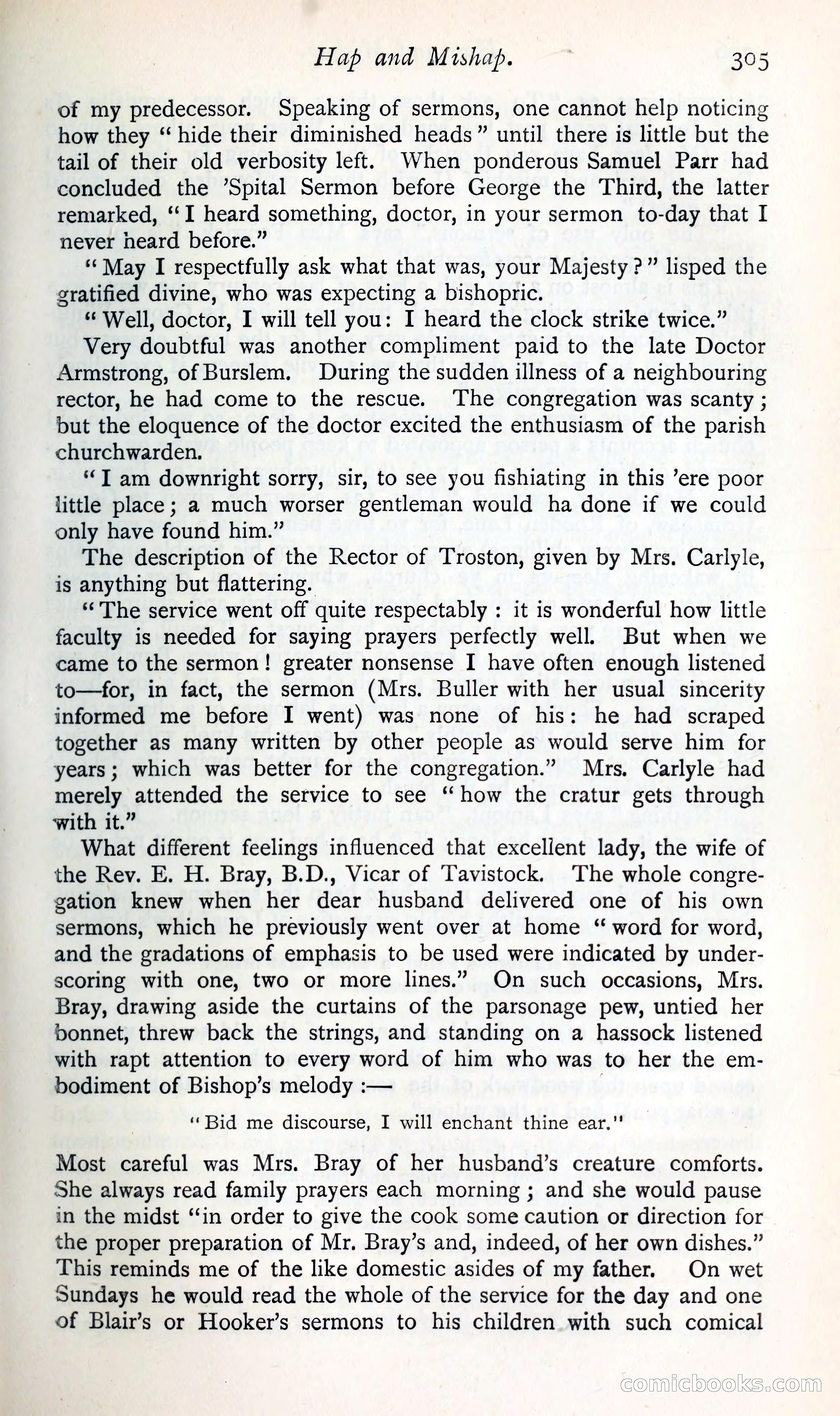
A restored page from Pulp Fiction, 1865. Page through the whole issue in the reader above.
📄 Transcribed text from this page (OCR, searchable)
Machine-transcribed from the original scan — historical spelling and the odd misread are preserved.
Hap and Mishap. | 305 of my predecessor. Speaking of sermons, one cannot help noticing how they “hide their diminished heads” until there is little but the tail of their old verbosity left. When ponderous Samuel Parr had concluded the ’Spital Sermon before George the Third, the latter remarked, ‘‘I heard something, doctor, in your sermon to-day that I never heard before.” ‘May I respectfully ask what that was, your Majesty ?” lisped the gratified divine, who was expecting a bishopric. “ Well, doctor, I will tell you: I heard the clock strike twice.” Very doubtful was another compliment paid to the late Doctor Armstrong, of Burslem. During the sudden illness of a neighbouring rector, he had come to the rescue. The congregation was scanty ; but the eloquence of the doctor excited the enthusiasm of the parish churchwarden. “JT am downright sorry, sir, to see you fishiating in this ’ere poor little place; a much worser gentleman would ha done if we could only have found him.” The description of the Rector of Troston, given by Mrs. Carlyle, is anything but flattering. ‘The service went off quite respectably : it is wonderful how little faculty is needed for saying prayers perfectly well. But when we came to the sermon! greater nonsense I have often enough listened to—for, in fact, the sermon (Mrs. Buller with her usual sincerity informed me before I went) was none of his: he had scraped together as many written by other people as would serve him for years; which was better for the congregation.” Mrs. Carlyle had merely attended the service to see ‘‘ how the cratur gets through with it.” What different feelings influenced that excellent lady, the wife of the Rev. E. H. Bray, B.D., Vicar of Tavistock. The whole congre- gation knew when her dear husband delivered one of his own sermons, which he previously went over at home “ word for word, and the gradations of emphasis to be used were indicated by under- scoring with one, two or more lines.” On such occasions, Mrs. Bray, drawing aside the curtains of the parsonage pew, untied her bonnet, threw back the strings, and standing on a hassock listened with rapt attention to every word of him who was to her the em- bodiment of Bishop’s melody :— | ‘‘Bid me discourse, I will enchant thine ear." Most careful was Mrs. Bray of her husband’s creature comforts. She always read family prayers each morning ; and she would pause in the midst ‘‘in order to give the cook some caution or direction for the proper preparation of Mr. Bray’s and, indeed, of her own dishes.” This reminds me of the like domestic asides of my father. On wet Sundays he would read the whole of the service for the day and one of Blair’s or Hooker’s sermons to his children with such comical COnniclooolkks @) (er @) mn