
Pulp Fiction, 1865 · page 327 of 400
The Argosy — page 327: what you’re looking at
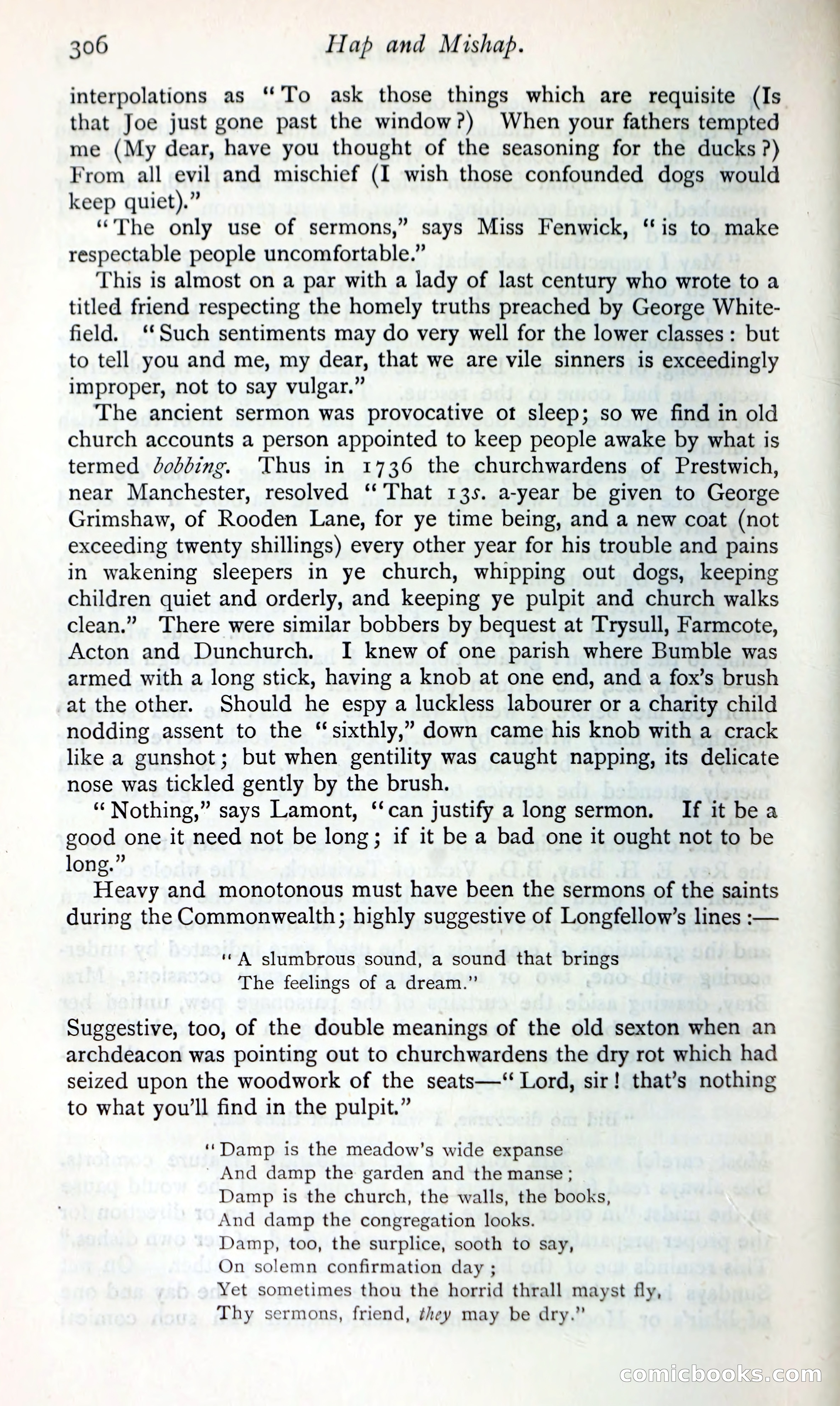
A restored page from Pulp Fiction, 1865. Page through the whole issue in the reader above.
📄 Transcribed text from this page (OCR, searchable)
Machine-transcribed from the original scan — historical spelling and the odd misread are preserved.
306 Hap and Mishap. interpolations as “To ask those things which are requisite (Is that Joe just gone past the window?) When your fathers tempted me (My dear, have you thought of the seasoning for the ducks ?) From all evil and mischief (I wish those confounded dogs would keep quiet).” “The only use of sermons,” says Miss Fenwick, “is to make respectable people uncomfortable.” This is almost on a par with a lady of last century who wrote to a titled friend respecting the homely truths preached by George White- field. ‘*Such sentiments may do very well for the lower classes: but to tell you and me, my dear, that we are vile sinners is exceedingly improper, not to say vulgar.” The ancient sermon was provocative ot sleep; so we find in old church accounts a person appointed to keep people awake by what is termed dobbing. ‘Thus in 1736 the churchwardens of Prestwich, near Manchester, resolved ‘“‘ That 13s. a-year be given to George Grimshaw, of Rooden Lane, for ye time being, and a new coat (not exceeding twenty shillings) every other year for his trouble and pains in wakening sleepers in ye church, whipping out dogs, keeping children quiet and orderly, and keeping ye pulpit and church walks clean.” ‘There were similar bobbers by bequest at Trysull, Farmcote, Acton and Dunchurch. I knew of one parish where Bumble was armed with a long stick, having a knob at one end, and a fox’s brush at the other. Should he espy a luckless labourer or a charity child nodding assent to the ‘sixthly,” down came his knob with a crack like a gunshot; but when gentility was caught napping, its delicate nose was tickled gently by the brush. ‘“ Nothing,” says Lamont, ‘‘can justify a long sermon. If it bea good one it need not be long; if it be a bad one it ought not to be long.” 3 Heavy and monotonous must have been the sermons of the saints during the Commonwealth; highly suggestive of Longfellow’s lines :-— ‘A slumbrous sound, a sound that brings The feelings of a dream.” Suggestive, too, of the double meanings of the old sexton when an archdeacon was pointing out to churchwardens the dry rot which had seized upon the woodwork of the seats—‘ Lord, sir! that’s nothing to what you'll find in the pulpit.” ‘‘Damp is the meadow’s wide expanse 'And damp the garden and the manse ; Damp is the church, the walls, the books, And damp the congregation looks. Damp, too, the surplice, sooth to say, On solemn confirmation day ; Yet sometimes thou the horrid thrall mayst fly, Thy sermons, friend, they may be dry.” ECORNIELIOOKS © m