
Pulp Fiction, 1865 · page 248 of 400
The Argosy — page 248: what you’re looking at
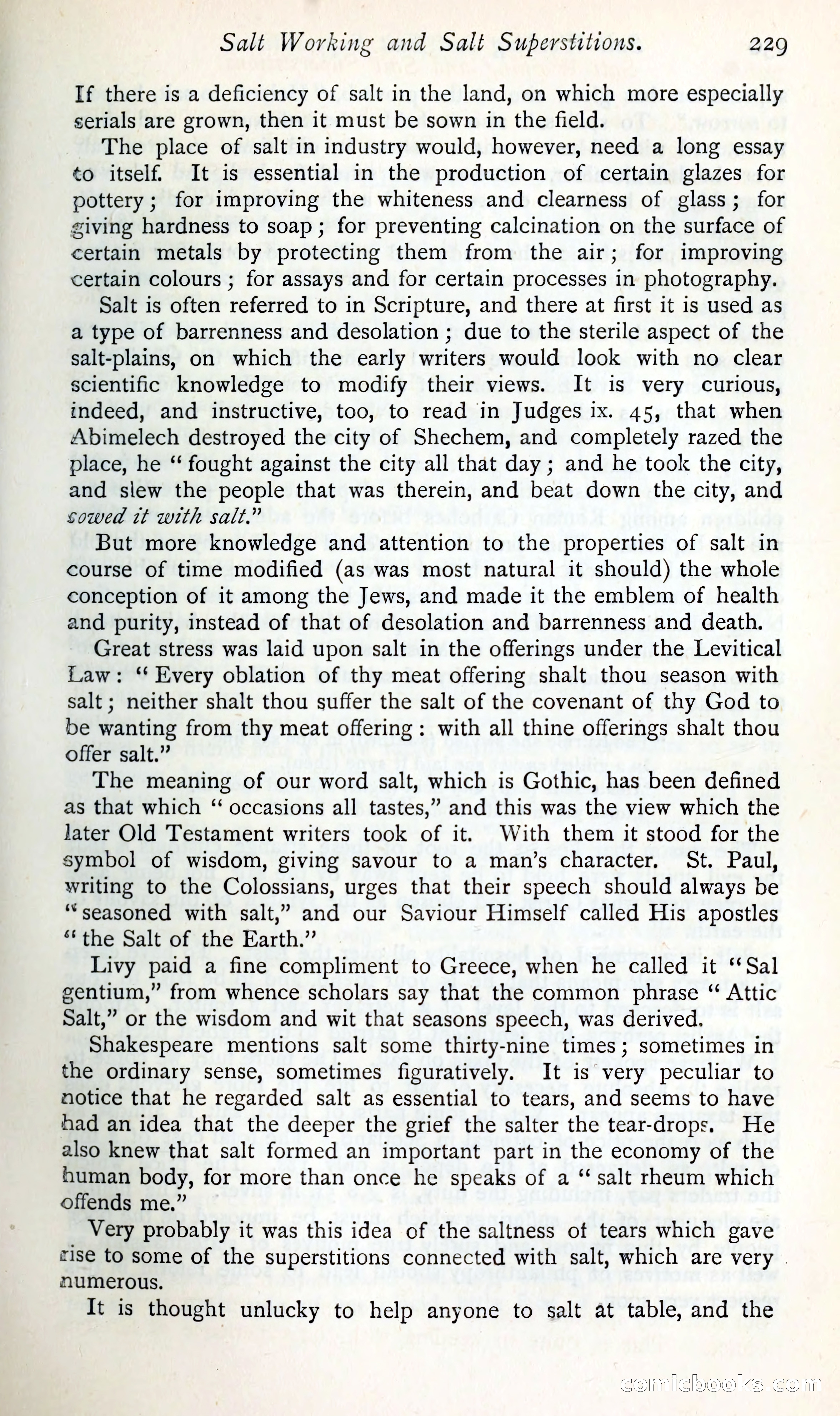
A restored page from Pulp Fiction, 1865. Page through the whole issue in the reader above.
📄 Transcribed text from this page (OCR, searchable)
Machine-transcribed from the original scan — historical spelling and the odd misread are preserved.
Salt Working and Salt Superstitions. 229 If there is a deficiency of salt in the land, on which more especially serials are grown, then it must be sown in the field. The place of salt in industry would, however, need a long essay to itself. It is essential in the production of certain glazes for pottery ; for improving the whiteness and clearness of glass; for giving hardness to soap; for preventing calcination on the surface of certain metals by protecting them from the air; for improving certain colours ; for assays and for certain processes in photography. Salt is often referred to in Scripture, and there at first it is used as a type of barrenness and desolation ; due to the sterile aspect of the salt-plains, on which the early writers would look with no clear scientific knowledge to modify their views. It is very curious, indeed, and instructive, too, to read in Judges ix. 45, that when Abimelech destroyed the city of Shechem, and completely razed the place, he ‘‘ fought against the city all that day; and he took the city, and slew the people that was therein, and beat down the city, and sowed it with salt.” But more knowledge and attention to the properties of salt in course of time modified (as was most natural it should) the whole conception of it among the Jews, and made it the emblem of health and purity, instead of that of desolation and barrenness and death. Great stress was laid upon salt in the offerings under the Levitical Law: ‘‘ Every oblation of thy meat offering shalt thou season with salt; neither shalt thou suffer the salt of the covenant of thy God to be wanting from thy meat offering: with all thine offerings shalt thou offer salt.” The meaning of our word salt, which is Gothic, has been defined as that which “ occasions all tastes,” and this was the view which the later Old Testament writers took of it. With them it stood for the symbol of wisdom, giving savour to a man’s character. St. Paul, writing to the Colossians, urges that their speech should always be “seasoned with salt,” and our Saviour Himself called His apostles ‘“‘ the Salt of the Earth.” Livy paid a fine compliment to Greece, when he called it ‘‘Sal gentium,” from whence scholars say that the common phrase “ Attic Salt,” or the wisdom and wit that seasons speech, was derived. Shakespeare mentions salt some thirty-nine times; sometimes in the ordinary sense, sometimes figuratively. It is very peculiar to notice that he regarded salt as essential to tears, and seems to have had an idea that the deeper the grief the salter the tear-drops. He also knew that salt formed an important part in the economy of the human body, for more than once he speaks of a “ salt rheum which offends me.” Very probably it was this idea of the saltness of tears which gave rise to some of the superstitions connected with salt, which are very | numerous. It is thought unlucky to help anyone to salt at table, and the connicloooks (CO)