
Pulp Fiction, 1865 · page 249 of 400
The Argosy — page 249: what you’re looking at
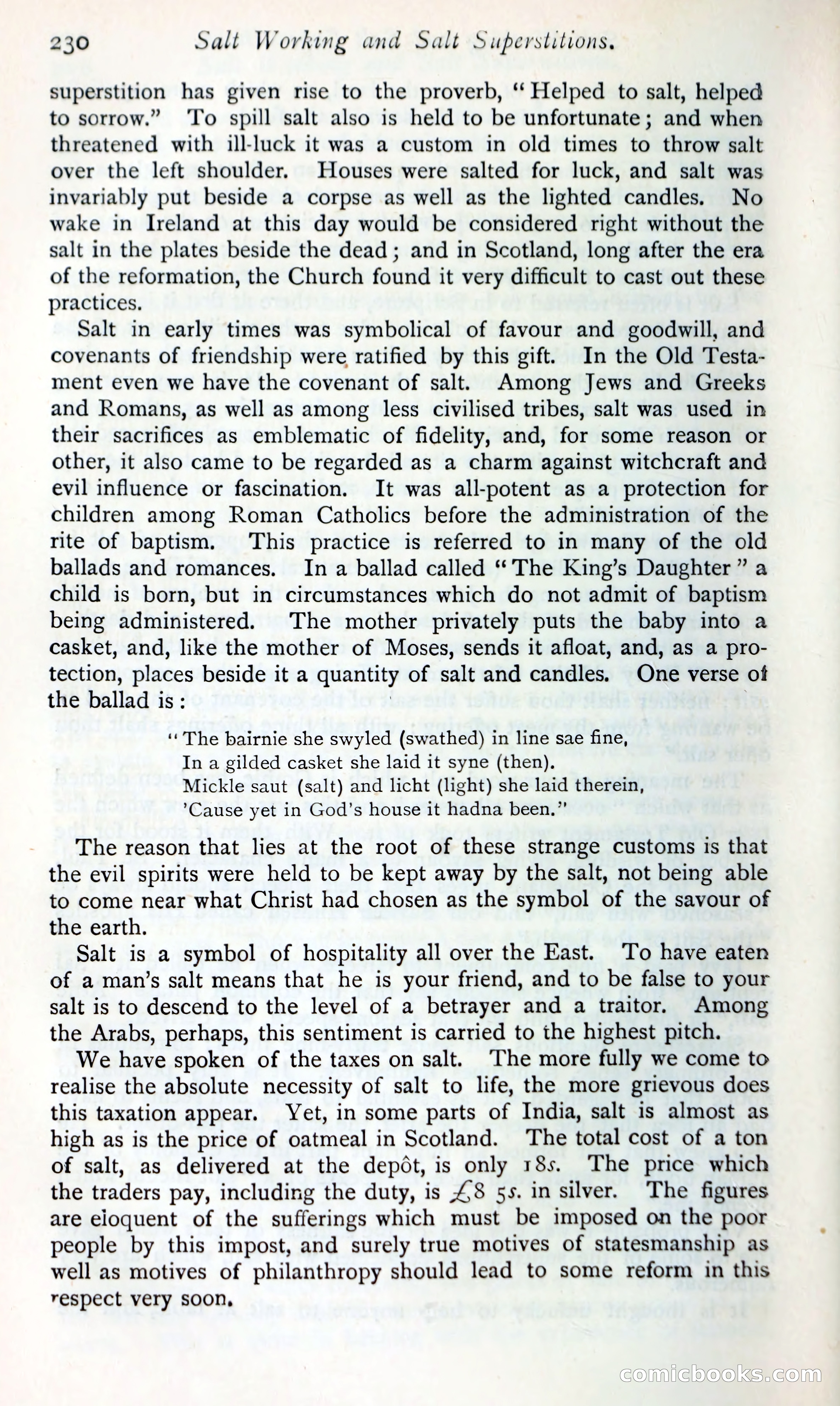
A restored page from Pulp Fiction, 1865. Page through the whole issue in the reader above.
📄 Transcribed text from this page (OCR, searchable)
Machine-transcribed from the original scan — historical spelling and the odd misread are preserved.
230 Salt Working and Salt Superstitions, superstition has given rise to the proverb, “ Helped to salt, helped to sorrow.” ‘To spill salt also is held to be unfortunate; and when threatened with ill-luck it was a custom in old times to throw salt over the left shoulder. Houses were salted for luck, and salt was invariably put beside a corpse as well as the lighted candles. No wake in Ireland at this day would be considered right without the salt in the plates beside the dead ; and in Scotland, long after the era of the reformation, the Church found it very difficult to cast out these practices, Salt in early times was symbolical of favour and goodwill, and covenants of friendship were ratified by this gift. In the Old Testa- ment even we have the covenant of salt. Among Jews and Greeks and Romans, as well as among less civilised tribes, salt was used in their sacrifices as emblematic of fidelity, and, for some reason or other, it also came to be regarded as a charm against witchcraft and evil influence or fascination. It was all-potent as a protection for children among Roman Catholics before the administration of the rite of baptism. This practice is referred to in many of the old ballads and romances. In a ballad called ‘‘ The King’s Daughter” a child is born, but in circumstances which do not admit of baptism being administered. The mother privately puts the baby into a casket, and, like the mother of Moses, sends it afloat, and, as a pro- tection, places beside it a quantity of salt and candles. One verse of the ballad is: | ‘The bairnie she swyled (swathed) in line sae fine, In a gilded casket she laid it syne (then). Mickle saut (salt) and licht (light) she laid therein, ‘Cause yet in God’s house it hadna been.”’ The reason that lies at the root of these strange customs is that the evil spirits were held to be kept away by the salt, not being able to come near what Christ had chosen as the symbol of the savour of the earth. Salt is a symbol of hospitality all over the East. To have eaten of a man’s salt means that he is your friend, and to be false to your salt is to descend to the level of a betrayer and a traitor. Among the Arabs, perhaps, this sentiment is carried to the highest pitch. We have spoken of the taxes on salt. ‘The more fully we come to realise the absolute necessity of salt to life, the more grievous does this taxation appear. Yet, in some parts of India, salt is almost as high as is the price of oatmeal in Scotland. The total cost of a ton of salt, as delivered at the depot, is only 18s. The price which the traders pay, including the duty, is 48 5s. in silver. The figures are eloquent of the sufferings which must be imposed on the poor people by this impost, and surely true motives of statesmanship as well as motives of philanthropy should lead to some reform in this respect very soon, CORNIELIOOLKKS (E() m