
Pulp Fiction, 1865 · page 250 of 400
The Argosy — page 250: what you’re looking at
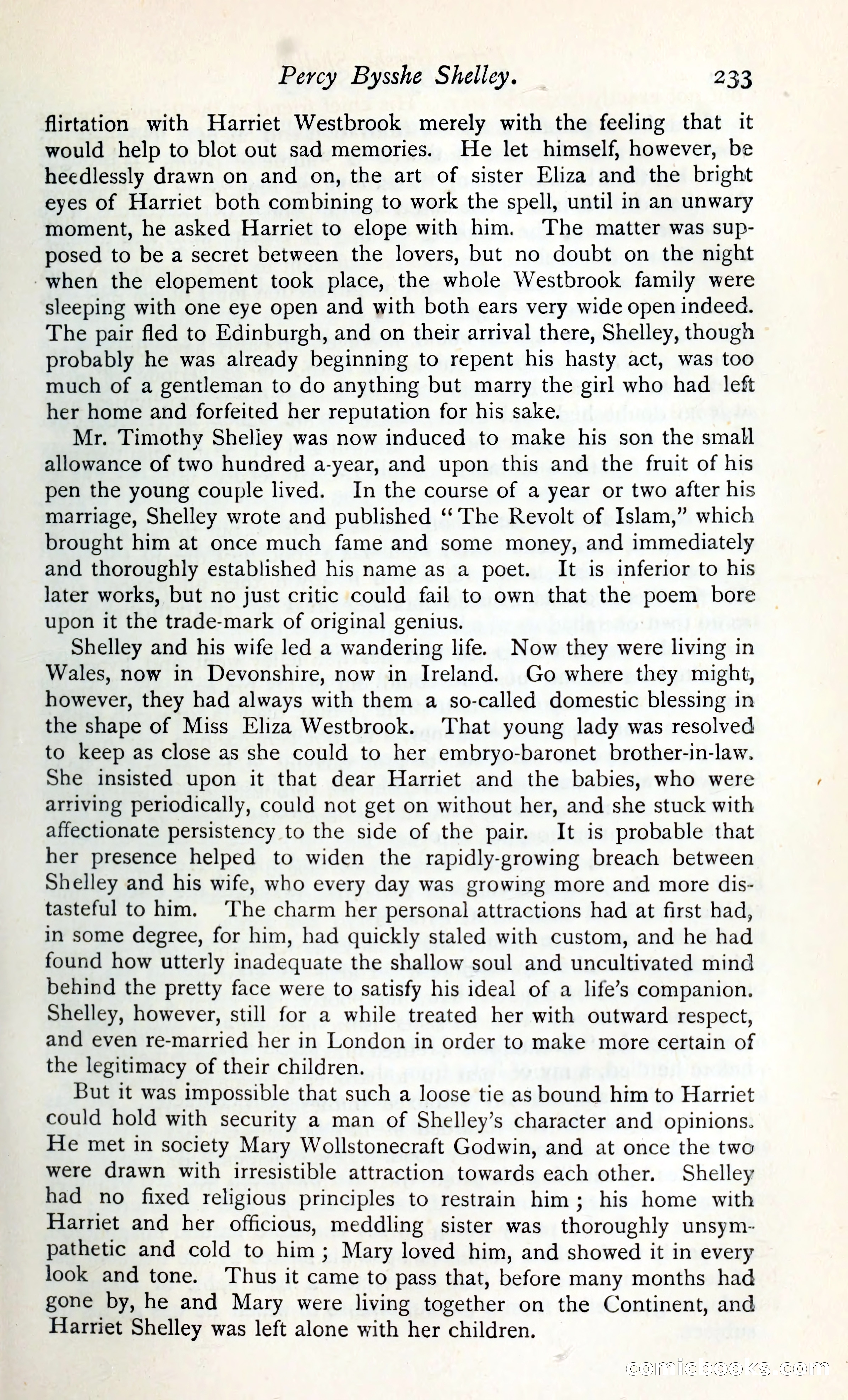
A restored page from Pulp Fiction, 1865. Page through the whole issue in the reader above.
📄 Transcribed text from this page (OCR, searchable)
Machine-transcribed from the original scan — historical spelling and the odd misread are preserved.
Percy Bysshe Shelley. 233 flirtation with Harriet Westbrook merely with the feeling that it would help to blot out sad memories. He let himself, however, be heedlessly drawn on and on, the art of sister Eliza and the bright eyes of Harriet both combining to work the spell, until in an unwary moment, he asked Harriet to elope with him. The matter was sup- posed to be a secret between the lovers, but no doubt on the night when the elopement took place, the whole Westbrook family were sleeping with one eye open and with both ears very wide open indeed. The pair fled to Edinburgh, and on their arrival there, Shelley, thougn probably he was already beginning to repent his hasty act, was too much of a gentleman to do anything but marry the girl who had left her home and forfeited her reputation for his sake. Mr. Timothy Sheliey was now induced to make his son the small allowance of two hundred a-year, and upon this and the fruit of his pen the young couple lived. In the course of a year or two after his marriage, Shelley wrote and published ‘‘ The Revolt of Islam,” which brought him at once much fame and some money, and immediately and thoroughly established his name as a poet. It is inferior to his later works, but no just critic could fail to own that the poem bore upon it the trade-mark of original genius. Shelley and his wife led a wandering life. Now they were living in Wales, now in Devonshire, now in Ireland. Go where they might, however, they had always with them a so-called domestic blessing in the shape of Miss Eliza Westbrook. ‘That young lady was resolved to keep as close as she could to her embryo-baronet brother-in-law. She insisted upon it that dear Harriet and the babies, who were arriving periodically, could not get on without her, and she stuck with affectionate persistency to the side of the pair. It is probable that her presence helped to widen the rapidly-growing breach between Shelley and his wife, who every day was growing more and more dis- tasteful to him. The charm her personal attractions had at first had, in some degree, for him, had quickly staled with custom, and he had found how utterly inadequate the shallow soul and uncultivated mind behind the pretty face were to satisfy his ideal of a life’s companion. Shelley, however, still for a while treated her with outward respect, and even re-married her in London in order to make more certain of the legitimacy of their children. But it was impossible that such a loose tie as bound him to Harriet could hold with security a man of Shelley’s character and opinions. He met in society Mary Wollstonecraft Godwin, and at once the two were drawn with irresistible attraction towards each other. Shelley had no fixed religious principles to restrain him; his home with Harriet and her officious, meddling sister was thoroughly unsym- pathetic and cold to him; Mary loved him, and showed it in every look and tone. Thus it came to pass that, before many months had gone by, he and Mary were living together on the Continent, and Harriet Shelley was left alone with her children. CconmicloooKks Co aa)