
Pulp Fiction, 1865 · page 251 of 400
The Argosy — page 251: what you’re looking at
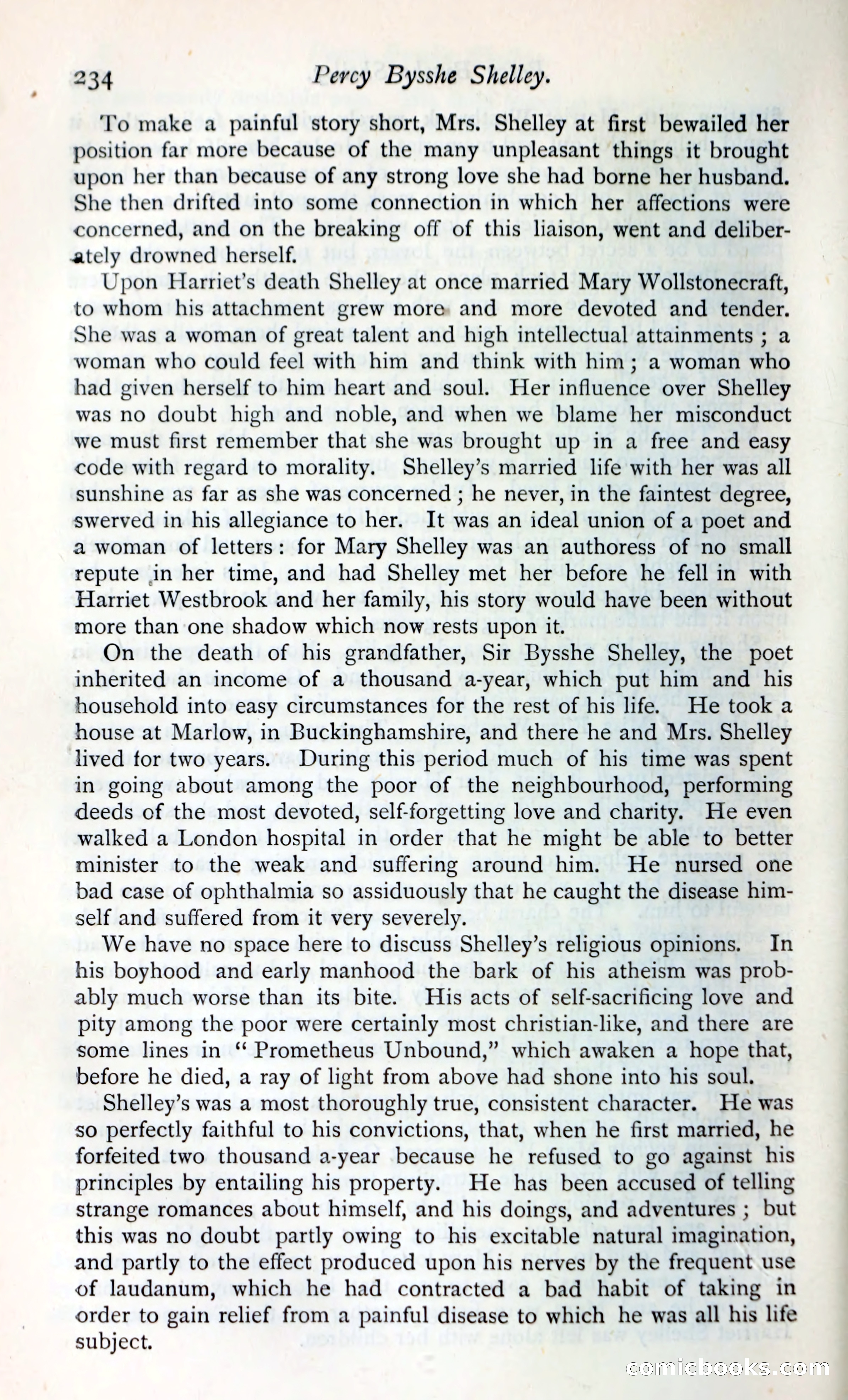
A restored page from Pulp Fiction, 1865. Page through the whole issue in the reader above.
📄 Transcribed text from this page (OCR, searchable)
Machine-transcribed from the original scan — historical spelling and the odd misread are preserved.
234 Percy Bysshe Shelley. ‘To make a painful story short, Mrs. Shelley at first bewailed her position far more because of the many unpleasant things it brought upon her than because of any strong love she had borne her husband. She then drifted into some connection in which her affections were concerned, and on the breaking off of this liaison, went and deliber- ately drowned herself. Upon Harriet’s death Shelley at once married Mary Wollstonecraft, to whom his attachment grew more and more devoted and tender. She was a woman of great talent and high intellectual attainments ; a woman who could feel with him and think with him; a woman who had given herself to him heart and soul. Her influence over Shelley was no doubt high and noble, and when we blame her misconduct we must first remember that she was brought up in a free and easy code with regard to morality. Shelley’s married life with her was all sunshine as far as she was concerned ; he never, in the faintest degree, swerved in his allegiance to her. It was an ideal union of a poet and a woman of letters: for Mary Shelley was an authoress of no small repute in her time, and had Shelley met her before he fell in with Harriet Westbrook and her family, his story would have been without more than one shadow which now rests upon it. On the death of his grandfather, Sir Bysshe Shelley, the poet inherited an income of a thousand a-year, which put him and his household into easy circumstances for the rest of his life. He took a house at Marlow, in Buckinghamshire, and there he and Mrs. Shelley lived for two years. During this period much of his time was spent in going about among the poor of the neighbourhood, performing deeds of the most devoted, self-forgetting love and charity. He even walked a London hospital in order that he might be able to better minister to the weak and suffering around him. He nursed one bad case of ophthalmia so assiduously that he caught the disease him- self and suffered from it very severely. We have no space here to discuss Shelley’s religious opinions. In his boyhood and early manhood the bark of his atheism was prob- ably much worse than its bite. His acts of self-sacrificing love and pity among the poor were certainly most christian-like, and there are some lines in “ Prometheus Unbound,” which awaken a hope that, before he died, a ray of light from above had shone into his soul. Shelley’s was a most thoroughly true, consistent character. He was so perfectly faithful to his convictions, that, when he first married, he forfeited two thousand a-year because he refused to go against his principles by entailing his property. He has been accused of telling strange romances about himself, and his doings, and adventures ; but this was no doubt partly owing to his excitable natural imagination, and partly to the effect produced upon his nerves by the frequent use of laudanum, which he had contracted a bad habit of taking in order to gain relief from a painful disease to which he was all his life subject. COMIC OOOKS.C©