
Pulp Fiction, 1865 · page 249 of 400
The Argosy — page 249: what you’re looking at
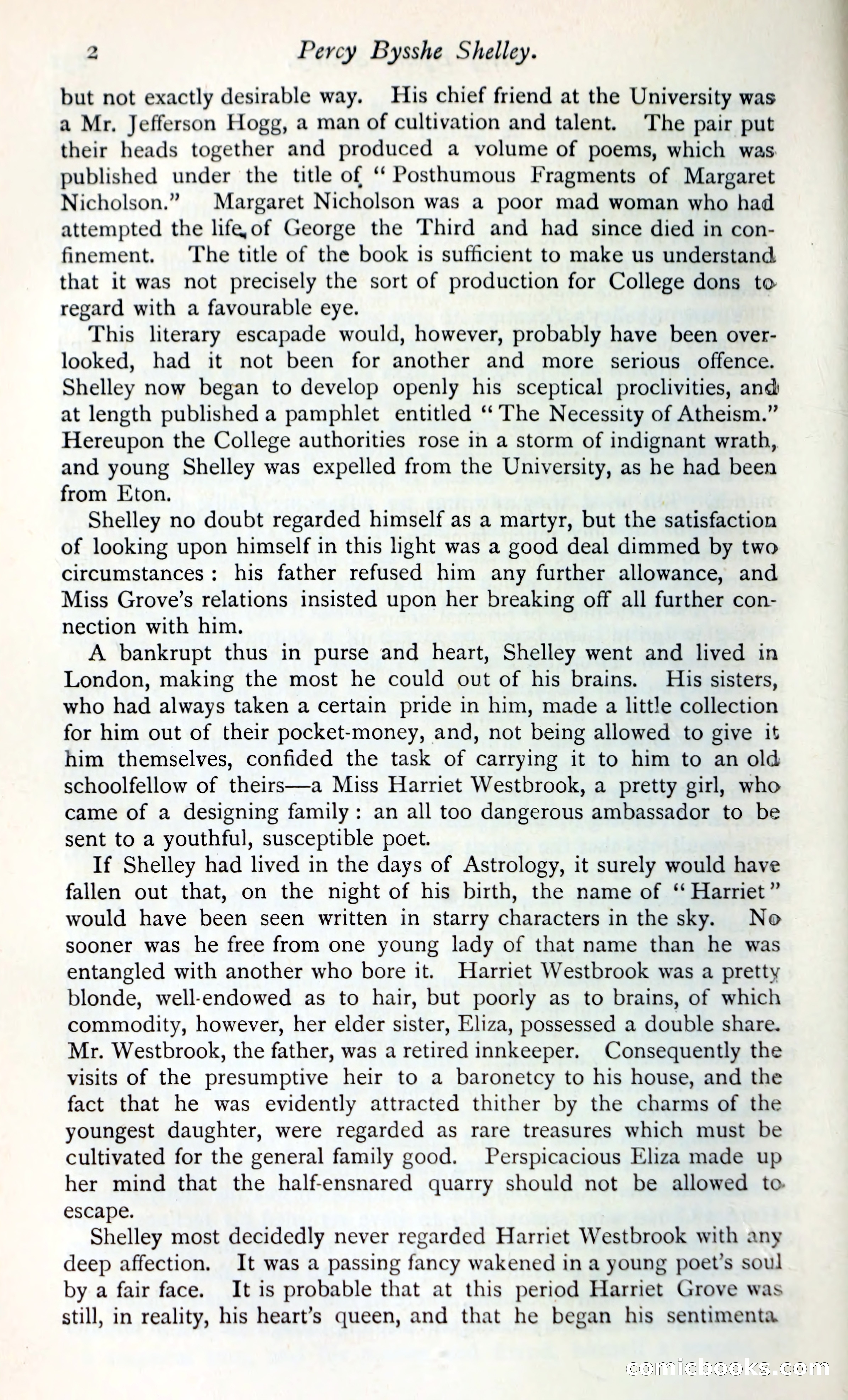
A restored page from Pulp Fiction, 1865. Page through the whole issue in the reader above.
📄 Transcribed text from this page (OCR, searchable)
Machine-transcribed from the original scan — historical spelling and the odd misread are preserved.
2 Percy Bysshe Shelley. but not exactly desirable way. His chief friend at the University was a Mr. Jefferson Hogg, a man of cultivation and talent. The pair put their heads together and produced a volume of poems, which was. published under the title of ‘‘ Posthumous Fragments of Margaret Nicholson.” Margaret Nicholson was a poor mad woman who had attempted the lifaof George the Third and had since died in con- finement. The title of the book is sufficient to make us understand that it was not precisely the sort of production for College dons to regard with a favourable eye. This literary escapade would, however, probably have been over- looked, had it not been for another and more serious offence. Shelley now began to develop openly his sceptical proclivities, and at length published a pamphlet entitled ‘‘ The Necessity of Atheism.” Hereupon the College authorities rose in a storm of indignant wrath, and young Shelley was expelled from the University, as he had been from Eton. | Shelley no doubt regarded himself as a martyr, but the satisfaction of looking upon himself in this light was a good deal dimmed by two circumstances: his father refused him any further allowance, and Miss Grove’s relations insisted upon her breaking off all further con- nection with him. A bankrupt thus in purse and heart, Shelley went and lived in London, making the most he could out of his brains. His sisters, who had always taken a certain pride in him, made a little collection for him out of their pocket-money, and, not being allowed to give it him themselves, confided the task of carrying it to him to an old schoolfellow of theirs—a Miss Harriet Westbrook, a pretty girl, who came of a designing family: an all too dangerous ambassador to be sent to a youthful, susceptible poet. If Shelley had lived in the days of Astrology, it surely would have fallen out that, on the night of his birth, the name of “ Harriet” would have been seen written in starry characters in the sky. No sooner was he free from one young lady of that name than he was entangled with another who bore it. Harriet Westbrook was a pretty blonde, well-endowed as to hair, but poorly as to brains, of which commodity, however, her elder sister, Eliza, possessed a double share. Mr. Westbrook, the father, was a retired innkeeper. Consequently the visits of the presumptive heir to a baronetcy to his house, and the fact that he was evidently attracted thither by the charms of the youngest daughter, were regarded as rare treasures which must be cultivated for the general family good. Perspicacious Eliza made up her mind that the half-ensnared quarry should not be allowed to escape. Shelley most decidedly never regarded Harriet Westbrook with any deep affection. It was a passing fancy wakened in a young poet’s soul by a fair face. It is probable that at this period Harriet Grove was still, in reality, his heart’s queen, and that he began his sentimenta COMICOOOKS. GO