
Pulp Fiction, 1865 · page 248 of 400
The Argosy — page 248: what you’re looking at
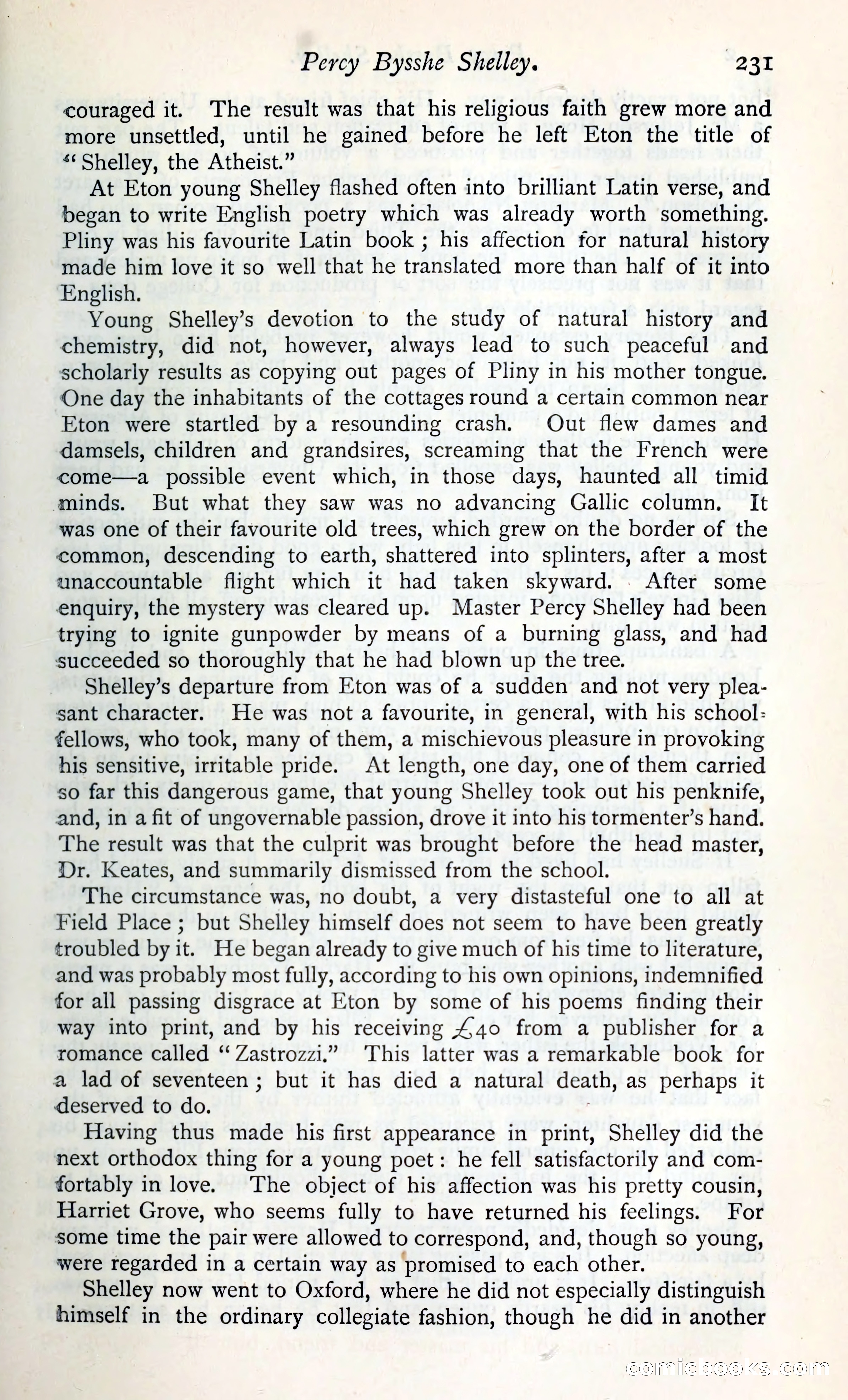
A restored page from Pulp Fiction, 1865. Page through the whole issue in the reader above.
📄 Transcribed text from this page (OCR, searchable)
Machine-transcribed from the original scan — historical spelling and the odd misread are preserved.
Percy Bysshe Shelley. "238 couraged it. The result was that his religious faith grew more and more unsettled, until he gained before he left Eton the title of *¢ Shelley, the Atheist.” At Eton young Shelley flashed often into brilliant Latin verse, and began to write English poetry which was already worth something. Pliny was his favourite Latin book ; his affection for natural history made him love it so well that he translated more than half of it into English. Young Shelley’s devotion to the study of natural history and chemistry, did not, however, always lead to such peaceful and scholarly results as copying out pages of Pliny in his mother tongue. One day the inhabitants of the cottages round a certain common near Eton were startled by a resounding crash. Out flew dames and damsels, children and grandsires, screaming that the French were come—a possible event which, in those days, haunted all timid minds. But what they saw was no advancing Gallic column. It was one of their favourite old trees, which grew on the border of the common, descending to earth, shattered into splinters, after a most unaccountable flight which it had taken skyward. . After some enquiry, the mystery was cleared up. Master Percy Shelley had been trying to ignite gunpowder by means of a burning glass, and had succeeded so thoroughly that he had blown up the tree. Shelley’s departure from Eton was of a sudden and not very plea- sant character. He was not a favourite, in general, with his school: fellows, who took, many of them, a mischievous pleasure in provoking his sensitive, irritable pride. At length, one day, one of them carried so far this dangerous game, that young Shelley took out his penknife, and, in a fit of ungovernable passion, drove it into his tormenter’s hand. The result was that the culprit was brought before the head master, Dr. Keates, and summarily dismissed from the school. The circumstance was, no doubt, a very distasteful one to all at Field Place ; but Shelley himself does not seem to have been greatly troubled by it. He began already to give much of his time to literature, and was probably most fully, according to his own opinions, indemnified for all passing disgrace at Eton by some of his poems finding their way into print, and by his receiving 440 from a publisher for a romance called ‘‘ Zastrozzi.” ‘This latter was a remarkable book for a lad of seventeen ; but it has died a natural death, as perhaps it deserved to do. ! Having thus made his first appearance in print, Shelley did the next orthodox thing for a young poet: he fell satisfactorily and com- fortably in love. The object of his affection was his pretty cousin, Harriet Grove, who seems fully to have returned his feelings. For some time the pair were allowed to correspond, and, though so young, were regarded in a certain way as promised to each other. Shelley now went to Oxford, where he did not especially distinguish himself in the ordinary collegiate fashion, though he did in another Ccomicoooks (S©)