
Pulp Fiction, 1865 · page 19 of 400
The Argosy — page 19: what you’re looking at
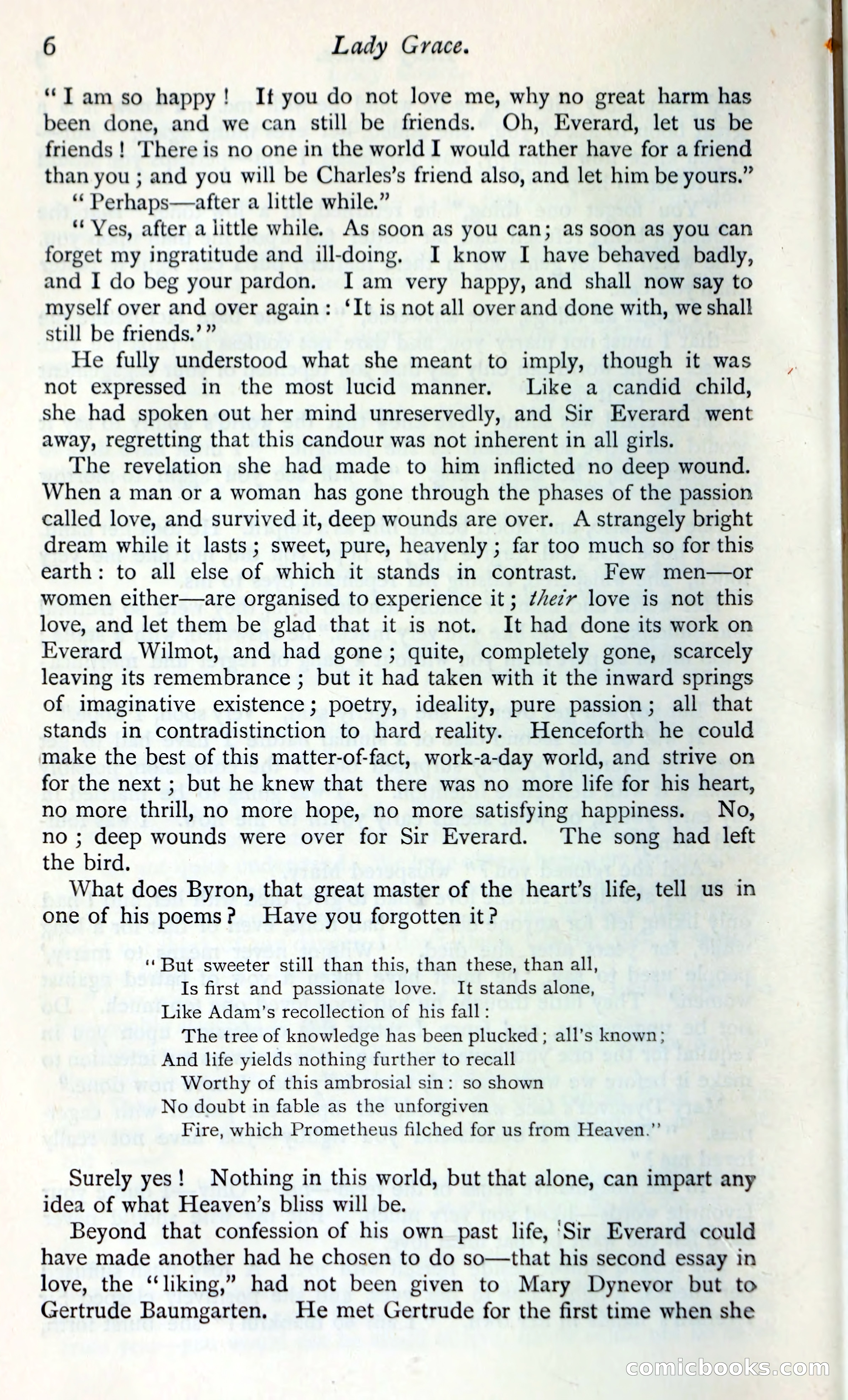
A restored page from Pulp Fiction, 1865. Page through the whole issue in the reader above.
📄 Transcribed text from this page (OCR, searchable)
Machine-transcribed from the original scan — historical spelling and the odd misread are preserved.
6 Lady Grace. “Tam so happy! If you do not love me, why no great harm has been done, and we can still be friends. Oh, Everard, let us be friends! There is no one in the world I would rather have for a friend than you ; and you will be Charles’s friend also, and let him be yours.” ‘“‘ Perhaps—after a little while.” “Yes, after a little while. As soon as you can; as soon as you can forget my ingratitude and ill-doing, I know I have behaved badly, and I do beg your pardon. I am very happy, and shall now say to myself over and over again: ‘It is not all over and done with, we shall still be friends.’ ” He fully understood what she meant to imply, though it was not expressed in the most lucid manner. Like a candid child, she had spoken out her mind unreservedly, and Sir Everard went away, regretting that this candour was not inherent in all girls. The revelation she had made to him inflicted no deep wound. When a man or a woman has gone through the phases of the passion called love, and survived it, deep wounds are over. A strangely bright dream while it lasts; sweet, pure, heavenly ; far too much so for this earth: to all else of which it stands in contrast. Few men—or women either—are organised to experience it; ¢ezr love is not this love, and let them be glad that it is not. It had done its work on Everard Wilmot, and had gone; quite, completely gone, scarcely leaving its remembrance ; but it had taken with it the inward springs of imaginative existence; poetry, ideality, pure passion; all that stands in contradistinction to hard reality. Henceforth he could make the best of this matter-of-fact, work-a-day world, and strive on for the next ; but he knew that there was no more life for his heart, no more thrill, no more hope, no more satisfying happiness. No, no ; deep wounds were over for Sir Everard. The song had left the bird. What does Byron, that great master of the heart’s life, tell us in one of his poems? Have you forgotten it? ‘But sweeter still than this, than these, than all, Is first and passionate love. It stands alone, Like Adam's recollection of his fall: The tree of knowledge has been plucked ; all’s known; And life yields nothing further to recall Worthy of this ambrosial sin: so shown No doubt in fable as the unforgiven Fire, which Prometheus filched for us from Heaven.”’ Surely yes! Nothing in this world, but that alone, can impart any idea of what Heaven’s bliss will be. Beyond that confession of his own past life, ‘Sir Everard could have made another had he chosen to do so—that his second essay in love, the ‘‘liking,” had not been given to Mary Dynevor but to Gertrude Baumgarten. He met Gertrude for the first time when she CORNIELOOC S (E©)