
Pulp Fiction, 1865 · page 20 of 400
The Argosy — page 20: what you’re looking at
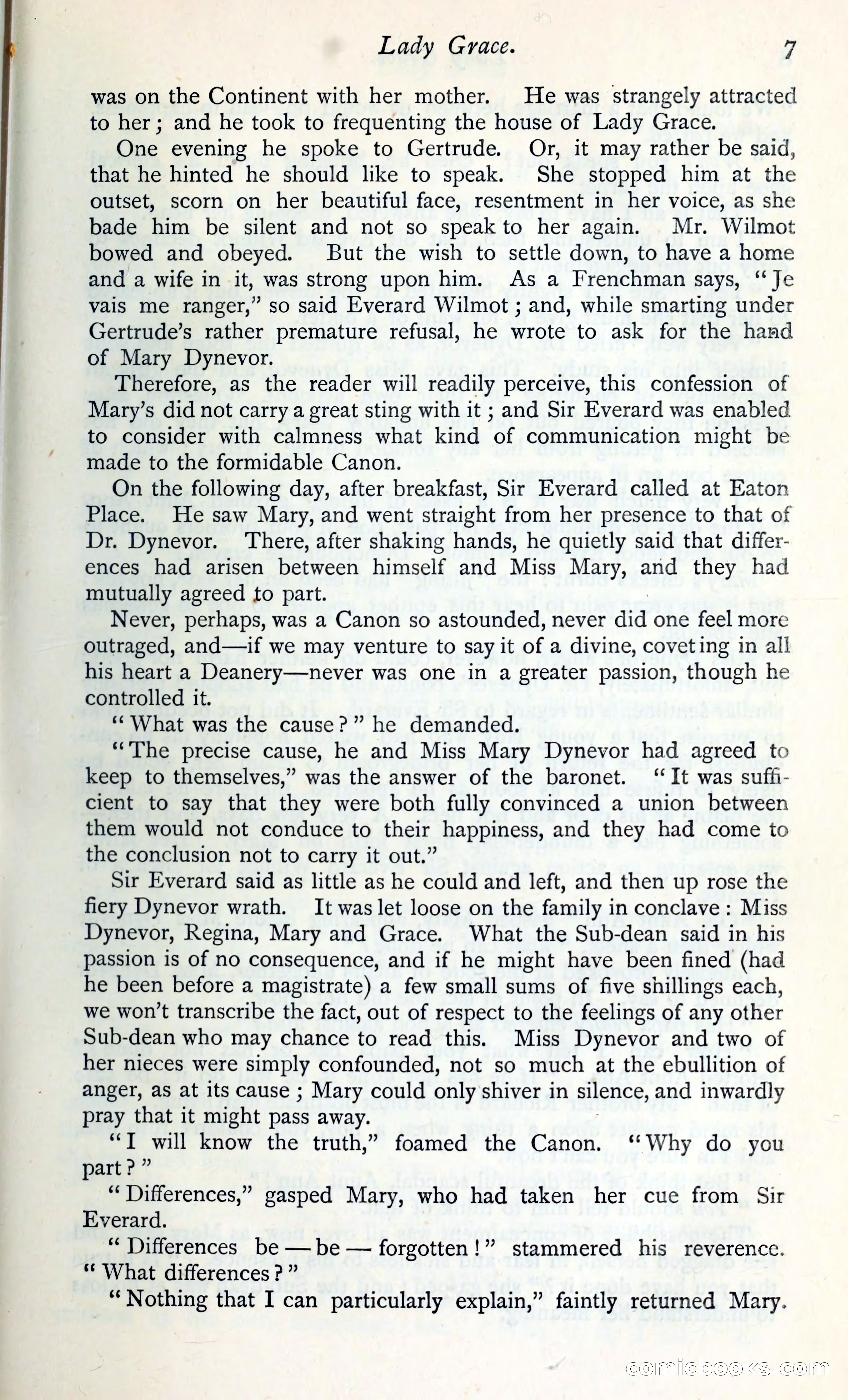
A restored page from Pulp Fiction, 1865. Page through the whole issue in the reader above.
📄 Transcribed text from this page (OCR, searchable)
Machine-transcribed from the original scan — historical spelling and the odd misread are preserved.
Lady Grace. 7 was on the Continent with her mother. He was strangely attracted to her; and he took to frequenting the house of Lady Grace. One evening he spoke to Gertrude. Or, it may rather be said, that he hinted he should like to speak. She stopped him at the outset, scorn on her beautiful face, resentment in her voice, as she bade him be silent and not so speak to her again. Mr. Wilmot bowed and obeyed. JBut the wish to settle down, to have a home and a wife in it, was strong upon him. As a Frenchman says, “Je vais me ranger,” so said Everard Wilmot ; and, while smarting under Gertrude’s rather premature refusal, he wrote to ask for the hand of Mary Dynevor. Therefore, as the reader will readily perceive, this confession of Mary’s did not carry a great sting with it ; and Sir Everard was enabled to consider with calmness what kind of communication might be made to the formidable Canon. On the following day, after breakfast, Sir Everard called at Eaton Place. He saw Mary, and went straight from her presence to that of Dr. Dynevor. There, after shaking hands, he quietly said that differ- ences had arisen between himself and Miss Mary, and they had mutually agreed to part. Never, perhaps, was a Canon so astounded, never did one feel more outraged, and—if we may venture to say it of a divine, coveting in all his heart a Deanery—never was one in a greater passion, though he controlled it. “What was the cause?” he demanded. “The precise cause, he and Miss Mary Dynevor had agreed to keep to themselves,” was the answer of the baronet. ‘It was suff- cient to say that they were both fully convinced a union between them would not conduce to their happiness, and they had come to the conclusion not to carry it out.” Sir Everard said as little as he could and left, and then up rose the fiery Dynevor wrath. It was let loose on the family in conclave : Miss _ Dynevor, Regina, Mary and Grace. What the Sub-dean said in his passion is of no consequence, and if he might have been fined (had he been before a magistrate) a few small sums of five shillings each, we won't transcribe the fact, out of respect to the feelings of any other Sub-dean who may chance to read this. Miss Dynevor and two of her nieces were simply confounded, not so much at the ebullition of anger, as at its cause ; Mary could only shiver in silence, and inwardly pray that it might pass away. “T will know the truth,” foamed the Canon. ‘‘Why do you part?” “Differences,” gasped Mary, who had taken her cue from Sir Everard. ‘Differences be — be — forgotten!” stammered his reverence. ‘What differences ? ” ‘Nothing that I can particularly explain,” faintly returned Mary. COMICOOOKS. EO