
Pulp Fiction, 1865 · page 18 of 400
The Argosy — page 18: what you’re looking at
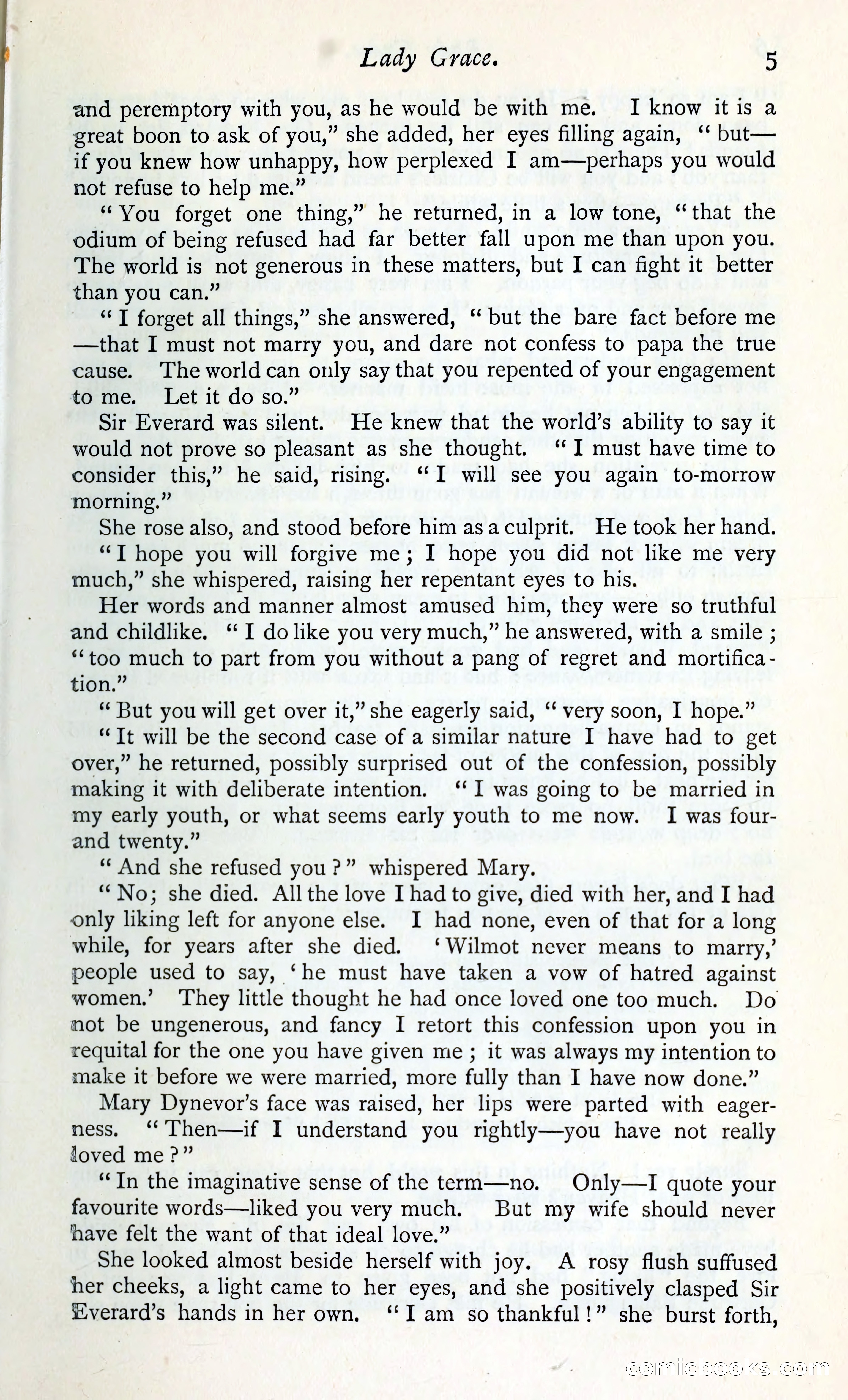
A restored page from Pulp Fiction, 1865. Page through the whole issue in the reader above.
📄 Transcribed text from this page (OCR, searchable)
Machine-transcribed from the original scan — historical spelling and the odd misread are preserved.
Lady Grace. 5 and peremptory with you, as he would be with me. I know itis a great boon to ask of you,” she added, her eyes filling again, ‘* but— if you knew how unhappy, how perplexed I am—perhaps you would not refuse to help me.” “Vou forget one thing,” he returned, in a low tone, “that the odium of being refused had far better fall upon me than upon you. The world is not generous in these matters, but I can fight it better than you can.” ‘“T forget all things,” she answered, ‘‘ but the bare fact before me —that I must not marry you, and dare not confess to papa the true cause. The world can only say that you repented of your engagement to me. Let it do so.” Sir Everard was silent. He knew that the world’s ability to say it would not prove so pleasant as she thought. ‘‘I must have time to consider this,” he said, rising. ‘“‘I will see you again to-morrow morning.” She rose also, and stood before him asaculprit. He took her hand. “T hope you will forgive me; I hope you did not like me very much,” she whispered, raising her repentant eyes to his. Her words and manner almost amused him, they were so truthful and childlike. ‘‘ I dolike you very much,” he answered, with a smile ; **too much to part from you without a pang of regret and mortifica- tion.” “ But you will get over it,” she eagerly said, ‘‘ very soon, I hope.” “It will be the second case of a similar nature I have had to get over,” he returned, possibly surprised out of the confession, possibly making it with deliberate intention. ‘‘ I was going to be married in my early youth, or what seems early youth to me now. I was four- and twenty.” ‘And she refused you ?” whispered Mary. ‘““ No; she died. All the love I had to give, died with her, and I had only liking left for anyone else. I had none, even of that for a long while, for years after she died. ‘Wilmot never means to marry,’ people used to say, ‘he must have taken a vow of hatred against women.’ They little thought he had once loved one too much. Do mot be ungenerous, and fancy I retort this confession upon you in requital for the one you have given me; it was always my intention to make it before we were married, more fully than I have now done.” Mary Dynevor’s face was raised, her lips were parted with eager- ness, ‘Then—if I understand you rightly—you have not really loved me ?” ‘In the imaginative sense of the teem—no. Only—lI quote your favourite words—liked you very much. But my wife should never have felt the want of that ideal love.” She looked almost beside herself with joy. A rosy flush suffused her cheeks, a light came to her eyes, and she positively clasped Sir iiverard’s hands in her own. “I am so thankful!” she burst forth, conniclooolkks () An