
Pulp Fiction, 1865 · page 368 of 400
The Argosy — page 368: what you’re looking at
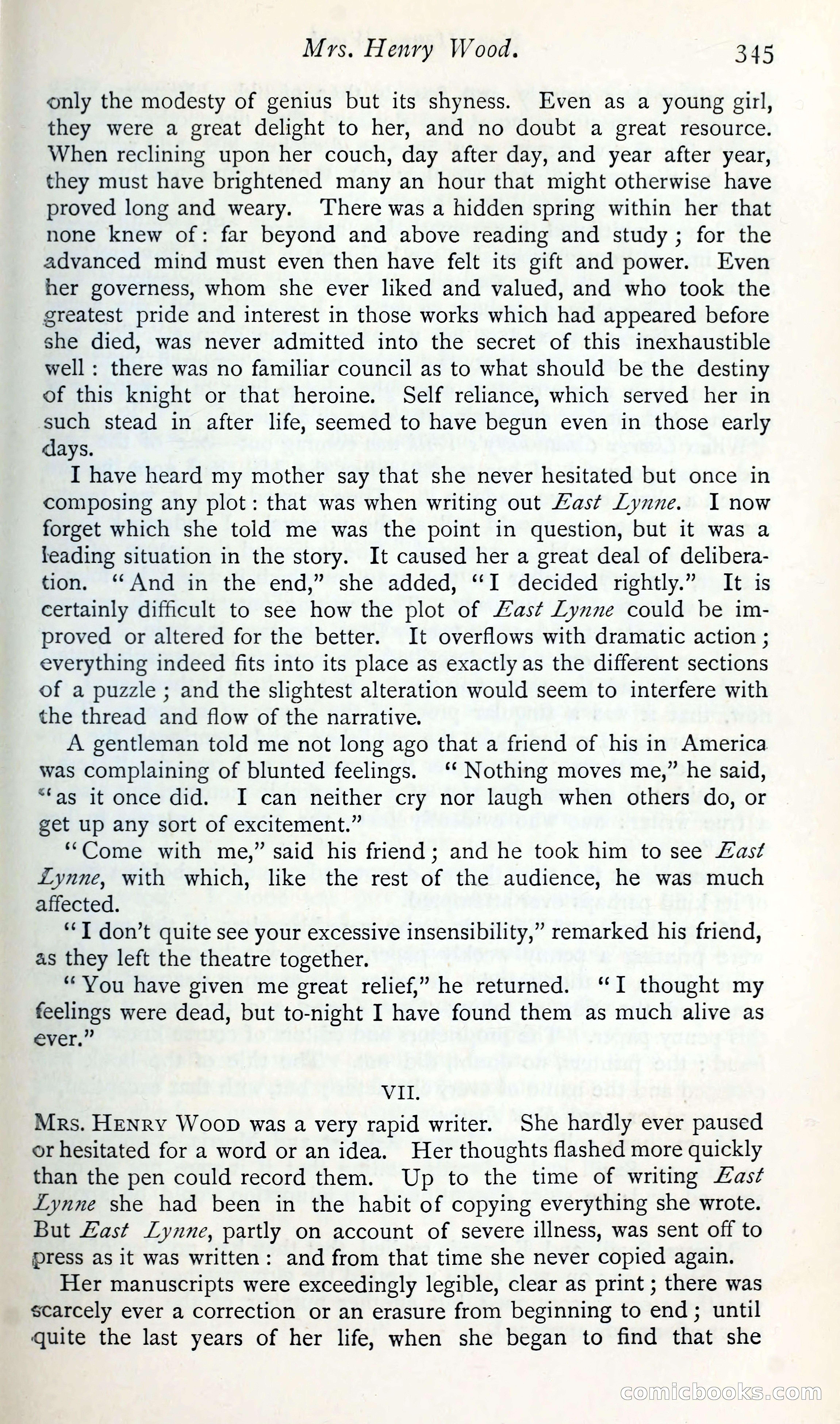
A restored page from Pulp Fiction, 1865. Page through the whole issue in the reader above.
📄 Transcribed text from this page (OCR, searchable)
Machine-transcribed from the original scan — historical spelling and the odd misread are preserved.
Mrs. Henry Wood. 345 only the modesty of genius but its shyness. Even as a young girl, they were a great delight to her, and no doubt a great resource. When reclining upon her couch, day after day, and year after year, they must have brightened many an hour that might otherwise have proved long and weary. There was a hidden spring within her that none knew of: far beyond and above reading and study; for the advanced mind must even then have felt its gift and power. Even her governess, whom she ever liked and valued, and who took the greatest pride and interest in those works which had appeared before she died, was never admitted into the secret of this inexhaustible well: there was no familiar council as to what should be the destiny of this knight or that heroine. Self reliance, which served her in such stead in after life, seemed to have begun even in those early days. I have heard my mother say that she never hesitated but once in composing any plot: that was when writing out “ast Lynne. I now forget which she told me was the point in question, but it was a feading situation in the story. It caused her a great deal of delibera- fion. “And in the end,” she added, “I decided rightly.” It. is certainly difficult to see how the plot of ast Lynne could be im- proved or altered for the better. It overflows with dramatic action ; everything indeed fits into its place as exactly as the different sections of a puzzle ; and the slightest alteration would seem to interfere with the thread and flow of the narrative. A gentleman told me not long ago that a friend of his in America was complaining of blunted feelings. ‘‘ Nothing moves me,” he said, “fas it once did. I can neither cry nor laugh when others do, or get up any sort of excitement.” “Come with me,” said his friend; and he took him to see Las¢ Lynne, with which, like the rest of the audience, he was much affected. “I don’t quite see your excessive insensibility,” remarked his friend, as they left the theatre together. “You have given me great relief,” he returned. ‘“I thought my feelings were dead, but to-night I have found them as much alive as ever.” VII. Mrs. Henry Woop was a very rapid writer. She hardly ever paused or hesitated for a word or an idea. Her thoughts flashed more quickly than the pen could record them. Up to the time of writing Last Lynne she had been in the habit of copying everything she wrote. But Last Lynne, partly on account of severe illness, was sent off to press as it was written: and from that time she never copied again. Her manuscripts were exceedingly legible, clear as print ; there was scarcely ever a correction or an erasure from beginning to end; until quite the last years of her life, when she began to find that she conniclbooolks co