
Pulp Fiction, 1865 · page 208 of 400
The Argosy — page 208: what you’re looking at
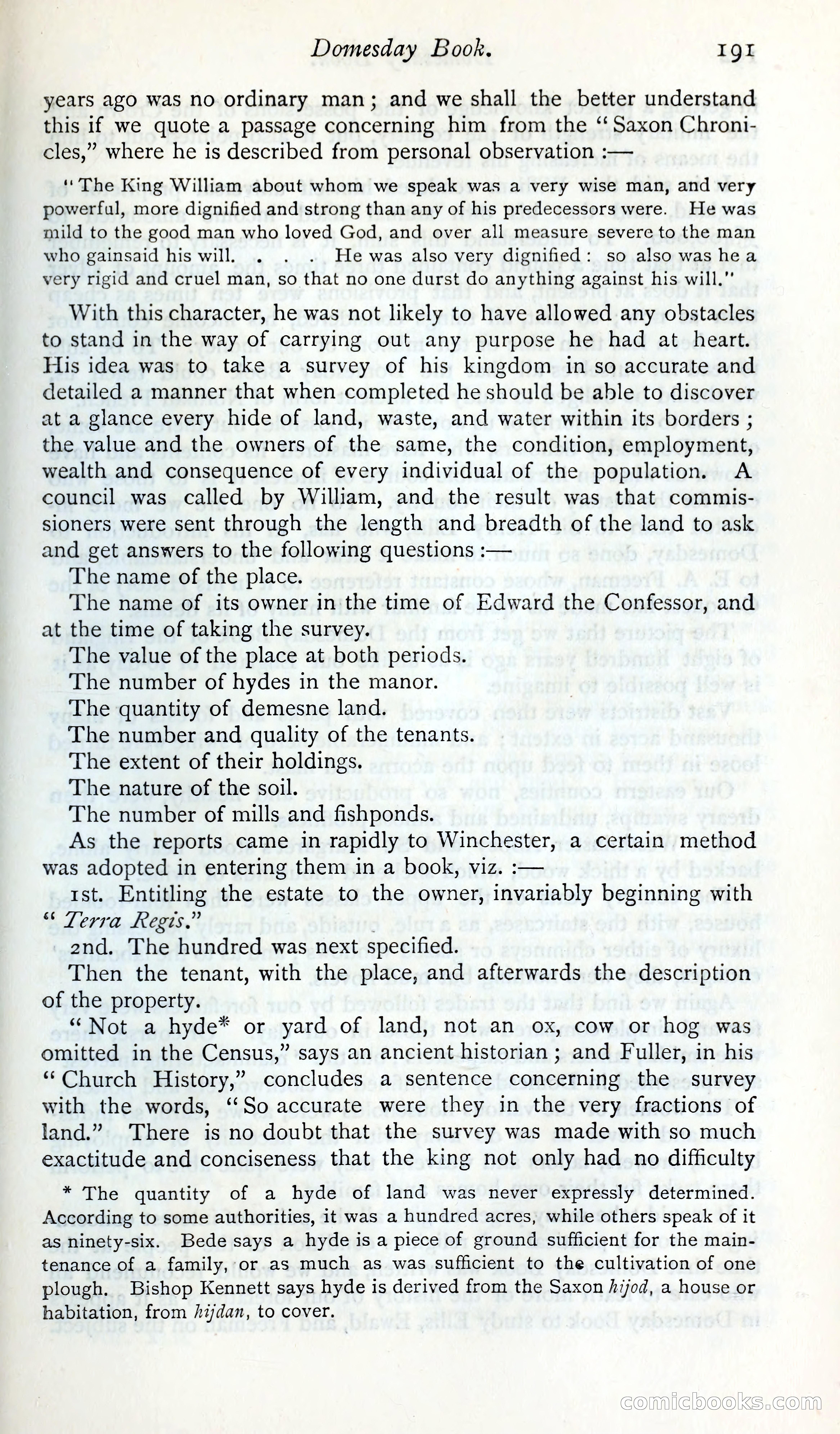
A restored page from Pulp Fiction, 1865. Page through the whole issue in the reader above.
📄 Transcribed text from this page (OCR, searchable)
Machine-transcribed from the original scan — historical spelling and the odd misread are preserved.
Domesday Book. Igl years ago was no ordinary man; and we shall the better understand this if we quote a passage concerning him from the ‘‘ Saxon Chroni- cles,” where he is described from personal observation :— ‘The King William about whom we speak was a very wise man, and very powerful, more dignified and strong than any of his predecessors were. He was mild to the good man who loved God, and over all measure severe to the man who gainsaid his will. . . . Hewas also very dignified: so also was hea very rigid and cruel man, so that no one durst do anything against his will.” With this character, he was not likely to have allowed any obstacles to stand in the way of carrying out any purpose he had at heart. His idea was to take a survey of his kingdom in so accurate and detailed a manner that when completed he should be able to discover at a glance every hide of land, waste, and water within its borders ; the value and the owners of the same, the condition, employment, wealth and consequence of every individual of the population. A council was called by William, and the result was that commis- sioners were sent through the length and breadth of the land to ask and get answers to the following questions :— The name of the place. The name of its owner in the time of Edward the Confessor, and at the time of taking the survey. The value of the place at both periods. The number of hydes in the manor. The quantity of demesne land. The number and quality of the tenants. The extent of their holdings. The nature of the soil. The number of mills and fishponds. As the reports came in rapidly to Winchester, a certain method was adopted in entering them in a book, viz. :— Ist. Entitling the estate to the owner, invariably beginning with ‘“* Terra Regis. ” 2nd. The hundred was next specified. Then the tenant, with the place, sisal afterwards the description of the property. “Not a hyde* or yard of land, not an ox, cow or hog was omitted in the Census,” says an ancient historian; and Fuller, in his “Church History,” concludes a sentence concerning the survey with the words, ‘‘So accurate were they in the very fractions of land.” There is no doubt that the survey was made with so much exactitude and conciseness that the king not only had no difficulty * The quantity of a hyde of land was never expressly determined. According to some authorities, it was a hundred acres, while others speak of it as ninety-six. Bede says a hyde isa piece of ground sufficient for the main- tenance of a family, or as much as was sufficient to the cultivation of one plough. Bishop Kennett says hyde is derived from the Saxon hijod, a house or habitation, from /zdan, to cover. CoOnmnicoooks (CO)