
Pulp Fiction, 1865 · page 207 of 400
The Argosy — page 207: what you’re looking at
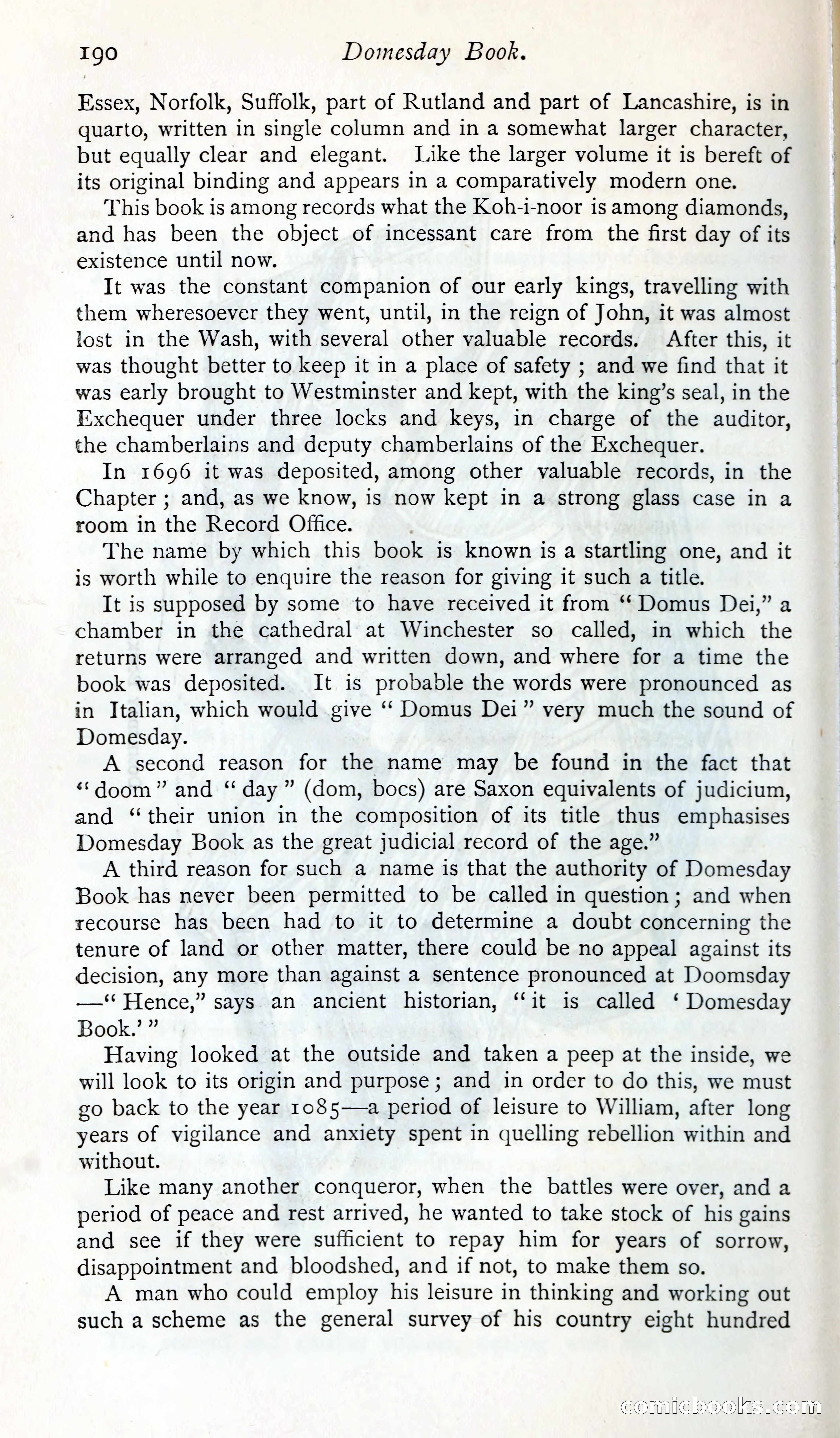
A restored page from Pulp Fiction, 1865. Page through the whole issue in the reader above.
📄 Transcribed text from this page (OCR, searchable)
Machine-transcribed from the original scan — historical spelling and the odd misread are preserved.
Igo Domesday Book. Essex, Norfolk, Suffolk, part of Rutland and part of Lancashire, is in quarto, written in single column and in a somewhat larger character, but equally clear and elegant. Like the larger volume it is bereft of its original binding and appears in a comparatively modern one. This book is among records what the Koh-i-noor is among diamonds, and has been the object of incessant care from the first day of its existence until now. It was the constant companion of our early kings, travelling with them wheresoever they went, until, in the reign of John, it was almost lost in the Wash, with several other valuable records. After this, it was thought better to keep it in a place of safety ; and we find that it was early brought to Westminster and kept, with the king’s seal, in the Exchequer under three locks and keys, in charge of the auditor, the chamberlains and deputy chamberlains of the Exchequer. In 1696 it was deposited, among other valuable records, in the Chapter ; and, as we know, is now kept in a strong glass case in a room in the Record Office. The name by which this book is known is a startling one, and it is worth while to enquire the reason for giving it such a title. It is supposed by some to have received it from ‘‘ Domus Dei,” a chamber in the cathedral at Winchester so called, in which the returns were arranged and written down, and where for a time the book was deposited. It is probable the words were pronounced as in Italian, which would give ‘‘ Domus Dei” very much the sound of Domesday. A second reason for the name may be found in the fact that “doom” and ‘‘ day” (dom, bocs) are Saxon equivalents of judicium, and “their union in the composition of its title thus emphasises Domesday Book as the great judicial record of the age.” A third reason for such a name is that the authority of Domesday Book has never been permitted to be called in question; and when recourse has been had to it to determine a doubt concerning the tenure of land or other matter, there could be no appeal against its decision, any more than against a sentence pronounced at Doomsday —‘* Hence,” says an ancient historian, “it is called ‘ Domesday Book.’ ” Having looked at the outside and taken a peep at the inside, we will look to its origin and purpose; and in order to do this, we must go back to the year 1085—a period of leisure to William, after long years of vigilance and anxiety spent in quelling rebellion within and without. Like many another conqueror, when the battles were over, and a period of peace and rest arrived, he wanted to take stock of his gains and see if they were sufficient to repay him for years of sorrow, disappointment and bloodshed, and if not, to make them so. A man who could employ his leisure in thinking and working out such a scheme as the general survey of his country eight hundred CONMICLMOOOKS. © l ca \