
Pulp Fiction, 1865 · page 390 of 400
The Argosy — page 390: what you’re looking at
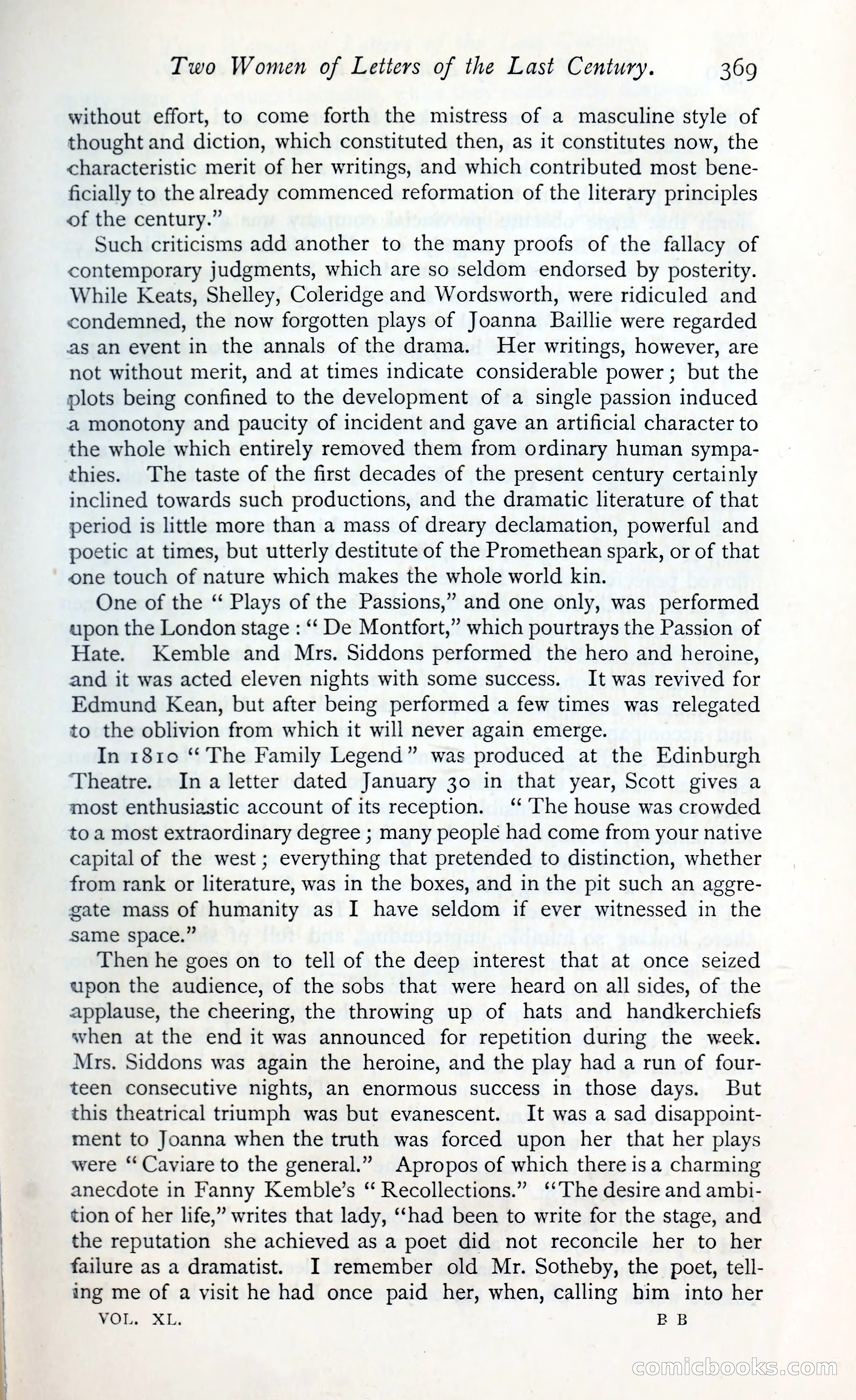
A restored page from Pulp Fiction, 1865. Page through the whole issue in the reader above.
📄 Transcribed text from this page (OCR, searchable)
Machine-transcribed from the original scan — historical spelling and the odd misread are preserved.
Two Women of Letters of the Last Century. 369 without effort, to come forth the mistress of a masculine style of thought and diction, which constituted then, as it constitutes now, the characteristic merit of her writings, and which contributed most bene- ficially to the already commenced reformation of the literary principles of the century.” Such criticisms add another to the many proofs of the fallacy of contemporary judgments, which are so seldom endorsed by posterity. While Keats, Shelley, Coleridge and Wordsworth, were ridiculed and condemned, the now forgotten plays of Joanna Baillie were regarded as an event in the annals of the drama. Her writings, however, are not without merit, and at times indicate considerable power; but the plots being confined to the development of a single passion induced a monotony and paucity of incident and gave an artificial character to the whole which entirely removed them from ordinary human sympa- thies. The taste of the first decades of the present century certainly inclined towards such productions, and the dramatic literature of that period is little more than a mass of dreary declamation, powerful and poetic at times, but utterly destitute of the Promethean spark, or of that one touch of nature which makes the whole world kin. One of the “ Plays of the Passions,” and one only, was performed upon the London stage : ‘‘ De Montfort,” which pourtrays the Passion of Hate. Kemble and Mrs. Siddons performed the hero and heroine, and it was acted eleven nights with some success. It was revived for Edmund Kean, but after being performed a few times was relegated to the oblivion from which it will never again emerge. In 181o “The Family Legend” was produced at the Edinburgh Theatre. Ina letter dated January 30 in that year, Scott gives a most enthusiastic account of its reception. ‘‘ The house was crowded toa most extraordinary degree ; many people had come from your native capital of the west; everything that pretended to distinction, whether from rank or literature, was in the boxes, and in the pit such an aggre- gate mass of humanity as I have seldom if ever witnessed in the same space.” Then he goes on to tell of the deep interest that at once seized upon the audience, of the sobs that were heard on all sides, of the applause, the cheering, the throwing up of hats and handkerchiefs when at the end it was announced for repetition during the week. Mrs. Siddons was again the heroine, and the play had a run of four- teen consecutive nights, an enormous success in those days. But this theatrical triumph was but evanescent. It was a sad disappoint- ment to Joanna when the truth was forced upon her that her plays were ‘‘ Caviare to the general.” Apropos of which there isa charming anecdote in Fanny Kemble’s “ Recollections.” ‘The desire and ambi- tion of her life,” writes that lady, ‘Shad been to write for the stage, and the reputation she achieved as a poet did not reconcile her to her failure as a dramatist. I remember old Mr. Sotheby, the poet, tell- ing me of a visit he had once paid her, when, calling him into her VOL. XL. BB COnniclooolxs (CO)