
Pulp Fiction, 1865 · page 120 of 400
The Argosy — page 120: what you’re looking at
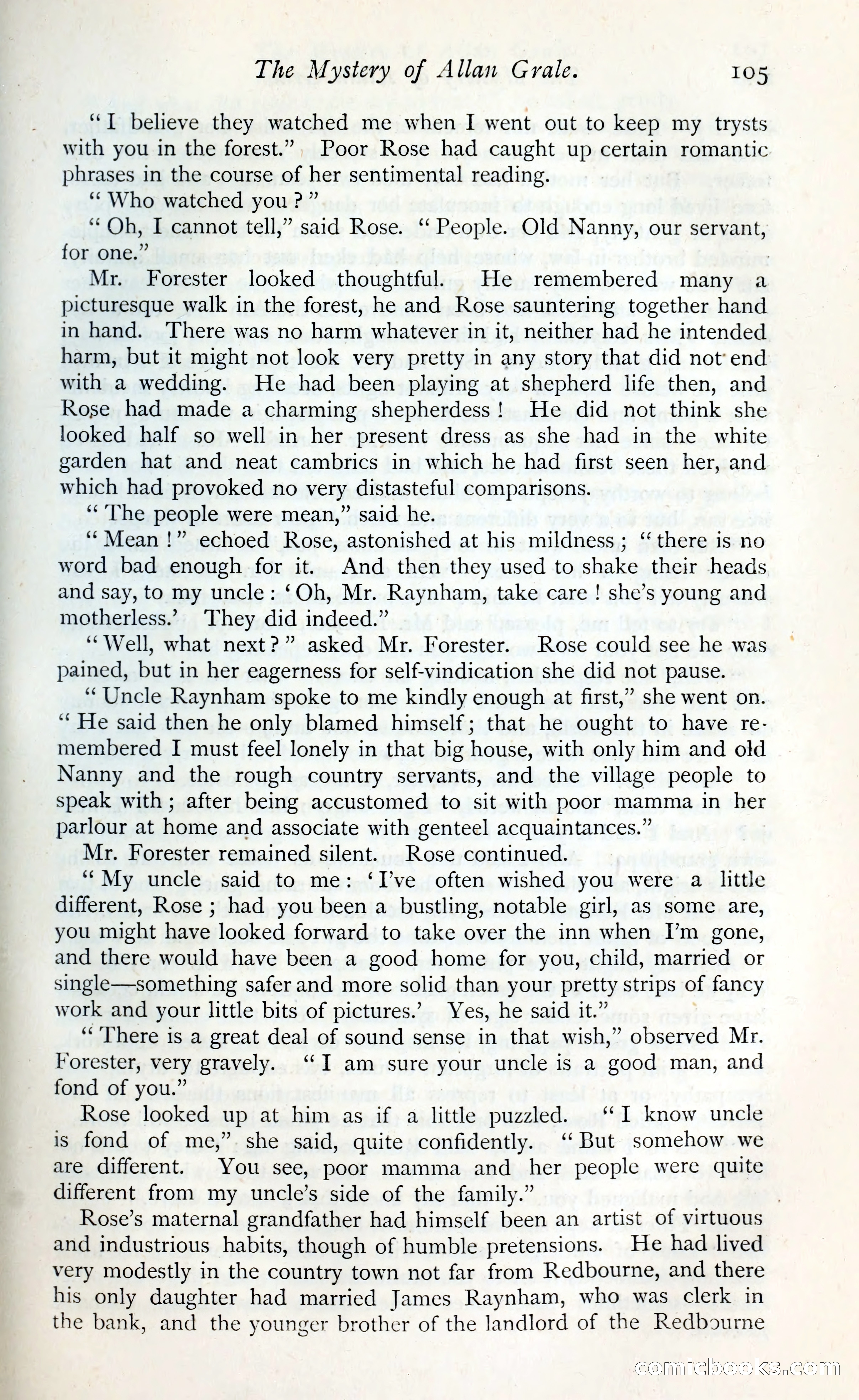
A restored page from Pulp Fiction, 1865. Page through the whole issue in the reader above.
📄 Transcribed text from this page (OCR, searchable)
Machine-transcribed from the original scan — historical spelling and the odd misread are preserved.
The Mystery of Allan Grale. 105 ‘““T believe they watched me when I went out to keep my trysts with you in the forest.” Poor Rose had caught up certain romantic phrases in the course of her sentimental reading. ‘Who watched you ?” “Oh, I cannot tell,” said Rose. ‘‘ People. Old Nanny, our servant, for one.” , , Mr. Forester looked thoughtful. He remembered many a picturesque walk in the forest, he and Rose sauntering together hand in hand. ‘There was no harm whatever in it, neither had he intended harm, but it might not look very pretty in any story that did not end with a wedding. He had been playing at shepherd life then, and Rose had made a charming shepherdess! He did not think she looked half so well in her present dress as she had in the white garden hat and neat cambrics in which he had first seen her, and which had provoked no very distasteful comparisons. ‘““"The people were mean,” said he. “Mean!” echoed Rose, astonished at his mildness; ‘‘ there is no word bad enough for it. And then they used to shake their heads and say, to my uncle: ‘Oh, Mr. Raynham, take care ! she’s young and motherless.’ They did indeed.” “Well, what next?” asked Mr. Forester. Rose could see he was pained, but in her eagerness for self-vindication she did not pause. “Uncle Raynham spoke to me kindly enough at first,” she went on. ‘“ He said then he only blamed himself; that he ought to have re- membered I must feel lonely in that big house, with only him and old Nanny and the rough country servants, and the village people to speak with; after being accustomed to sit with poor mamma in her parlour at home and associate with genteel acquaintances.” Mr. Forester remained silent. Rose continued. ‘“My uncle said to me: ‘I’ve often wished you were a little different, Rose ; had you been a bustling, notable girl, as some are, you might have looked forward to take over the inn when I’m gone, and there would have been a good home for you, child, married or single—something safer and more solid than your pretty strips of fancy work and your little bits of pictures.’ Yes, he said it.” “There is a great deal of sound sense in that wish,” observed Mr. Forester, very gravely. “I am sure your uncle is a good man, and fond of you.” Rose looked up at him as if a little puzzled. “I know uncle is fond of me,” she said, quite confidently. ‘‘ But somehow we are different. You see, poor mamma and her people were quite different from my uncle’s side of the family.” Rose’s maternal grandfather had himself been an artist of virtuous and industrious habits, though of humble pretensions. He had lived very modestly in the country town not far from Redbourne, and there his only daughter had married James Raynham, who was clerk in the bank, and the younger brother of the landlord of the Redbourne Connicloooks (SO)