
Pulp Fiction, 1865 · page 119 of 400
The Argosy — page 119: what you’re looking at
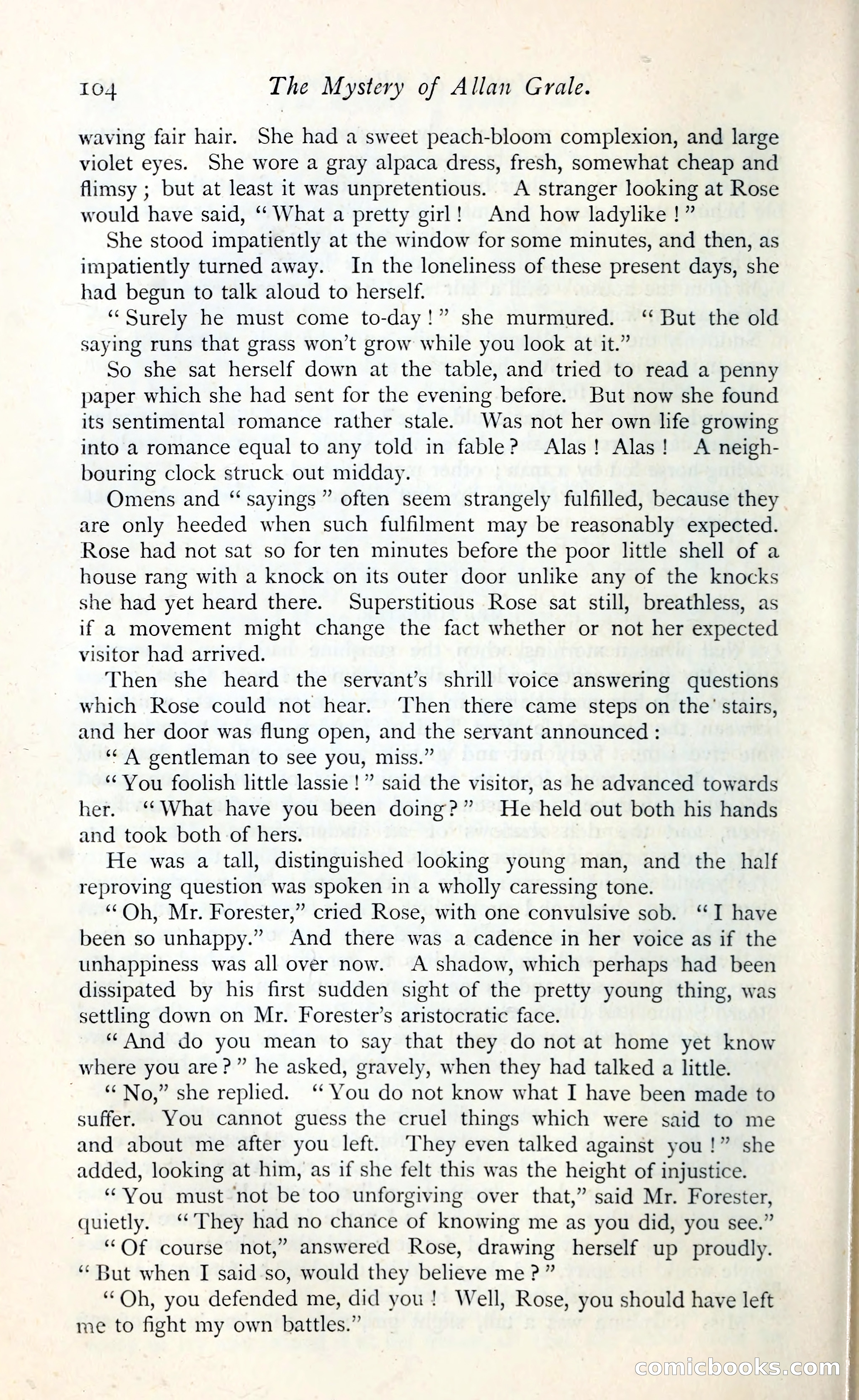
A restored page from Pulp Fiction, 1865. Page through the whole issue in the reader above.
📄 Transcribed text from this page (OCR, searchable)
Machine-transcribed from the original scan — historical spelling and the odd misread are preserved.
104 The Mystery of Allan Grale. waving fair hair. She had a sweet peach-bloom complexion, and large violet eyes. She wore a gray alpaca dress, fresh, somewhat cheap and flimsy ; but at least 1t was unpretentious. A stranger looking at Rose would have said, “‘ What a pretty girl! And how ladylike!” She stood impatiently at the window for some minutes, and then, as impatiently turned away. In the loneliness of these present days, she had begun to talk aloud to herself. ‘Surely he must come to-day!” she murmured. ‘‘ But the old saying runs that grass won’t grow while you look at it.” So she sat herself down at the table, and tried to read a penny paper which she had sent for the evening before. But now she found its sentimental romance rather stale. Was not her own life growing into a romance equal to any told in fable? Alas! Alas! A neigh- bouring clock struck out midday. Omens and “sayings ” often seem strangely fulfilled, because they are only heeded when such fulfilment may be reasonably expected. Rose had not sat so for ten minutes before the poor little shell of a house rang with a knock on its outer door unlike any of the knocks she had yet heard there. Superstitious Rose sat still, breathless, as if a movement might change the fact whether or not her expected visitor had arrived. Then she heard the servant’s shrill voice answering questions which Rose could not hear. ‘Then there came steps on the’ stairs, and her door was flung open, and the servant announced : ‘‘ A gentleman to see you, miss.” ‘You foolish little lassie!” said the visitor, as he advanced towards her. ‘‘What have you been doing?” He held out both his hands and took both of hers. | He was a tall, distinguished looking young man, and the half reproving question was spoken in a wholly caressing tone. “Oh, Mr. Forester,” cried Rose, with one convulsive sob. ‘I have been so unhappy.” And there was a cadence in her voice as if the unhappiness was all over now. A shadow, which perhaps had been dissipated by his first sudden sight of the pretty young thing, was settling down on Mr. Forester’s aristocratic face. “And do you mean to say that they do not at home yet know where you are?” he asked, gravely, when they had talked a little. “ No,” she replied. ‘‘ You do not know what I have been made to suffer. You cannot guess the cruel things which were said to me and about me after you left. ‘They even talked against you!” she added, looking at him, as if she felt this was the height of injustice. ‘You must not be too unforgiving over that,” said Mr. Forester, quietly. ‘They had no chance of knowing me as you did, you see.” “Of course not,” answered Rose, drawing herself up proudly. ‘But when I said so, would they believe me ? ” ‘““Oh, you defended me, did you! Well, Rose, you should have left me to fight my own battles.” CONNIE DOO KS (EO)