
Pulp Fiction, 1865 · page 55 of 400
The Argosy — page 55: what you’re looking at
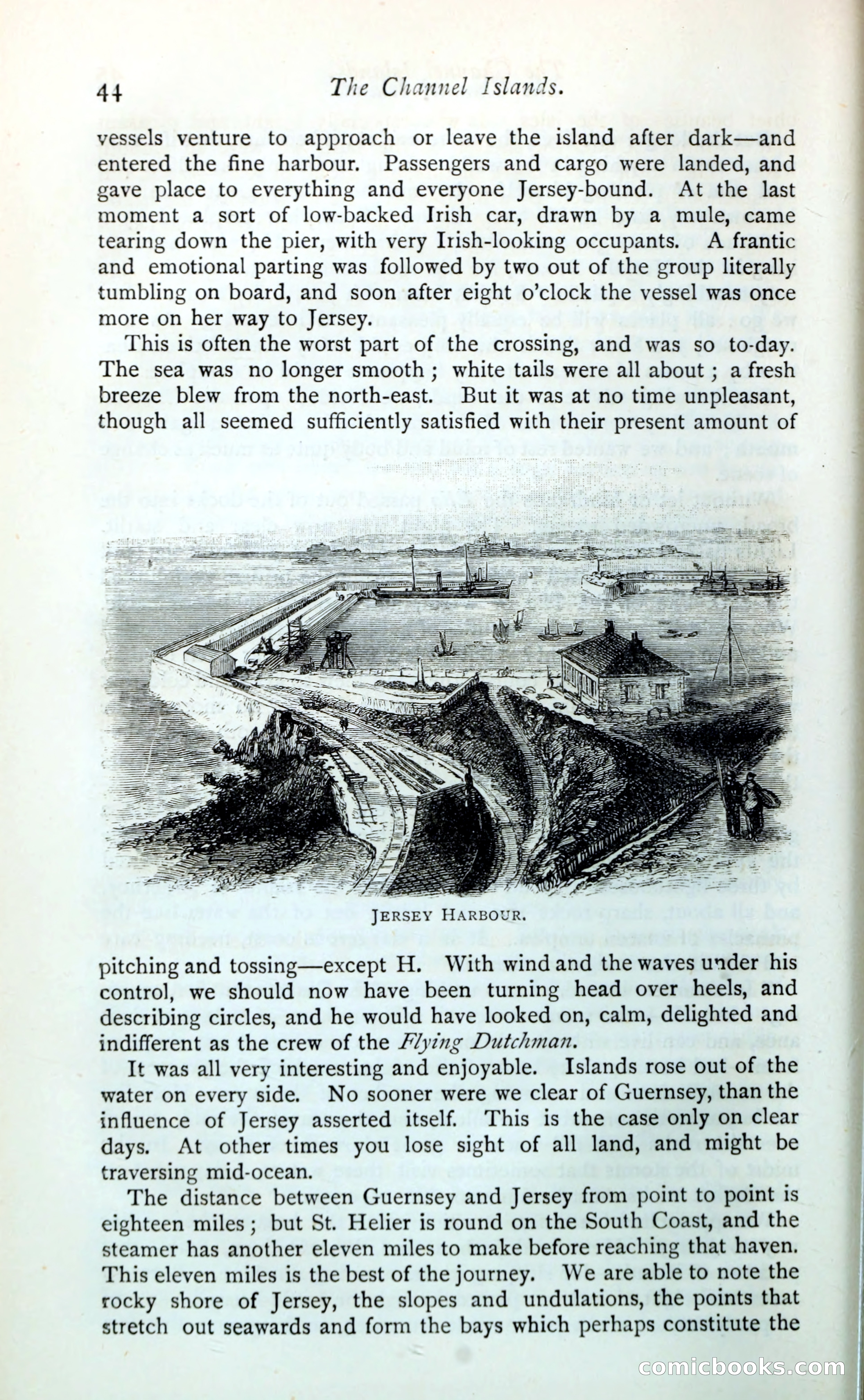
A restored page from Pulp Fiction, 1865. Page through the whole issue in the reader above.
📄 Transcribed text from this page (OCR, searchable)
Machine-transcribed from the original scan — historical spelling and the odd misread are preserved.
44 The Channel Islands. vessels venture to approach or leave the island after dark—and entered the fine harbour. Passengers and cargo were landed, and gave place to everything and everyone Jersey-bound. At the last moment a sort of low-backed Irish car, drawn by a mule, came tearing down the pier, with very Irish-looking occupants. A frantic and emotional parting was followed by two out of the group literally tumbling on board, and soon after eight o’clock the vessel was once more on her way to Jersey. This is often the worst part of the crossing, and was so to-day. The sea was no longer smooth; white tails were all about ; a fresh breeze blew from the north-east. But it was at no time unpleasant, though all seemed sufficiently satisfied with their present amount of : H \\ aT | e . an F a te “¢ “ = 9 — 4 ~ . > “" i = iW i JERSEY HARBOUR. pitching and tossing—except H. With wind and the waves under his control, we should now have been turning head over heels, and describing circles, and he would have looked on, calm, delighted and indifferent as the crew of the //yzng Dutchman. It was all very interesting and enjoyable. Islands rose out of the water on every side. No sooner were we clear of Guernsey, than the influence of Jersey asserted itself. This is the case only on clear days. At other times you lose sight of all land, and might be traversing mid-ocean. The distance between Guernsey and Jersey from point to point is eighteen miles; but St. Helier is round on the South Coast, and the steamer has another eleven miles to make before reaching that haven. This eleven miles is the best of the journey. We are able to note the rocky shore of Jersey, the slopes and undulations, the points that stretch out seawards and form the bays which perhaps constitute the > Gomicbooks.co