
Pulp Fiction, 1865 · page 339 of 400
The Argosy — page 339: what you’re looking at
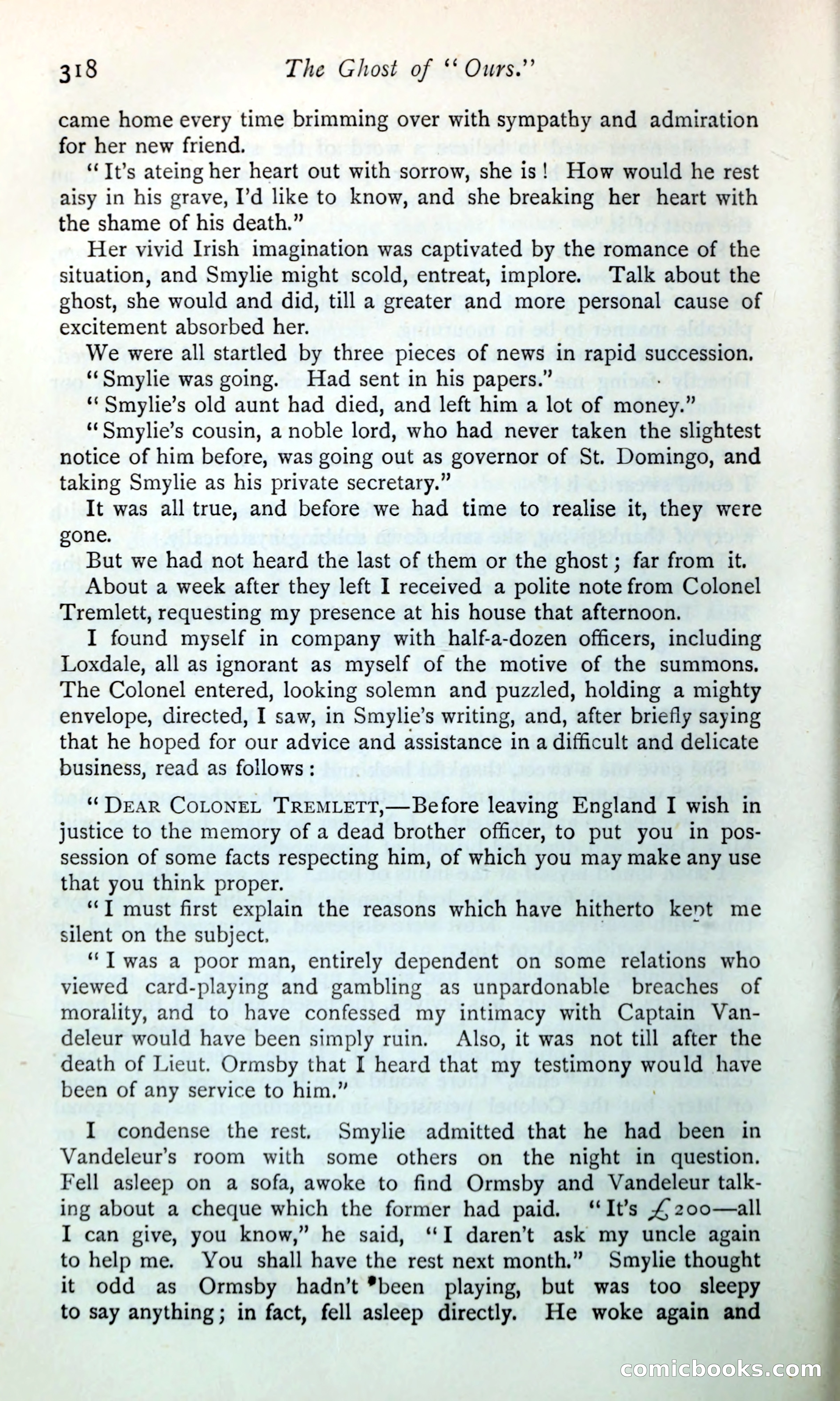
A restored page from Pulp Fiction, 1865. Page through the whole issue in the reader above.
📄 Transcribed text from this page (OCR, searchable)
Machine-transcribed from the original scan — historical spelling and the odd misread are preserved.
318 The Ghost of ‘* Ours.”’ came home every time brimming over with sympathy and admiration for her new friend. ‘“Tt’s ateing her heart out with sorrow, she is! How would he rest aisy in his grave, I’d like to know, and she breaking her heart with the shame of his death.” Her vivid Irish imagination was captivated by the romance of the situation, and Smylie might scold, entreat, implore. Talk about the ghost, she would and did, till a greater and more personal cause of excitement absorbed her. We were all startled by three pieces of news: in —_—- succession. ‘‘Smylie was going. Had sent in his papers.” * Smylie’s old aunt had died, and left him a lot of money.” *Smylie’s cousin, a noble lord, who had never taken the slightest notice of him before, was going out as governor of St. Domingo, and taking Smylie as his private secretary.” It was all true, and before we had time to realise it, they were gone. But we had not heard the last of them or the ghost; far from it. About a week after they left I received a polite note from Colonel Tremlett, requesting my presence at his house that afternoon. I found myself in company with half-a-dozen officers, including Loxdale, all as ignorant as myself of the motive of the summons, The Colonel entered, looking solemn and puzzled, holding a mighty envelope, directed, I saw, in Smylie’s writing, and, after briefly saying that he hoped for our advice and assistance in a difficult and delicate business, read as follows: “DEAR COLONEL TREMLETT,—Before leaving England I wish in justice to the memory of a dead brother officer, to put you in pos- session of some facts respecting him, of which you may make any use that you think proper. ‘“‘T must first explain the reasons which have hitherto kent me silent on the subject. ‘‘T was a poor man, entirely dependent on some relations who viewed card-playing and gambling as unpardonable breaches of morality, and to have confessed my intimacy with Captain Van- deleur would have been simply ruin. Also, it was not till after the death of Lieut. Ormsby that I heard that my testimony would have been of any service to him,” I condense the rest. Smylie admitted that he had been in Vandeleur’s room with some others on the night in question. Fell asleep on a sofa, awoke to find Ormsby and Vandeleur talk- ing about a cheque which the former had paid. ‘It’s 4 200—all I can give, you know,” he said, ‘I daren’t ask my uncle again to help me. You shall have the rest next month.” Smylie thought it odd as Ormsby hadn’t *been playing, but was too sleepy to say anything; in fact, fell asleep directly. He woke again and Gomichbooks eom