
Pulp Fiction, 1865 · page 338 of 400
The Argosy — page 338: what you’re looking at
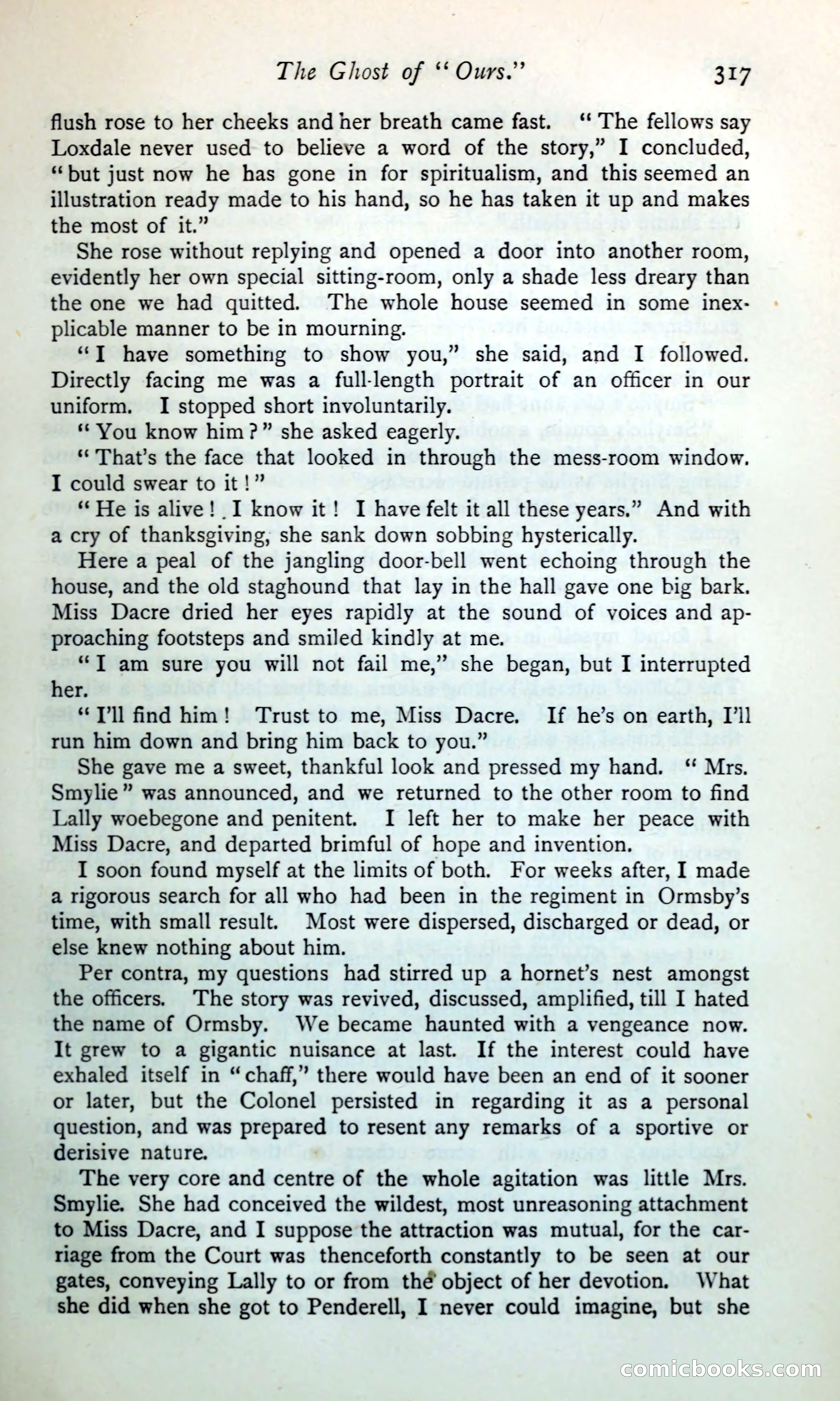
A restored page from Pulp Fiction, 1865. Page through the whole issue in the reader above.
📄 Transcribed text from this page (OCR, searchable)
Machine-transcribed from the original scan — historical spelling and the odd misread are preserved.
The Ghost of ‘‘ Ours.” 317 flush rose to her cheeks and her breath came fast. ‘‘ The fellows say Loxdale never used to believe a word of the story,” I concluded, “but just now he has gone in for spiritualism, and this seemed an illustration ready made to his hand, so he has taken it up and makes the most of it.” She rose without replying and opened a door into another room, evidently her own special sitting-room, only a shade less dreary than the one we had quitted. The whole house seemed in some inex- plicable manner to be in mourning. “TI have something to show you,” she said, and I followed. Directly facing me was a full-length portrait of an officer in our uniform. I stopped short involuntarily. * You know him?” she asked eagerly. *‘'That’s the face that looked in through the mess-room window. I could swear to it!” “ He is alive! I know it! I have felt it all these years.” And with a cry of thanksgiving, she sank down sobbing hysterically. Here a peal of the jangling door-bell went echoing through the house, and the old staghound that lay in the hall gave one big bark. Miss Dacre dried her eyes rapidly at the sound of voices and ap- proaching footsteps and smiled kindly at me. “IT am sure you will not fail me,” she began, but I interrupted her. *T’'ll find him! Trust to me, Miss Dacre. If he’s on earth, Ill run him down and bring him back to you.” She gave me a sweet, thankful look and pressed my hand. “ Mrs. Smylie” was announced, and we returned to the other room to find Lally woebegone and penitent. I left her to make her peace with Miss Dacre, and departed brimful of hope and invention. I soon found myself at the limits of both. For weeks after, I made a rigorous search for all who had been in the regiment in Ormsby’s time, with small result. Most were dispersed, discharged or dead, or else knew nothing about him. Per contra, my questions had stirred up a hornet’s nest amongst the officers. The story was revived, discussed, amplified, till I hated the name of Ormsby. We became haunted with a vengeance now. It grew to a gigantic nuisance at last. If the interest could have exhaled itself in “chaff,” there would have been an end of it sooner or later, but the Colonel persisted in regarding it as a personal question, and was prepared to resent any remarks of a sportive or derisive nature. The very core and centre of the whole agitation was little Mrs. Smylie. She had conceived the wildest, most unreasoning attachment to Miss Dacre, and I suppose the attraction was mutual, for the car- riage from the Court was thenceforth constantly to be seen at our gates, conveying Lally to or from thé object of her devotion. What she did when she got to Penderell, I never could imagine, but she (EONNIE OO KS (EO) m