
Pulp Fiction, 1865 · page 169 of 400
The Argosy — page 169: what you’re looking at
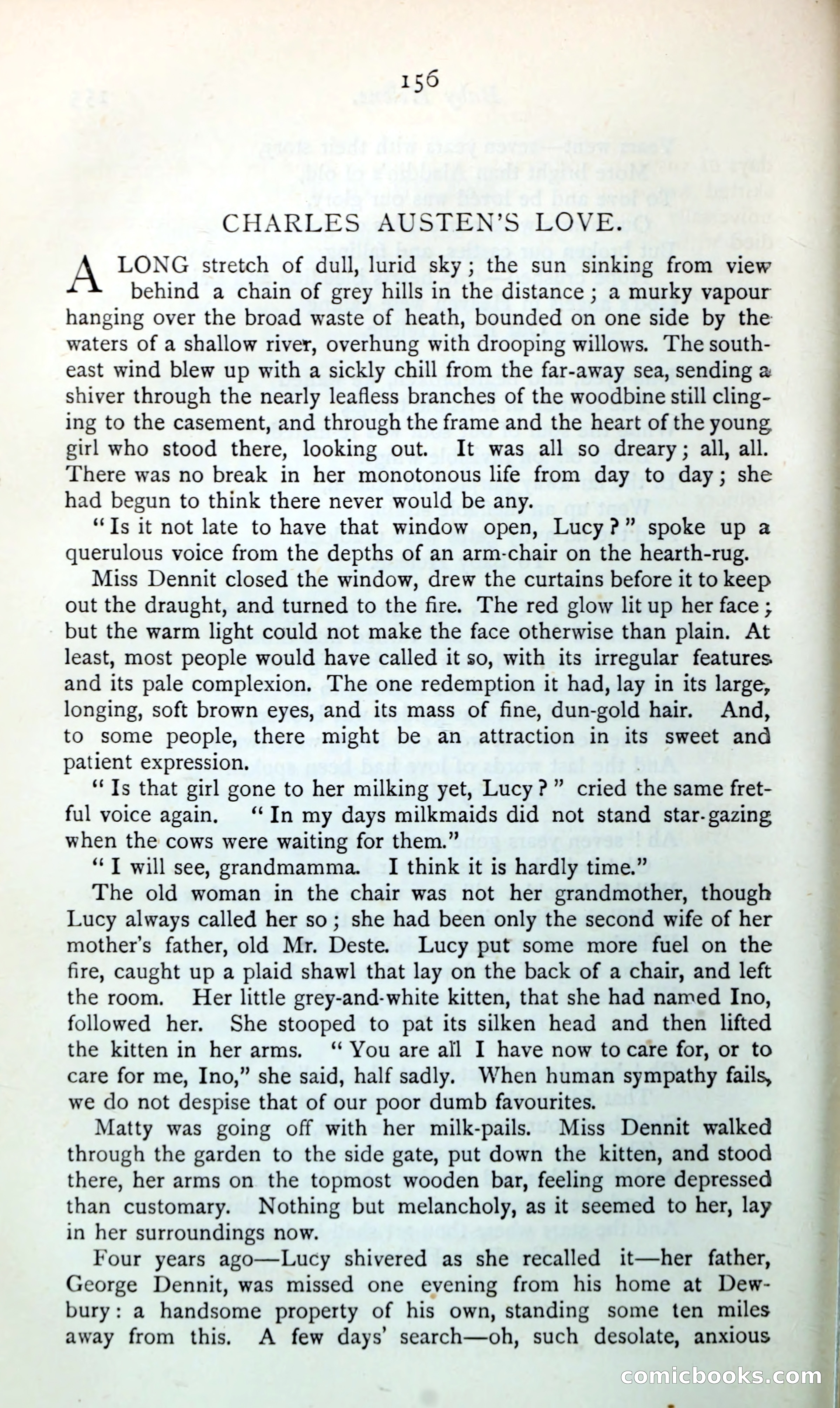
A restored page from Pulp Fiction, 1865. Page through the whole issue in the reader above.
📄 Transcribed text from this page (OCR, searchable)
Machine-transcribed from the original scan — historical spelling and the odd misread are preserved.
CHARLES, AUSEREN’S «LOVE. LONG stretch of dull, lurid sky; the sun sinking from view behind a chain of grey hills in the distance ; a murky vapour hanging over the broad waste of heath, bounded on one side by the waters of a shallow river, overhung with drooping willows. The south- east wind blew up with a sickly chill from the far-away sea, sending 2 shiver through the nearly leafless branches of the woodbine still cling- ing to the casement, and through the frame and the heart of the young girl who stood there, looking out. It was all so dreary; all, all. There was no break in her monotonous life from day to day; she had begun to think there never would be any. “Ts it not late to have that window open, Lucy?” spoke up a querulous voice from the depths of an arm-chair on the hearth-rug. Miss Dennit closed the window, drew the curtains before it to keep out the draught, and turned to the fire. The red glow lit up her face ; but the warm light could not make the face otherwise than plain. At least, most people would have called it so, with its irregular features and its pale complexion. The one redemption it had, lay in its large, longing, soft brown eyes, and its mass of fine, dun-gold hair. And, to some people, there might be an attraction in its sweet and patient expression. | “Ts that girl gone to her milking yet, Lucy?” cried the same fret- ful voice again. ‘In my days milkmaids did not stand star- gazing when the cows were waiting for them.” “T will see, grandmamma. _ I think it is hardly time.” The old woman in the chair was not her grandmother, though Lucy always called her so; she had been only the second wife of her mother’s father, old Mr. Deste. Lucy put some more fuel on the fire, caught up a plaid shawl that lay on the back of a chair, and left the room. Her little grey-and-white kitten, that she had named Ino, followed her. She stooped to pat its silken head and then lifted the kitten in her arms. ‘ You are all I have now tocare for, or to care for me, Ino,” she said, half sadly. When human sympathy fails, we do not despise that of our poor dumb favourites. Matty was going off with her milk-pails. Miss Dennit walked through the garden to the side gate, put down the kitten, and stood there, her arms on the topmost wooden bar, feeling more depressed than customary. Nothing but melancholy, as it seemed to her, lay in her surroundings now. Four years ago—Lucy shivered as she recalled it—her father, George Dennit, was missed one evening from his home at Dew- bury: a handsome property of his own, standing some ten miles away from this. A few days’ search—oh, such desolate, anxious Eomichbooks (E (0)