
Pulp Fiction, 1865 · page 151 of 400
The Argosy — page 151: what you’re looking at
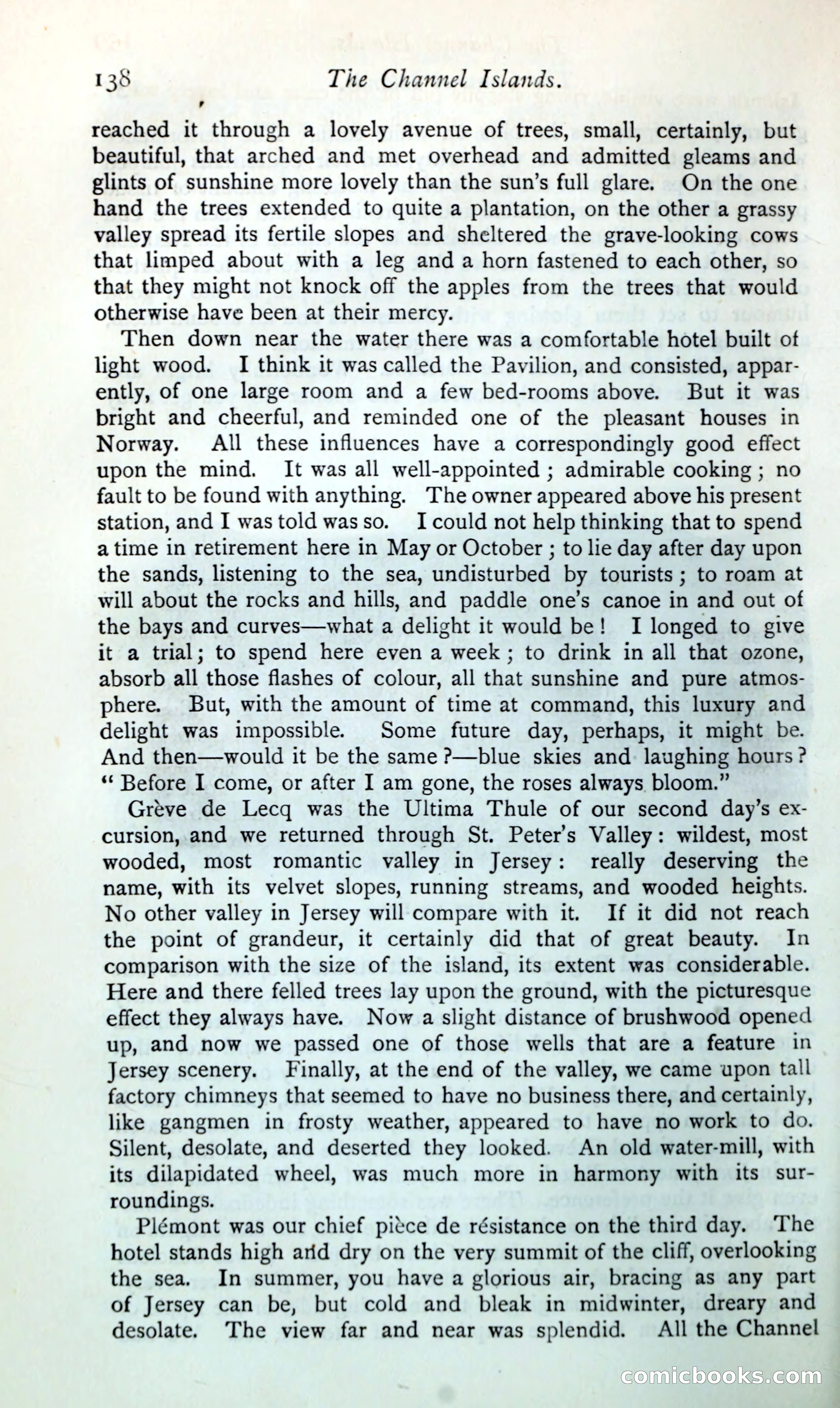
A restored page from Pulp Fiction, 1865. Page through the whole issue in the reader above.
📄 Transcribed text from this page (OCR, searchable)
Machine-transcribed from the original scan — historical spelling and the odd misread are preserved.
135 The Channel Islands. reached it through a lovely avenue of trees, small, certainly, but beautiful, that arched and met overhead and admitted gleams and glints of sunshine more lovely than the sun’s full glare. On the one hand the trees extended to quite a plantation, on the other a grassy valley spread its fertile slopes and sheltered the grave-looking cows that limped about with a leg and a horn fastened to each other, so that they might not knock off the apples from the trees that would otherwise have been at their mercy. Then down near the water there was a comfortable hotel built of light wood. I think it was called the Pavilion, and consisted, appar- ently, of one large room and a few bed-rooms above. But it was bright and cheerful, and reminded one of the pleasant houses in Norway. All these influences have a correspondingly good effect upon the mind. It was all well-appointed ; admirable cooking ; no fault to be found with anything. The owner appeared above his present station, and I wastoldwasso. I could not help thinking that to spend a time in retirement here in May or October ; to lie day after day upon the sands, listening to the sea, undisturbed by tourists ; to roam at will about the rocks and hills, and paddle one’s canoe in and out of the bays and curves—what a delight it would be! I longed to give it a trial; to spend here even a week; to drink in all that ozone, absorb all those flashes of colour, all that sunshine and pure atmos- phere. But, with the amount of time at command, this luxury and delight was impossible. Some future day, perhaps, it might be. And then—would it be the same P—blue skies and laughing hours? ‘“‘ Before I come, or after I am gone, the roses always bloom.” Greve de Lecq was the Ultima Thule of our second day’s ex- cursion, and we returned through St. Peter's Valley: wildest, most wooded, most romantic valley in Jersey: really deserving the name, with its velvet slopes, running streams, and wooded heights. No other valley in Jersey will compare with it. If it did not reach the point of grandeur, it certainly did that of great beauty. In comparison with the size of the island, its extent was considerable. Here and there felled trees lay upon the ground, with the picturesque effect they always have. Now a slight distance of brushwood opened up, and now we passed one of those wells that are a feature in Jersey scenery. Finally, at the end of the valley, we came upon tall factory chimneys that seemed to have no business there, and certainly, like gangmen in frosty weather, appeared to have no work to do. Silent, desolate, and deserted they looked. An old water-mill, with its dilapidated wheel, was much more in harmony with its sur- roundings. Plémont was our chief pitce de résistance on the third day. ‘The hotel stands high arid dry on the very summit of the cliff, overlooking the sea. In summer, you have a glorious air, bracing as any part of Jersey can be, but cold and bleak in midwinter, dreary and desolate. The view far and near was splendid. All the Channel GEomichbooks.com