
Pulp Fiction, 1865 · page 121 of 400
The Argosy — page 121: what you’re looking at
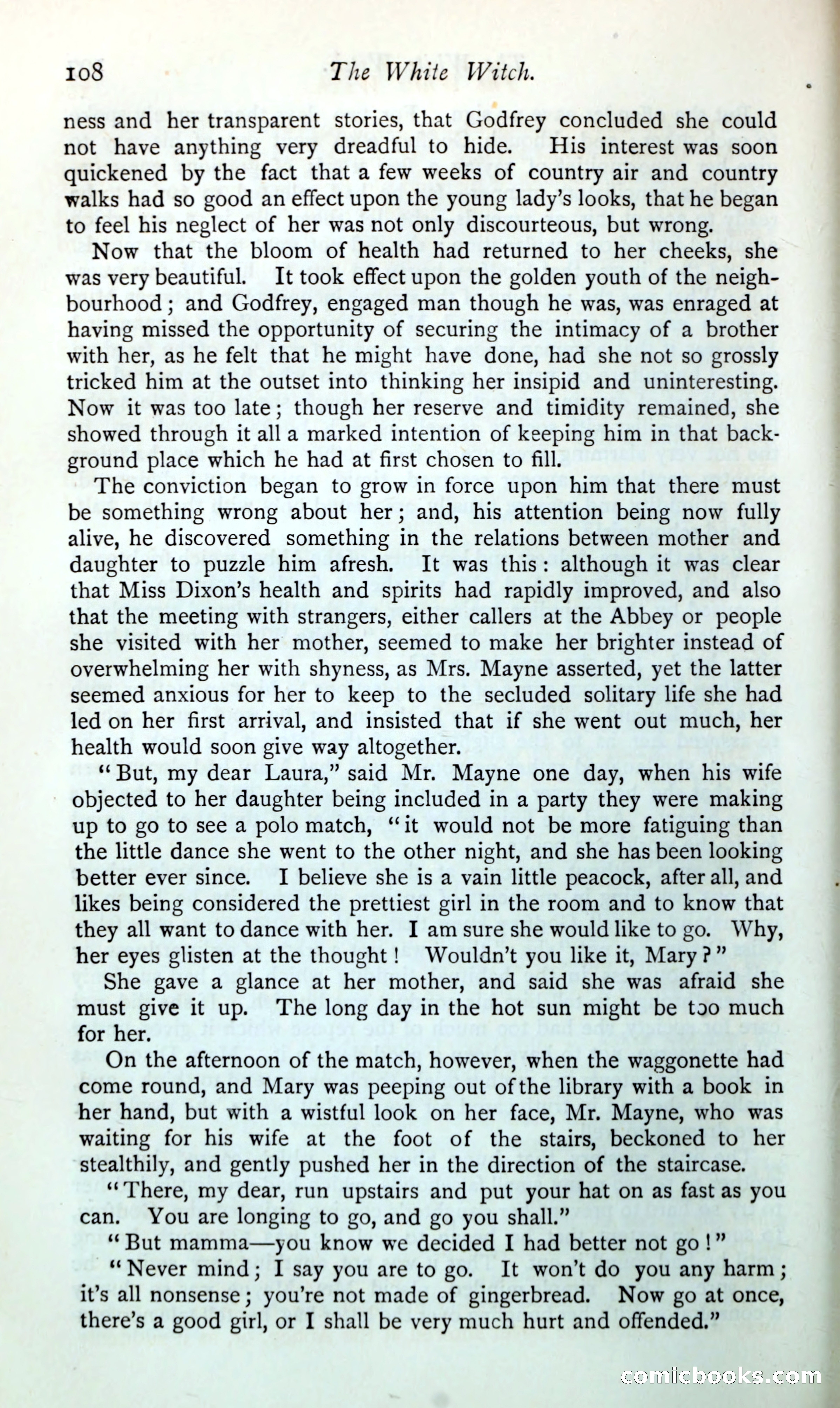
A restored page from Pulp Fiction, 1865. Page through the whole issue in the reader above.
📄 Transcribed text from this page (OCR, searchable)
Machine-transcribed from the original scan — historical spelling and the odd misread are preserved.
108 The White Witch. ness and her transparent stories, that Godfrey concluded she could not have anything very dreadful to hide. His interest was soon quickened by the fact that a few weeks of country air and country walks had so good an effect upon the young lady’s looks, that he began to feel his neglect of her was not only discourteous, but wrong. Now that the bloom of health had returned to her cheeks, she was very beautiful. It took effect upon the golden youth of the neigh- bourhood ; and Godfrey, engaged man though he was, was enraged at having missed the opportunity of securing the intimacy of a brother with her, as he felt that he might have done, had she not so grossly tricked him at the outset into thinking her insipid and uninteresting. Now it was too late; though her reserve and timidity remained, she showed through it alla marked intention of keeping him in that back- ground place which he had at first chosen to fill. The conviction began to grow in force upon him that there must be something wrong about her; and, his attention being now fully alive, he discovered something in the relations between mother and daughter to puzzle him afresh. It was this: although it was clear that Miss Dixon’s health and spirits had rapidly improved, and also that the meeting with strangers, either callers at the Abbey or people she visited with her mother, seemed to make her brighter instead of overwhelming her with shyness, as Mrs. Mayne asserted, yet the latter seemed anxious for her to keep to the secluded solitary life she had led on her first arrival, and insisted that if she went out much, her health would soon give way altogether. ‘ But, my dear Laura,” said Mr. Mayne one day, when his wife objected to her daughter being included in a party they were making up to go to see a polo match, “it would not be more fatiguing than the little dance she went to the other night, and she has been looking better ever since. I believe she is a vain little peacock, after all, and likes being considered the prettiest girl in the room and to know that they all want to dance with her. I amsure she would like to go. Why, her eyes glisten at the thought! Wouldn’t you like it, Mary?” She gave a glance at her mother, and said she was afraid she must give it up. ‘The long day in the hot sun might be ta0 much for her. On the afternoon of the match, however, when the waggonette had come round, and Mary was peeping out ofthe library with a book in her hand, but with a wistful look on her face, Mr. Mayne, who was | waiting for his wife at the foot of the stairs, beckoned to her stealthily, and gently pushed her in the direction of the staircase. ‘There, my dear, run upstairs and put your hat on as fast as you can. You are longing to go, and go you shall.” ‘But mamma—you know we decided I had better not go!” “Never mind; I say you are to go. It won’t do you any harm; it’s all nonsense; you’re not made of gingerbread. Now go at once, there’s a good girl, or I shall be very much hurt and offended.” Gomichbooks;Gcom _