
Pulp Fiction, 1865 · page 16 of 399
The Argosy — page 16: what you’re looking at
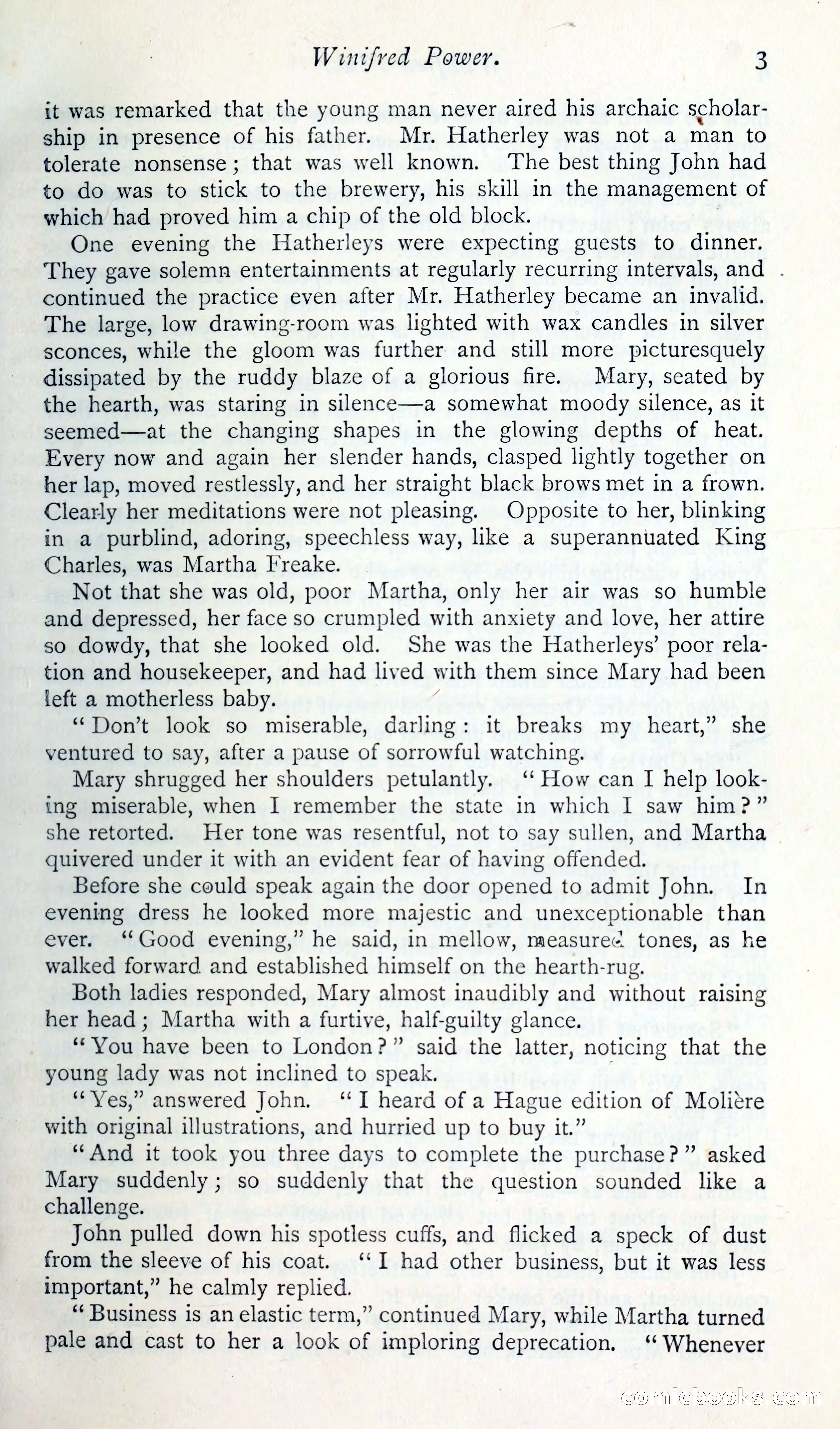
A restored page from Pulp Fiction, 1865. Page through the whole issue in the reader above.
📄 Transcribed text from this page (OCR, searchable)
Machine-transcribed from the original scan — historical spelling and the odd misread are preserved.
Winifred Power. 3 it was remarked that the young man never aired his archaic scholar- ship in presence of his father. Mr. Hatherley was not a man to tolerate nonsense; that was well known. ‘The best thing John had to do was to stick to the brewery, his skill in the management of which had proved him a chip of the old block. One evening the Hatherleys were expecting guests to dinner. They gave solemn entertainments at regularly recurring intervals, and . continued the practice even after Mr. Hatherley became an invalid. The large, low drawing-room was lighted with wax candles in silver sconces, while the gloom was further and still more picturesquely dissipated by the ruddy blaze of a glorious fire. Mary, seated by the hearth, was staring in silence—a somewhat moody silence, as it seemed—at the changing shapes in the glowing depths of heat. Every now and again her slender hands, clasped lightly together on her lap, moved restlessly, and her straight black brows met in a frown. Clearly her meditations were not pleasing. Opposite to her, blinking in a purblind, adoring, speechless way, like a superannuated King Charles, was Martha Freake. Not that she was old, poor Martha, only her air was so humble and depressed, her face so crumpled with anxiety and love, her attire so dowdy, that she looked old. She was the Hatherleys’ poor rela- tion and housekeeper, and had lived with them since Mary had been left a motherless baby. “Don’t look so miserable, darling: it breaks my heart,” she ventured to say, after a pause of sorrowful watching. Mary shrugged her shoulders petulantly. ‘‘ How can I help look- ing miserable, when I remember the state in which I saw him?” she retorted. Her tone was resentful, not to say sullen, and Martha quivered under it with an evident fear of having offended. Before she could speak again the door opened to admit John. In evening dress he looked more majestic and unexceptionable than ever. ‘‘Good evening,” he said, in mellow, measuree tones, as he walked forward and established himself on the hearth-rug. Both ladies responded, Mary almost inaudibly and without raising her head; Martha with a furtive, half-guilty glance. “You have been to London?” said the latter, noticing that the young lady was not inclined to speak. ; “Yes,” answered John. “I heard of a Hague edition of Moliére with original illustrations, and hurried up to buy it.” “And it took you three days to complete the purchase?” asked Mary suddenly; so suddenly that the question sounded like a challenge. John pulled down his spotless cuffs, and flicked a speck of dust from the sleeve of his coat. ‘‘I had other business, but it was less important,” he calmly replied. ‘Business is an elastic term,” continued Mary, while Martha turned pale and cast to her a look of imploring deprecation. ‘Whenever EOnnicloooks (CO)