
Pulp Fiction, 1865 · page 15 of 399
The Argosy — page 15: what you’re looking at
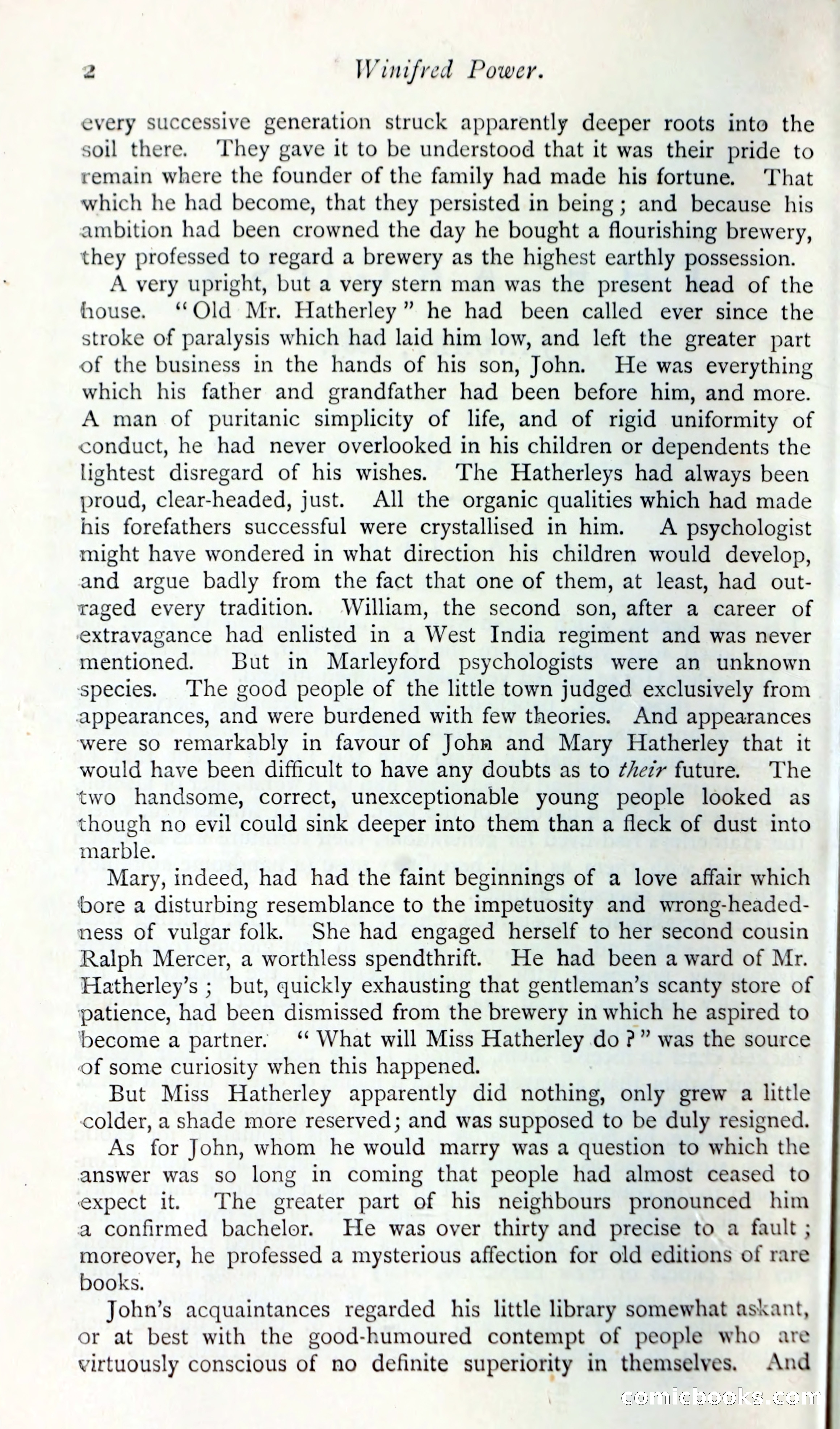
A restored page from Pulp Fiction, 1865. Page through the whole issue in the reader above.
📄 Transcribed text from this page (OCR, searchable)
Machine-transcribed from the original scan — historical spelling and the odd misread are preserved.
2 Winifred Power. every successive generation struck apparently deeper roots into the soil there. ‘They gave it to be understood that it was their pride to remain where the founder of the family had made his fortune. That which he had become, that they persisted in being; and because his ambition had been crowned the day he bought a flourishing brewery, they professed to regard a brewery as the highest earthly possession. A very upright, but a very stern man was the present head of the house. ‘‘Old Mr. Hatherley” he had been called ever since the stroke of paralysis which had laid him low, and left the greater part of the business in the hands of his son, John. He was everything which his father and grandfather had been before him, and more. A man of puritanic simplicity of life, and of rigid uniformity of conduct, he had never overlooked in his children or dependents the lightest disregard of his wishes. ‘The Hatherleys had always been proud, clear-headed, just. All the organic qualities which had made his forefathers successful were crystallised in him. A psychologist might have wondered in what direction his children would develop, and argue badly from the fact that one of them, at least, had out- raged every tradition. William, the second son, after a career of extravagance had enlisted in a West India regiment and was never mentioned. But in Marleyford psychologists were an unknown species. The good people of the little town judged exclusively from appearances, and were burdened with few theories. And appearances were so remarkably in favour of John and Mary Hatherley that it would have been difficult to have any doubts as to ¢/ezy future. The two handsome, correct, unexceptionable young people looked as though no evil could sink deeper into them than a fleck of dust into marble. Mary, indeed, had had the faint beginnings of a love affair which bore a disturbing resemblance to the impetuosity and wrong-headed- ness of vulgar folk. She had engaged herself to her second cousin Ralph Mercer, a worthless spendthrift. He had been a ward of Mr. Hatherley’s ; but, quickly exhausting that gentleman’s scanty store of patience, had been dismissed from the brewery in which he aspired to become a partner. ‘‘ What will Miss Hatherley do ?” was the source of some curlosity when this happened. But Miss Hatherley apparently did nothing, only grew a little colder, a shade more reserved; and was supposed to be duly resigned. As for John, whom he would marry was a question to which the answer was so long in coming that people had almost ceased to expect it. The greater part of his neighbours pronounced him a confirmed bachelor. He was over thirty and precise to a fault ; moreover, he professed a mysterious affection for old editions of rare books. John’s acquaintances regarded his little library somewhat askant, or at best with the good-humoured contempt of people who are virtuously conscious of no definite superiority in themselves. And Gomichbooksrheom