
Pulp Fiction, 1865 · page 17 of 399
The Argosy — page 17: what you’re looking at
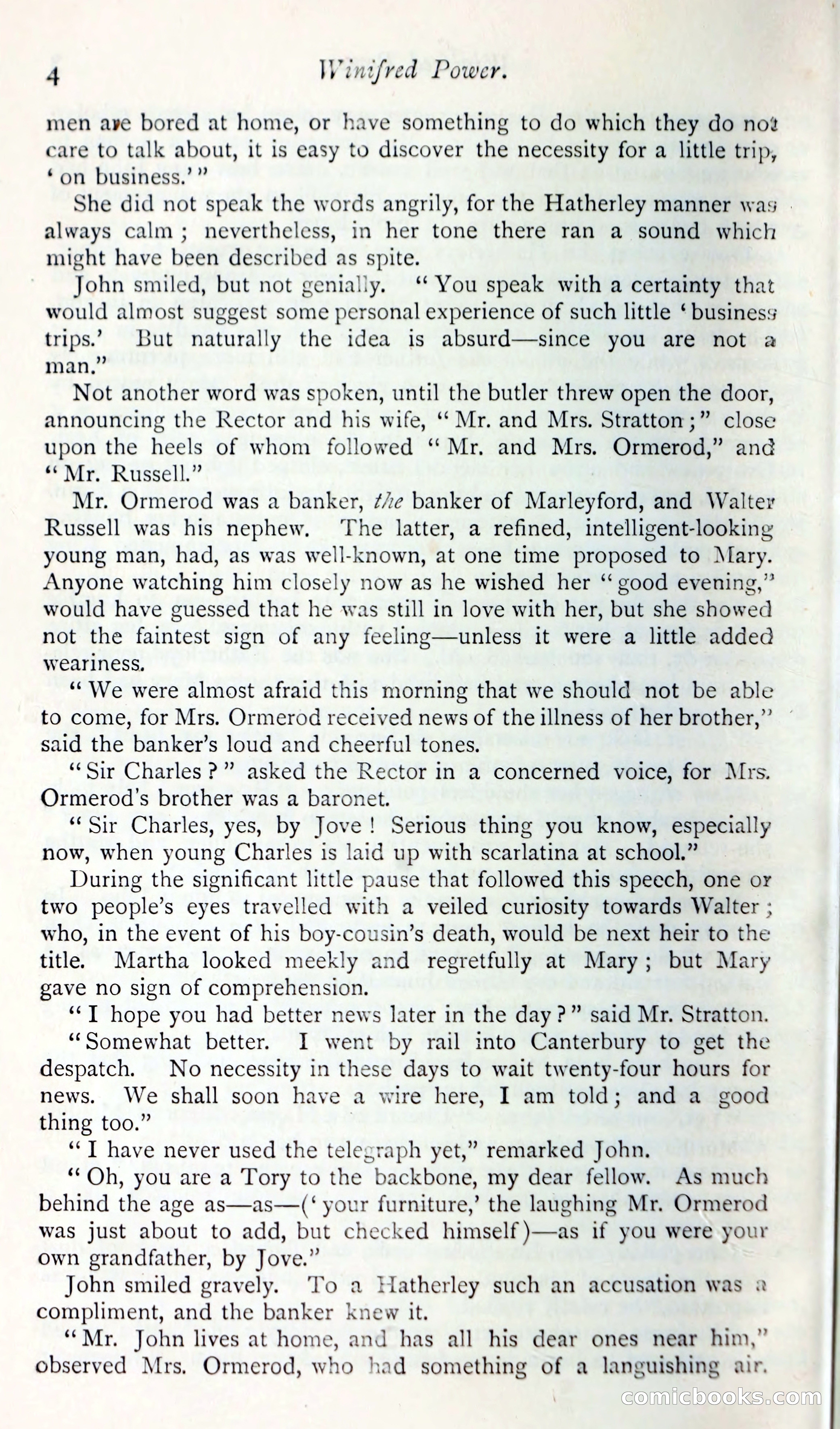
A restored page from Pulp Fiction, 1865. Page through the whole issue in the reader above.
📄 Transcribed text from this page (OCR, searchable)
Machine-transcribed from the original scan — historical spelling and the odd misread are preserved.
4 Winifred Power. men ave bored at home, or have something to do which they do not care to talk about, it is easy to discover the necessity for a little trip, ‘on business.’ ” She did not speak the words angrily, for the Hatherley manner was | always calm; nevertheless, In her tone there ran a sound which might have been described as spite. John smiled, but not genially. ‘‘ You speak with a certainty that would almost suggest some personal experience of such little ‘ business trips.’ But naturally the idea is absurd—since you are not a man,” Not another word was spoken, until the butler threw open the door, announcing the Rector and his wife, ‘‘ Mr. and Mrs. Stratton ;” close upon the heels of whom followed ‘‘ Mr, and Mrs. Ormerod,” and “* Mr, Russell.” Mr. Ormerod was a banker, ¢/e banker of Marleyford, and Walter Russell was his nephew. ‘The latter, a refined, intelligent-looking young man, had, as was well-known, at one time proposed to Mary. Anyone watching him closely now as he wished her “‘ good evening,” would have guessed that he was still in love with her, but she showed not the faintest sign of any feeling—unless it were a little added weariness. ‘We were almost afraid this morning that we should not be able to come, for Mrs. Ormerod received news of the illness of her brother,” said the banker’s loud and cheerful tones. ‘¢Sir Charles P” asked the Rector in a concerned voice, for Mrs. Ormerod's brother was a baronet. ‘Sir Charles, yes, by Jove! Serious thing you know, especially now, when young Charles 1s laid up with scarlatina at school.” During the significant little pause that followed this speech, one or two people’s eyes travelled with a veiled curiosity towards Walter ; who, in the event of his boy-cousin’s death, would be next heir to the title. Martha looked meekly and regretfully at Mary; but Mary gave no sign of comprehension. ‘“T hope you had better news later in the day ?” said Mr. Stratton. ‘‘Somewhat better. I went by rail into Canterbury to get the despatch. No necessity in these days to wait twenty-four hours for news. We shall soon have a wire here, I am told; and a good thing too.” ‘“‘T have never used the telegraph yet,” remarked John. ‘“Oh, you are a Tory to the backbone, my dear fellow. As much behind the age as—as—/(‘ your furniture,’ the laughing Mr. Ormerod was just about to add, but checked himself )—as if you were your own grandfather, by Jove.” John smiled gravely. To a Hatherley such an accusation was a compliment, and the banker knew it. ““Mr. John lives at home, and has all his dear ones near him,” observed Mrs. Ormerod, who had something of a languishing air, EORNIE OOOKS (E©)