
Pulp Fiction, 1865 · page 86 of 399
The Argosy — page 86: what you’re looking at
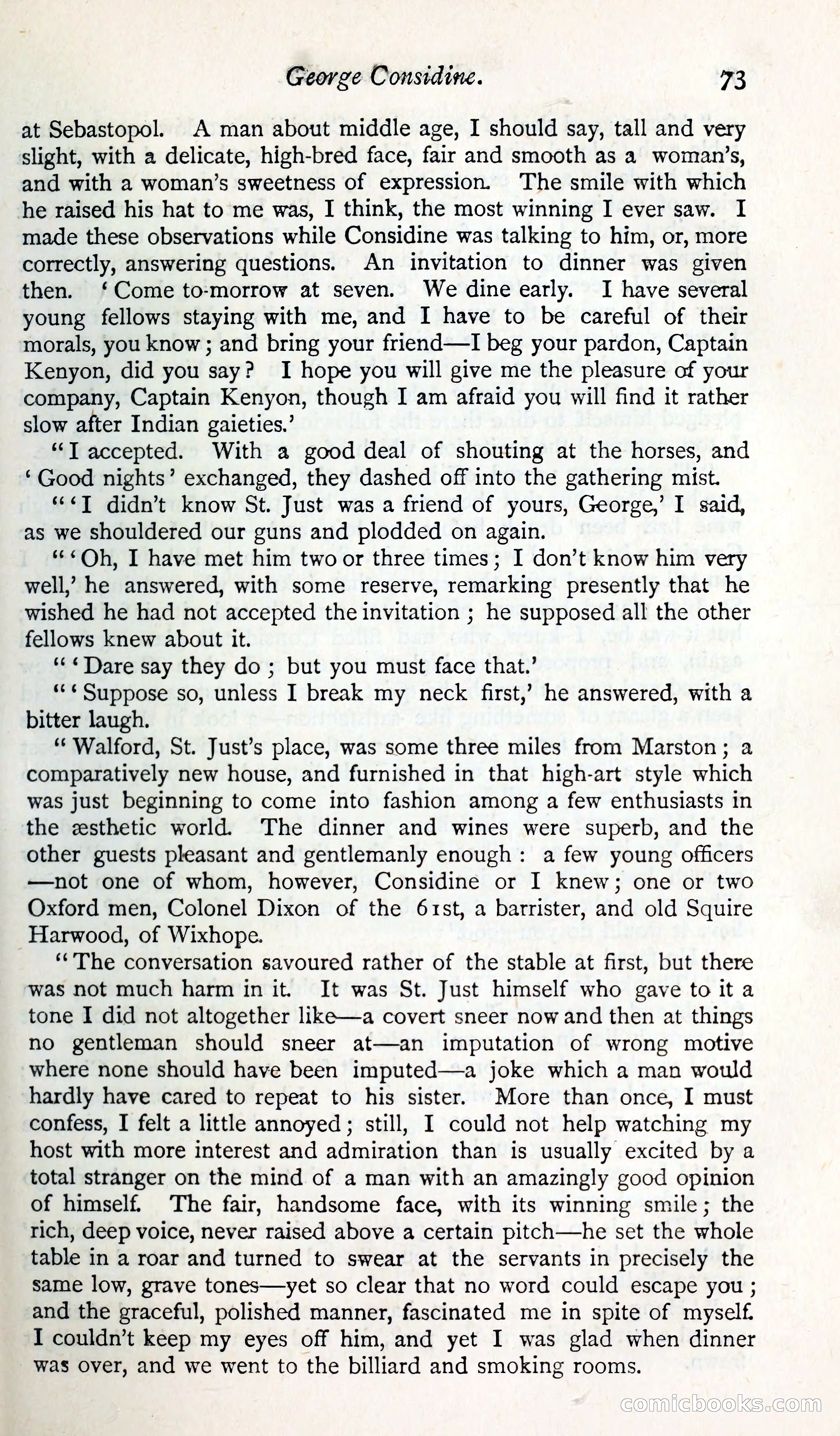
A restored page from Pulp Fiction, 1865. Page through the whole issue in the reader above.
📄 Transcribed text from this page (OCR, searchable)
Machine-transcribed from the original scan — historical spelling and the odd misread are preserved.
George Considine. 73 at Sebastopol. A man about middle age, I should say, tall and very slight, with a delicate, high-bred face, fair and smooth as a woman’s, and with a woman’s sweetness of expression. The smile with which he raised his hat to me was, I think, the most winning I ever saw. I made these observations while Considine was talking to him, or, more correctly, answering questions. An invitation to dinner was given then. ‘Come to-morrow at seven. We dine early. I have several young fellows staying with me, and I have to be careful of their morals, you know; and bring your friend—lI beg your pardon, Captain Kenyon, did you say? I hope you will give me the pleasure of your company, Captain Kenyon, though I am afraid you will find it rather slow after Indian gaieties.’ ‘‘T accepted. With a good deal of shouting at the horses, and ‘Good nights’ exchanged, they dashed off into the gathering mist. ‘<7 didn’t know St. Just was a friend of yours, George,’ I said, as we shouldered our guns and plodded on again. **<Oh, I have met him two or three times; I don’t know him very well,’ he answered, with some reserve, remarking presently that he wished he had not accepted the invitation ; he supposed all the other fellows knew about it. *¢< Dare say they do; but you must face that.’ «¢¢ Suppose so, unless I break my neck first,’ he answered, with a bitter laugh. ‘Walford, St. Just’s place, was some three miles from Marston; a comparatively new house, and furnished in that high-art style which was just beginning to come into fashion among a few enthusiasts in the esthetic world. The dinner and wines were superb, and the other guests pleasant and gentlemanly enough: a few young officers —not one of whom, however, Considine or I knew; one or two Oxford men, Colonel Dixon of the 61st, a barrister, and old Squire Harwood, of Wixhope. ‘The conversation savoured rather of the stable at first, but there was not much harm init. It was St. Just himself who gave to ita tone I did not altogether like—a covert sneer now and then at things no gentleman should sneer at—an imputation of wrong motive where none should have been imputed—a joke which a man would hardly have cared to repeat to his sister. More than once, I must confess, I felt a little annoyed; still, I could not help watching my host with more interest and admiration than is usually excited by a total stranger on the mind of a man with an amazingly good opinion of himself. The fair, handsome face, with its winning smile; the rich, deep voice, never raised above a certain pitch—he set the whole table in a roar and turned to swear at the servants in precisely the same low, grave tones—yet so clear that no word could escape you ; and the graceful, polished manner, fascinated me in spite of myself. I couldn’t keep my eyes off him, and yet I was glad when dinner was over, and we went to the billiard and smoking rooms. ECORnnicloooks (GO mn