
Pulp Fiction, 1865 · page 84 of 399
The Argosy — page 84: what you’re looking at
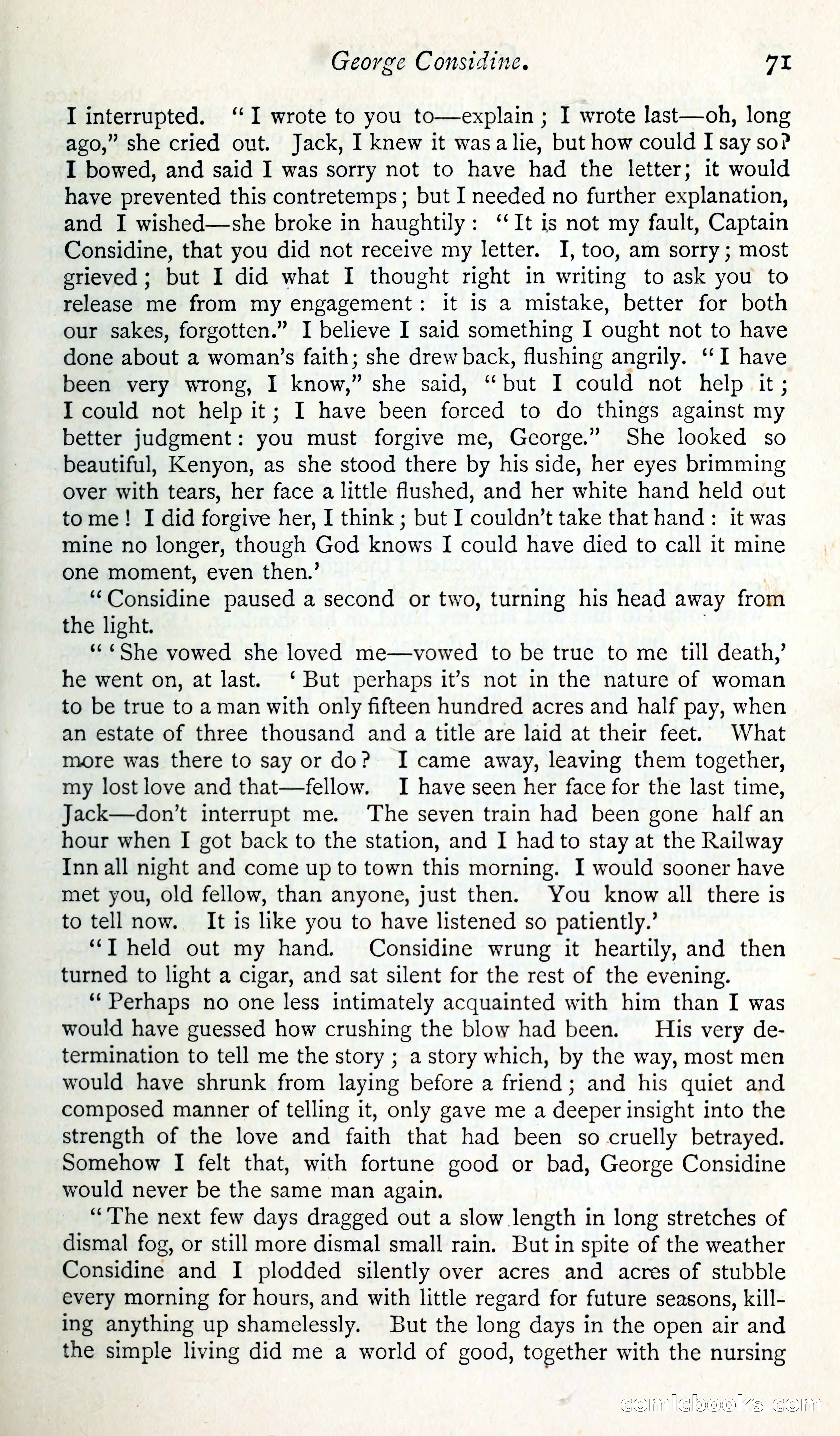
A restored page from Pulp Fiction, 1865. Page through the whole issue in the reader above.
📄 Transcribed text from this page (OCR, searchable)
Machine-transcribed from the original scan — historical spelling and the odd misread are preserved.
George Considine. 71 I interrupted. ‘I wrote to you to—explain ; I wrote last—oh, long ago,” she cried out. Jack, I knew it wasalie, but how could I say so? I bowed, and said I was sorry not to have had the letter; it would have prevented this contretemps; but I needed no further explanation, and I wished—she broke in haughtily: ‘“‘It is not my fault, Captain Considine, that you did not receive my letter. I, too, am sorry ; most grieved ; but I did what I thought right in writing to ask you to release me from my engagement: it is a mistake, better for both our sakes, forgotten.” I believe I said something I ought not to have done about a woman’s faith; she drew back, flushing angrily. “‘I have been very wrong, I know,” she said, “but I could not help it; I could not help it; I have been forced to do things against my better judgment: you must forgive me, George.” She looked so beautiful, Kenyon, as she stood there by his side, her eyes brimming over with tears, her face a little flushed, and her white hand held out tome! I did forgive her, I think ; but I couldn’t take that hand: it was mine no longer, though God knows I could have died to call it mine one moment, even then.’ ‘Considine paused a second or two, turning his head away from the light. *¢ ¢She vowed she loved me—vowed to be true to me till death,’ he went on, at last. ‘ But perhaps it’s not in the nature of woman to be true to aman with only fifteen hundred acres and half pay, when an estate of three thousand and a title are laid at their feet. What more was there to say or do? I came away, leaving them together, my lost love and that—fellow. I have seen her face for the last time, Jack—don’t interrupt me. The seven train had been gone half an hour when I got back to the station, and I had to stay at the Railway Inn all night and come up to town this morning. I would sooner have met you, old fellow, than anyone, just then. You know all there is to tell now. It is like you to have listened so patiently.’ “IT held out my hand. Considine wrung it heartily, and then turned to light a cigar, and sat silent for the rest of the evening. ‘Perhaps no one less intimately acquainted with him than I was would have guessed how crushing the blow had been. His very de- termination to tell me the story ; a story which, by the way, most men would have shrunk from laying before a friend; and his quiet and composed manner of telling it, only gave me a deeper insight into the strength of the love and faith that had been so cruelly betrayed. Somehow I felt that, with fortune good or bad, George Considine would never be the same man again. “The next few days dragged out a slow length in long stretches of dismal fog, or still more dismal small rain. But in spite of the weather Considine and I plodded silently over acres and acres of stubble every morning for hours, and with little regard for future seasons, kill- ing anything up shamelessly. But the long days in the open air and the simple living did me a world of good, together with the nursing CONNICHOOKS.EO mn