
Pulp Fiction, 1865 · page 314 of 399
The Argosy — page 314: what you’re looking at
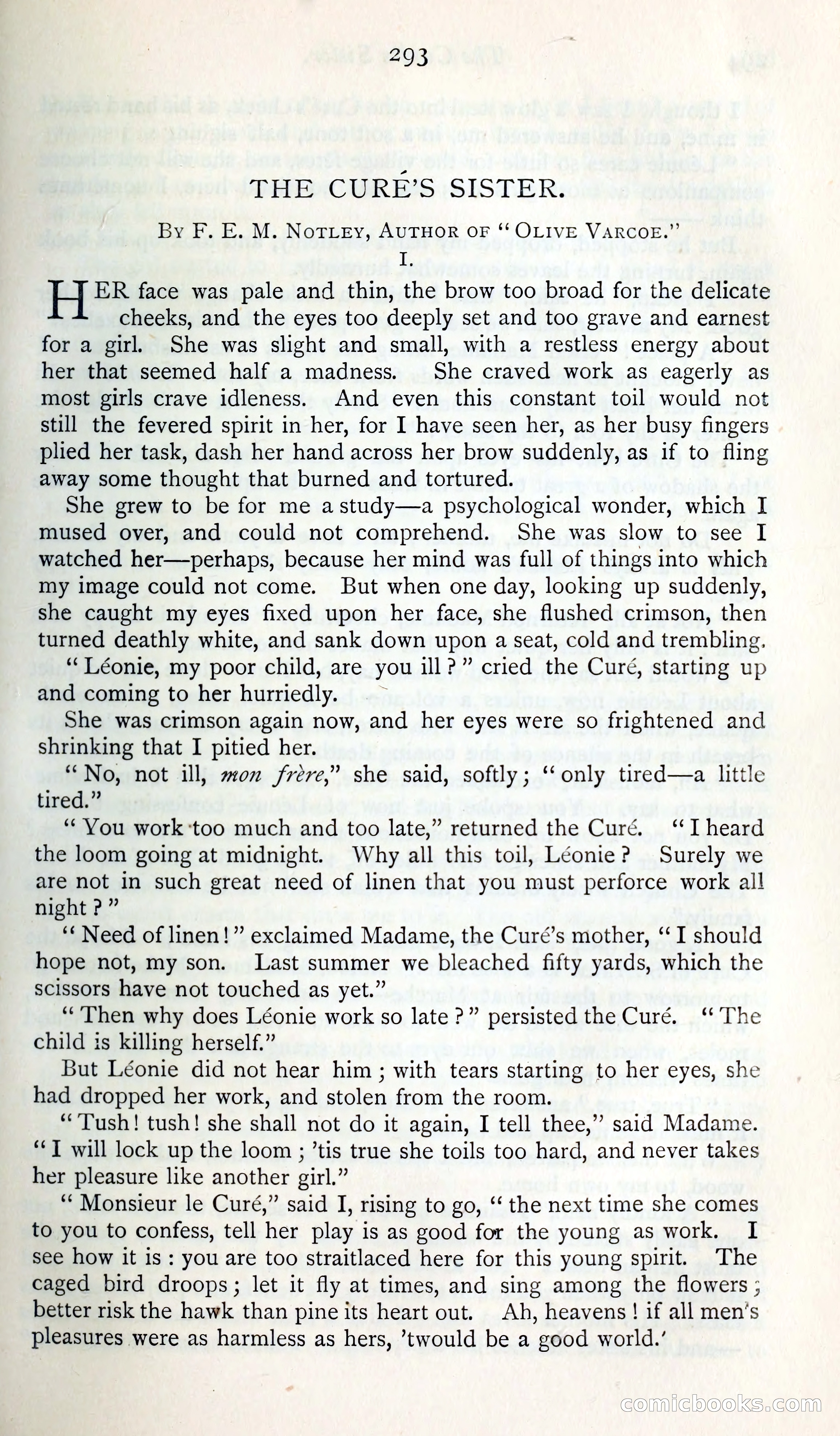
A restored page from Pulp Fiction, 1865. Page through the whole issue in the reader above.
📄 Transcribed text from this page (OCR, searchable)
Machine-transcribed from the original scan — historical spelling and the odd misread are preserved.
293 THE CURE’S SISTER. By F. E. M. NotrLtrey, AUTHOR OF ‘‘ OLIVE VARCOE.”’ iis HER face was pale and thin, the brow too broad for the delicate cheeks, and the eyes too deeply set and too grave and earnest for a girl, She was slight and small, with a restless energy about her that seemed half a madness. She craved work as eagerly as most girls crave idleness. And even this constant toil would not still the fevered spirit in her, for I have seen her, as her busy fingers plied her task, dash her hand across her brow suddenly, as if to fling away some thought that burned and tortured. She grew to be for me astudy—a psychological wonder, which I mused over, and could not comprehend. She was slow to see I watched her—perhaps, because her mind was full of things into which my image could not come. But when one day, looking up suddenly, she caught my eyes fixed upon her face, she flushed crimson, then turned deathly white, and sank down upon a seat, cold and trembling. ‘“‘Léonie, my poor child, are you ill?” cried the Curé, starting up and coming to her hurriedly. She was crimson again now, and her eyes were so frightened and shrinking that I pitied her. “No, not ill, mon frere,”’ she said, softly; “only tired—a little tired.” “You work ‘too much and too late,” returned the Curé. ‘I heard the loom going at midnight. Why all this toil, Léonie? Surely we are not in such great need of linen that you must perforce work all night ?” ‘“ Need of linen!” exclaimed Madame, the Curé’s mother, ‘‘ I should hope not, my son. Last summer we bleached fifty yards, which the scissors have not touched as yet.” “Then why does Léonie work so late ?” persisted the Curé. ‘‘ The child is killing herself.” But Léonie did not hear him ; with tears starting to her eyes, she had dropped her work, and stolen from the room. ‘Tush! tush! she shall not do it again, I tell thee,” said Madame. ‘‘T will lock up the loom ; ’tis true she toils too hard, and never takes her pleasure like another girl.” ‘“ Monsieur le Curé,” said I, rising to go, ‘‘ the next time she comes to you to confess, tell her play is as good for the young as work. I see how it is: you are too straitlaced here for this young spirit. The caged bird droops; let it fly at times, and sing among the flowers ; better risk the hawk than pine its heart out. Ah, heavens! if all men’s pleasures were as harmless as hers, ’twould be a good world.’ ECOMmiCoooks (GO